

7.3 - National Unification and Diplomatic Tensions
The Crimean War
Background and Causes:
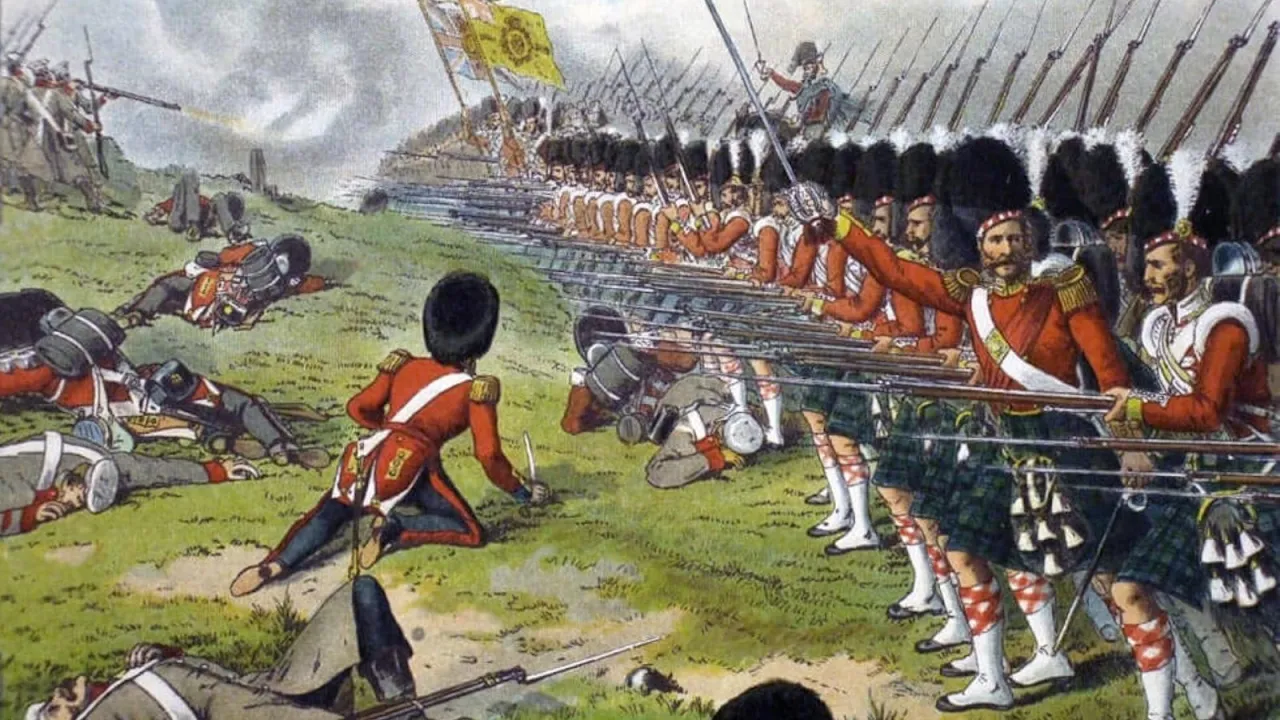
- The Crimean War (1853-1856) was the first war fought among the Great Powers since 1815. From 1815 until 1853, the Concert of Europe had kept the Great Powers from fighting each other in a general war, though smaller wars and revolutions still happened.
- The war started over religious tensions within the Ottoman Empire, which was in decline as a major European power. The Ottoman Sultan, under pressure from Napoleon III of France, granted special privileges to Roman Catholics in Jerusalem.
- Russia demanded similar privileges for Orthodox Christians but was denied, largely due to France's influence.
Political Motives:
- Russia wanted to expand at the expense of the declining Ottoman Empire, which was already struggling with nationalist revolts in its Balkan lands and was mocked as the "sick man of Europe." Britain and France wanted to stop Russia from gaining power in the Balkans and the eastern Mediterranean, where it could threaten Britain's trade routes to India.
- Russia also wanted control of the Straits (the Bosporus and the Dardanelles), the narrow waterways linking the Black Sea to the Mediterranean, so its warships and grain ships could pass freely. (Crimea itself already belonged to Russia; its port of Sevastopol was the base of Russia's Black Sea Fleet.)
War and Alliances:
- The war pitted Russia against the Ottoman Empire, which was supported by Britain and France.
- Britain and France entered the war in 1854 and landed an army in Crimea to besiege Sevastopol, which fell in 1855. Piedmont-Sardinia also sent troops in 1855 (see Cavour below).
- Russia called on its ally, Austria, for support. However, Austria declared neutrality, leaving Russia to fight alone.
- This felt like betrayal, because Russia had helped Austria crush the Hungarian revolution in 1849. Austria even demanded that Russian troops leave Moldavia and Wallachia, Ottoman lands Russia had occupied in 1853. The old conservative partnership between Austria and Russia was broken, so Russia would not help Austria when it went to war with France and Piedmont (1859) and with Prussia (1866).
- Ultimately, Russia was defeated and humiliated on the world stage.
- The Treaty of Paris (1856) banned warships from the Black Sea, ended Russia's claim to be the special protector of Christians in the Ottoman Empire, and promised to keep the Ottoman Empire whole. The Ottomans had survived only because Britain and France fought for them, which showed how weak the empire had become.
Consequences of the War:
- The Crimean War had significant consequences for the balance of power in Europe.
- The war effectively broke up the Concert of Europe, the system that had maintained peace and balance among the major European powers since the early 19th century.
- Britain and Russia largely withdrew from continental affairs after the war, turning inward to focus on their domestic issues. This created a power vacuum in Europe.
- The absence of British and Russian influence on the continent provided an opportunity for leaders in Germany and Italy to pursue the unification of their respective states, which would have profound implications for European politics in the following decades.
- Austria came out of the war with no Great Power friends, which made it an easier target for Cavour and Bismarck.
- Russia's humiliating defeat also pushed Tsar Alexander II into major reforms, including freeing the serfs in 1861 (see 6.6).
The Unification of Italy
Background:
- During the mid-19th century, Italy was not a single unified nation but a collection of separate states, each with its own ruler. Efforts to unify these states had been ongoing for some time but had not succeeded due to the lack of a strong leader and external opposition.
Count Camillo di Cavour:
- The turning point for Italian unification came with the rise of Count Camillo di Cavour, who became the Prime Minister of the Piedmont-Sardinia region in 1852.
- Cavour was a shrewd politician and strategist who recognized that Piedmont could lead the unification effort. He implemented infrastructure programs that significantly boosted Piedmont's economy, enabling the region to build a powerful army.
- Cavour also used diplomacy to win friends. He sent Piedmontese troops to fight alongside Britain and France in the Crimean War (1855), which earned him a seat at the peace conference in Paris (1856), where he raised the problem of Austrian rule in Italy.
Challenges to Unification:
- The primary obstacles to unification were the Austrian and French control over key regions in Italy. Austria controlled much of Northern Italy, while France held sway over parts of Central Italy, including Rome.
- Cavour recognized that Italy could not be unified without first expelling these foreign powers from the Italian Peninsula.
Diplomacy and War:
- To achieve this, Cavour made a secret deal with Napoleon III of France at Plombières (1858): France would help Piedmont fight Austria if Austria could be made to look like the aggressor, and in return France would get Nice and Savoy, two border regions ruled by Piedmont. Cavour then provoked Austria into declaring war in 1859.
- French and Piedmontese armies beat Austria at Magenta and Solferino (1859), but Napoleon III, worried about heavy losses and a possible Prussian attack on France, suddenly made a separate peace with Austria at Villafranca. Piedmont gained Lombardy, but Austria kept Venetia.
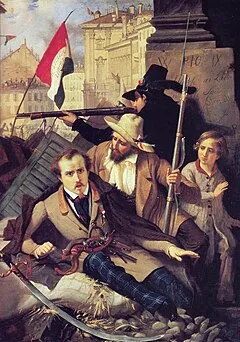
- Meanwhile, nationalist uprisings in central Italy (Tuscany, Parma, Modena, and the Romagna) drove out their rulers, and in 1860 their people voted in plebiscites to join Piedmont. France received Nice and Savoy as promised. Piedmont now ruled most of northern and central Italy.
Giuseppe Garibaldi and Southern Italy:
- Meanwhile, in Southern Italy, another unification effort was led by the charismatic military leader Giuseppe Garibaldi. Garibaldi, commanding his famous Red Shirts, successfully unified the southern regions of Italy.
- In 1860, Garibaldi landed in Sicily with about a thousand volunteers (the Expedition of the Thousand) and, helped by local revolts, conquered Sicily and then Naples, toppling the Kingdom of the Two Sicilies. Cavour feared Garibaldi would march on Rome and drag Italy into war with France, so he sent Piedmont's army south through the Papal States (going around Rome) to meet him.
- After his military victories, Garibaldi handed over control of Southern Italy to Victor Emmanuel II, the ruler of Piedmont. This was a significant gesture that furthered the cause of unification.
- In 1861, the Kingdom of Italy was proclaimed, with Victor Emmanuel II as its king. Garibaldi was a republican, but he put Italian unity first. Cavour died a few months later.
Completion of Unification:
- Italy gained Venetia in 1866 by siding with Prussia in the Austro-Prussian War. By 1870, only Rome remained outside the kingdom, ruled by the Pope and guarded by French troops. However, the outbreak of the Franco-Prussian War that same year forced Napoleon III to withdraw French troops from Rome to fight in the war.
- With the French gone, Victor Emmanuel II seized the opportunity to take control of Rome, and by doing so, he completed the unification of Italy.
- Rome became Italy's capital in 1871. Pope Pius IX refused to accept the loss of his lands and called himself a "prisoner in the Vatican," a dispute not settled until 1929.
The Unification of Germany
Background:
- The dream of a unified Germany had been alive since the Revolution of 1848, but the revolutionaries' hopes were dashed when their movement was crushed. The goal of unification would have to wait until a strong leader from a powerful state could emerge to bring it to fruition.
- Prussia had already taken the economic lead. The Zollverein (1834), a customs union that removed tariffs among most German states, tied their economies to Prussia and left Austria out (see 6.3).
Otto von Bismarck and Realpolitik:
- That leader came in the form of Otto von Bismarck, whom King Wilhelm I appointed prime minister (minister-president) of Prussia in 1862. Bismarck was a master of Realpolitik, a political philosophy focused on practical objectives rather than moral or ideological considerations. Essentially, it was about doing whatever was necessary to achieve one's goals, regardless of the means.
Prussian Reforms and Military Buildup:
- Like Cavour in Italy, Bismarck introduced reforms aimed at increasing Prussia's power, with a particular focus on strengthening the Prussian Army. He understood that a strong military would be essential for unifying the German states under Prussian leadership.
- When Prussia's liberal-dominated parliament refused to pay for the army reforms, Bismarck collected the taxes and expanded the army anyway. He told the parliament's budget committee in 1862 that the great questions of the day would be decided not by speeches and majority votes but by "iron and blood."
- Prussia's army was built for industrialized warfare. Its chief of staff, Helmuth von Moltke, used railroads to rush troops to the front and the telegraph to command them.
Wars of Unification:
- The Prussian-Danish War (1864):
- Bismarck's first step toward unification involved a war with Denmark (1864) over the control of two duchies with large German-speaking populations: Schleswig and Holstein. These duchies were ruled by the king of Denmark, but Bismarck aimed to bring them under German rule.
- Bismarck cleverly secured Austria's support in this war, and together, they quickly defeated Denmark. As a result, Schleswig went to Prussia, and Holstein went to Austria, setting the stage for future conflict between the two powers.
- The Austro-Prussian War (1866):
- With Prussia's military strengthened and alliances in place to prevent interference from other major powers, Bismarck provoked a conflict with Austria. This war, also known as the Seven Weeks' War, saw Prussia emerge victorious.
- Before the war, Bismarck made sure Austria would fight alone: he kept Napoleon III neutral with vague hints that France might gain land, counted on Russia's goodwill (he had helped Russia against a Polish revolt in 1863), and allied with Italy, which was promised Venetia. Prussian railroads and the breech-loading needle gun, which could be reloaded lying down and fired much faster than Austria's muzzle-loading rifles, helped Prussia win the decisive Battle of Königgrätz (Sadowa).
- The outcome was significant: Austria was excluded from German affairs, and the northern German states aligned themselves with Prussia. This victory marked a major step toward unification but left the southern German states still outside the Prussian fold.
- Bismarck gave Austria mild peace terms so it would not seek revenge and could become an ally later. Prussia annexed several northern states, including Hanover, and created the North German Confederation (1867), which it dominated.
- The Franco-Prussian War (1870-1871):
- To bring the southern German states into the unification process, Bismarck engineered a conflict with France. He manipulated a diplomatic incident, the Ems Dispatch, to provoke Napoleon III into declaring war on Prussia.
- The crisis began when a German prince related to Prussia's king was offered the throne of Spain. Even after the prince withdrew, France, afraid of being surrounded, demanded that King Wilhelm promise this would never happen again. Bismarck edited the king's telegram from the spa town of Ems so that the meeting sounded like an insult, then released it to the press. Public anger in both countries did the rest, and France declared war in July 1870.
- The southern German states, feeling threatened by France, rallied to Prussia's side. The combined German forces defeated France, leading to the fall of Napoleon III and the capture of Paris.
- Prussia's steel breech-loading cannons, made by the Krupp company, outclassed French artillery. At Sedan (September 1870), the Germans captured Napoleon III himself, and Paris surrendered in January 1871 after a long siege.
German Unification:
- In the aftermath of the Franco-Prussian War, the German states were united under Prussian leadership. On January 18, 1871, King Wilhelm I of Prussia was proclaimed Kaiser (emperor) of a unified Germany in the Hall of Mirrors at the Palace of Versailles, outside Paris. This event marked the birth of the German Empire, with Bismarck as its first Chancellor. In the peace treaty, France lost Alsace and most of Lorraine and had to pay 5 billion francs.
- The new Germany, with the largest population west of Russia and fast-growing industry, upset the balance of power. British politician Benjamin Disraeli warned that "the balance of power has been entirely destroyed."
- Bismarck also manipulated democratic mechanisms. The Reichstag (parliament) of the North German Confederation and then of the German Empire was elected by universal male suffrage, which he expected would favor loyal, conservative rural voters over his liberal critics. Yet the Reichstag could not choose or remove the chancellor, who answered only to the kaiser, so real power stayed at the top. Many liberals forgave his earlier illegal tax collection and backed him because he had delivered national unity.
Bismarck's Foreign Policy and Alliances:
- Following unification, Bismarck said Germany was a "satisfied" power that wanted no more land. He focused on keeping the peace and isolating France, which wanted revenge for its defeat and the loss of Alsace-Lorraine. Without allies, France could not risk a war, and Germany would never have to fight France and Russia at the same time (a two-front war). His main alliances:
- The Three Emperors' League (1873): An alliance between Germany, Austria-Hungary, and Russia, the three conservative empires of eastern Europe, aimed at stabilizing Eastern Europe. Austro-Russian rivalry in the Balkans kept straining it, and it finally collapsed in 1887.
- The Dual Alliance (1879): A defensive alliance between Germany and Austria-Hungary, signed after Russia turned against Germany over the Congress of Berlin (below). It stayed the core of Germany's alliances until 1918.
- The Triple Alliance (1882): A military alliance between Germany, Austria-Hungary, and Italy. Italy joined partly out of anger at France for taking Tunisia (1881). When World War I began, Italy stayed neutral, and in 1915 it joined the other side.
- The Reinsurance Treaty (1887): A secret agreement between Germany and Russia, ensuring mutual neutrality in case of war, unless Germany attacked France or Russia attacked Austria-Hungary. It kept Russia from turning to France.
Bismarck's Dismissal and the Two Armed Camps:
- In 1888, the young Kaiser Wilhelm II came to the throne. He wanted to run foreign policy himself and forced Bismarck to resign in 1890. That same year, Germany let the Reinsurance Treaty with Russia expire.
- Isolated, Russia turned to France, and the Franco-Russian Alliance (1894) created exactly what Bismarck had feared: hostile powers on both of Germany's borders.
- Wilhelm II's Weltpolitik ("world policy") sought colonies and a large navy. Germany's Naval Laws (starting in 1898) set off a naval arms race with Britain, which grew fiercer after Britain launched the battleship HMS Dreadnought in 1906. Alarmed, Britain gave up its "splendid isolation" and settled its colonial disputes with France (Entente Cordiale, 1904) and Russia (Anglo-Russian Entente, 1907).
- By 1907, Europe was divided into two mutually antagonistic blocs: the Triple Alliance (Germany, Austria-Hungary, and Italy) and the Triple Entente (France, Russia, and Britain). Each side saw the other as a threat, so any local crisis could pull in all the Great Powers (see 8.1/8.2).
The Balkans and Rising Tensions
Background:
- The Balkans during this period were a hotbed of nationalist tensions, largely due to the region's complex ethnic makeup and the influence of declining empires, particularly the Ottoman Empire, Austria-Hungary, and Russia. As nationalist movements spread across Europe, the various ethnic groups in the Balkans sought independence and the right to form their own nation-states.
- Each Great Power had its own stake. Russia saw itself as the protector of fellow Slavs and Orthodox Christians (Pan-Slavism, see 7.1/7.2) and wanted access to the Straits. Austria-Hungary feared that Slavic nationalism would inspire its own Slavic peoples to break away. Britain wanted to keep Russia away from the Mediterranean and the route to India.
Congress of Berlin (1878):
- Otto von Bismarck, recognizing the growing unrest in the Balkans and its potential to destabilize Europe, organized the Congress of Berlin in 1878. The Congress brought together the major European powers to address the "Eastern Question," which revolved around the fate of the Ottoman Empire's territories in Europe.
- The Congress followed the Russo-Turkish War (1877-1878). After defeating the Ottomans, Russia forced them to sign the Treaty of San Stefano, which created a large Bulgaria under Russian influence. Britain and Austria-Hungary threatened to fight over this, so Bismarck offered to act as an "honest broker" to settle it.
- However, the decisions made at the Congress of Berlin primarily focused on maintaining the balance of power among the great European powers rather than addressing the nationalist aspirations of the Balkan peoples. This approach only served to increase tensions in the region, as the desires for self-rule among the various ethnic groups were largely ignored.
- The Congress recognized Serbia, Romania, and Montenegro as fully independent, cut Bulgaria down and made it a self-governing principality still under the sultan (fully independent in 1908), and let Austria-Hungary occupy and run Bosnia-Herzegovina. Britain took Cyprus in a side deal with the Ottomans. Russia felt cheated of its victory and blamed Germany, which pushed Bismarck toward the Dual Alliance with Austria-Hungary (1879).
Ethnic and Nationalist Struggles:
- The Balkans were home to a diverse array of ethnic groups, including Serbs, Bulgarians, Greeks, Albanians, and others, each with its own nationalist ambitions. The Ottoman Empire's weakening grip on the region further fueled these ambitions, as these groups saw an opportunity to assert their independence.
- The decisions made at the Congress of Berlin left many of these groups dissatisfied, leading to a series of conflicts and power struggles that would eventually involve the great powers of Europe.
Serbia and the Bosnian Crisis (1908):
- Serbia's influence grew after 1903, when army officers murdered King Alexander, whose family had been friendly to Austria, and put Peter I, who leaned toward Russia, on the throne. Serbian nationalists dreamed of uniting all South Slavs, including the Serbs and Croats living inside Austria-Hungary, in one state, which would mean breaking Austria-Hungary apart. Secret societies like the Black Hand (founded 1911) used terrorism to pursue this goal.
- In 1908, Austria-Hungary formally annexed Bosnia-Herzegovina, which it had run since 1878. Serbia was furious because many Bosnians were Serbs. Russia backed Serbia but was still weak from its defeat by Japan and the Revolution of 1905, so it backed down when Germany firmly supported Austria-Hungary. Humiliated, Russia was determined not to back down again, and Serbia's hatred of Austria-Hungary grew.
Balkan Wars:
- The First Balkan War (1912) and the Second Balkan War (1913) were direct results of the unresolved tensions in the region. In these wars, the Balkan League, consisting of Serbia, Montenegro, Greece, and Bulgaria, fought against the Ottoman Empire and later against each other over the spoils of war.
- In the First Balkan War (1912-1913), the Balkan League took almost all of the Ottomans' remaining land in Europe. In the Second Balkan War (1913), Bulgaria attacked its former allies over the spoils and lost. Serbia came out nearly twice as large, but Austria-Hungary blocked it from reaching the Adriatic Sea by backing a new, independent Albania. Austria-Hungary's leaders now saw Serbia as a deadly threat, and some of them, like army chief Franz Conrad von Hötzendorf, pushed for war to crush it.
- These conflicts highlighted the deep divisions within the region and the involvement of the great powers, who supported different sides based on their own strategic interests.
Path to World War I:
- The unresolved tensions in the Balkans, coupled with the alliances formed among the great powers, set the stage for the outbreak of World War I. The assassination of Archduke Franz Ferdinand of Austria-Hungary in Sarajevo in 1914 by a Serbian nationalist was the spark that ignited the war, but the underlying causes lay in the tangled web of alliances, nationalist ambitions, and great power rivalries that had been building up over decades.