

6.3 - The Foreign Exchange Market
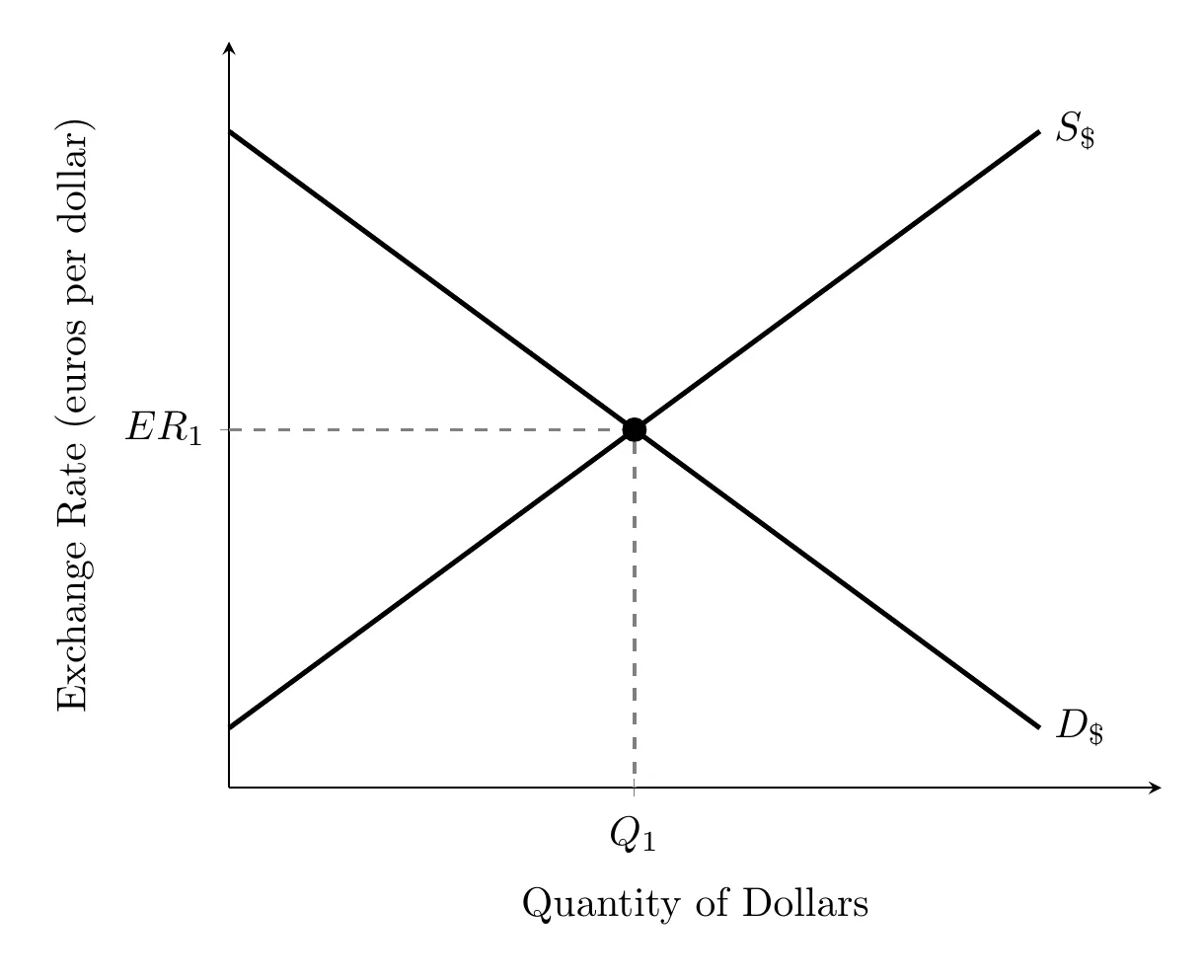
Setup
The FOREX model is just another supply-and-demand graph.
- Vertical axis (price): the exchange rate, labeled based on whichever currency the model is analyzing. If it’s the U.S. dollar model, price is in “euros per dollar” (the currency you’re modeling goes on the bottom of that ratio).
- Horizontal axis: quantity of that currency.
Supply slopes up, demand slopes down, and where they cross gives you the current exchange rate.
- Supply (upward sloping): sellers of a currency like higher prices.
- Why it slopes up: supply comes from people who hold dollars and want to buy foreign things. At a higher exchange rate, each dollar buys more euros, so European goods, services, and assets get cheaper for Americans. They buy more of them and supply more dollars to do it.
- Demand (downward sloping): buyers like lower prices, even when they’re buying currency.
- Why it slopes down: at a lower exchange rate, each dollar costs fewer euros, so U.S. goods, services, and assets get cheaper for Europeans. They buy more of them and need more dollars to pay.
The equilibrium exchange rate is the rate where the quantity of the currency demanded equals the quantity supplied, right where the two curves cross. At that rate, everyone who wants to trade dollars for euros can find someone to trade with.
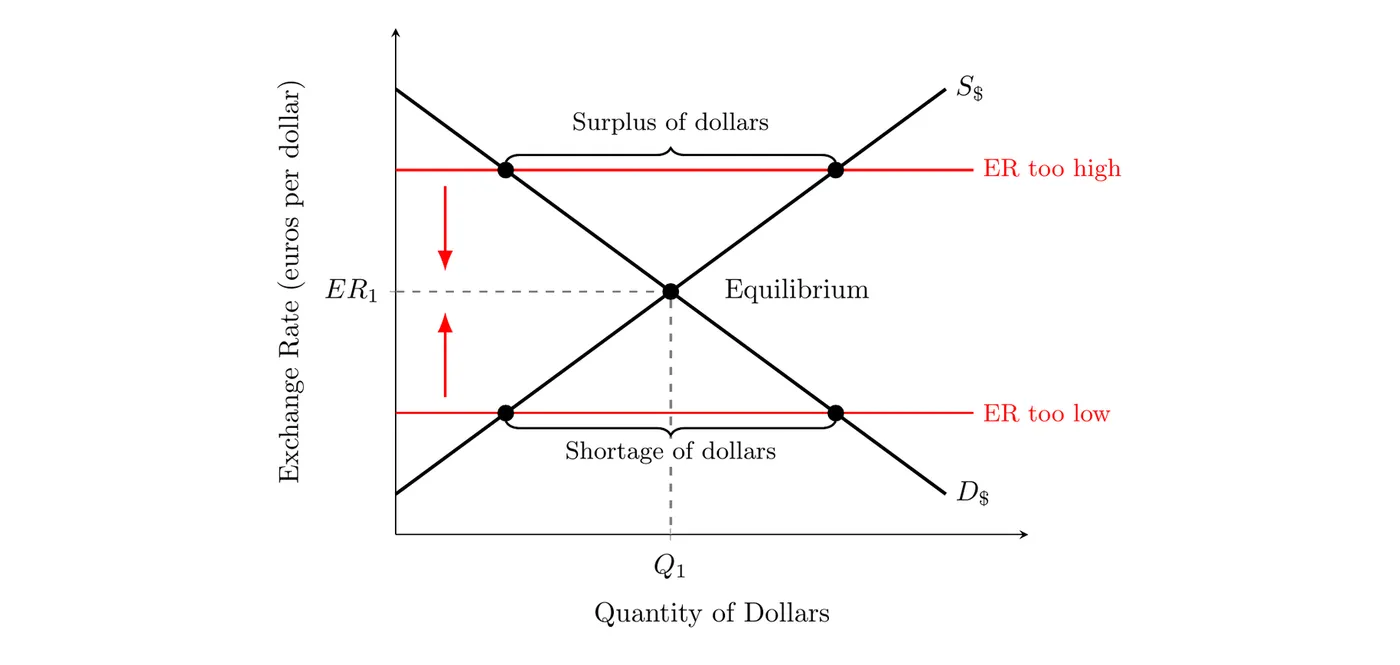
If the exchange rate is too high, you get a surplus (quantity supplied exceeds demand), pushing the price down. If it’s too low, you get a shortage, pushing the price up.
Here’s how it fixes itself. At a rate above equilibrium, people want to sell more dollars than others want to buy, so there’s a surplus of dollars. Sellers who can’t find buyers accept fewer euros per dollar, and the rate falls. As it falls, U.S. goods get cheaper for Europeans (quantity demanded rises) and European goods get pricier for Americans (quantity supplied falls), until the surplus is gone at . Below equilibrium it runs the other way: there’s a shortage of dollars, buyers offer more euros per dollar, and the rate rises back to .
Why People Supply and Demand Currency
Demand for a currency comes from people wanting to buy goods, services, or financial assets from that country, since those purchases ultimately have to be paid for in that country’s own currency (even if the transaction starts in your home currency, like buying a PS5 with dollars, those dollars eventually get converted).
Supply of a currency comes from people wanting to buy something in a different currency. If an American wants French wine, they supply dollars to the FOREX market to get euros, effectively selling dollars and buying euros.
Bottom line: FOREX is a standard supply-and-demand model for the exchange rate. Demand for a currency comes from foreigners wanting that country’s goods, services, or assets; supply comes from residents wanting foreign goods, services, or assets.