

4.4 - 18th-Century Society and Demographics
The Columbian Exchange and Its Impact on Europe
Introduction: The Columbian Exchange, a widespread exchange of plants, animals, and ideas between the New World and Europe, profoundly affected European diets and agricultural practices.
Variety and Abundance of Food:
- Dietary Changes: The introduction of new crops and foods from the Americas, such as potatoes, tomatoes, and maize, significantly diversified the European diet, leading to better nutrition and overall health.
- Increased Food Supply: By the mid-18th century, advances in agriculture, together with the new crops from the Americas, meant that in most years Europe grew more food than people needed just to survive. This surplus helped people live longer and the population grow.
Improvements in Food Transportation and Storage:
- Infrastructure Development: During this period, there were significant improvements in transportation infrastructure, including better roads, canals, and other means of moving food efficiently across regions.
- Food Storage: Innovations in food storage helped keep food fresh for longer periods, reducing waste and ensuring a more consistent food supply throughout the year.
Impact on Population Growth:
- Longer Life Expectancy: The increased availability of food and the disappearance of the bubonic plague were major factors in the longer lives of Europeans. The last major plague outbreak in western Europe struck Marseille, France, in 1720. Quarantines helped stop it, such as the guarded border the Habsburgs kept along the Ottoman frontier to turn back travelers from plague areas, though historians still debate all the reasons the plague disappeared.
- Decline in Death Rate: With these factors in place, the death rate in Europe declined, contributing to a growing population.
- Smallpox Inoculation: Smallpox killed huge numbers of Europeans every year, especially children. In inoculation, a little material from a smallpox sore was put into a small cut on a healthy person, who usually got a mild case and was then immune for life.
- Lady Mary Wortley Montagu saw inoculation in the Ottoman Empire and promoted it in England after 1721, and Catherine the Great had herself inoculated in 1768 to set an example for Russians.
- In 1796, Edward Jenner showed that infecting people with the much milder cowpox also protected against smallpox. This was the first vaccine, and it was safer than inoculation. Both methods lowered smallpox deaths.
Birth Rates and Family Size:
- Family Size: On average, families had about five children during the childbearing years. However, this did not significantly increase the population for several reasons:
- Marriage Rates: Only 40% to 60% of women of childbearing age were married at any given time, meaning that a substantial portion of the population was not having children.
- European Marriage Pattern: In western and central Europe, people married late and many never married at all (see 1.10). Late marriage cut years off a woman's childbearing years, which kept the number of births down.
- Birth Control: Some couples deliberately limited births, mostly through withdrawal. This started among the upper classes and spread more widely in France by the late 1700s, so French families began shrinking earlier than families elsewhere in Europe.
- Illegitimate Births: While some single women did have children, these births were often stigmatized, with children born out of wedlock referred to as "illegitimate."
Illegitimate Births and Population Growth
- Illegitimate births rose in the 1700s, especially after 1750. By 1800, around 10% of births in parts of Germany were illegitimate.
- Why: Young people who moved to towns and cities for work lived away from their parents and villages, which had pressured couples to marry. A promise of marriage was often broken when a man moved on or could not afford a household.
- This added somewhat to population growth, but it was not the main cause.
- The main cause of population growth during this period was longer life expectancy.
The Agricultural Revolution and Its Impact
- 17th Century Context:
- Agriculture in the 17th century faced challenges due to weather disruptions, low productivity, and small landholdings.
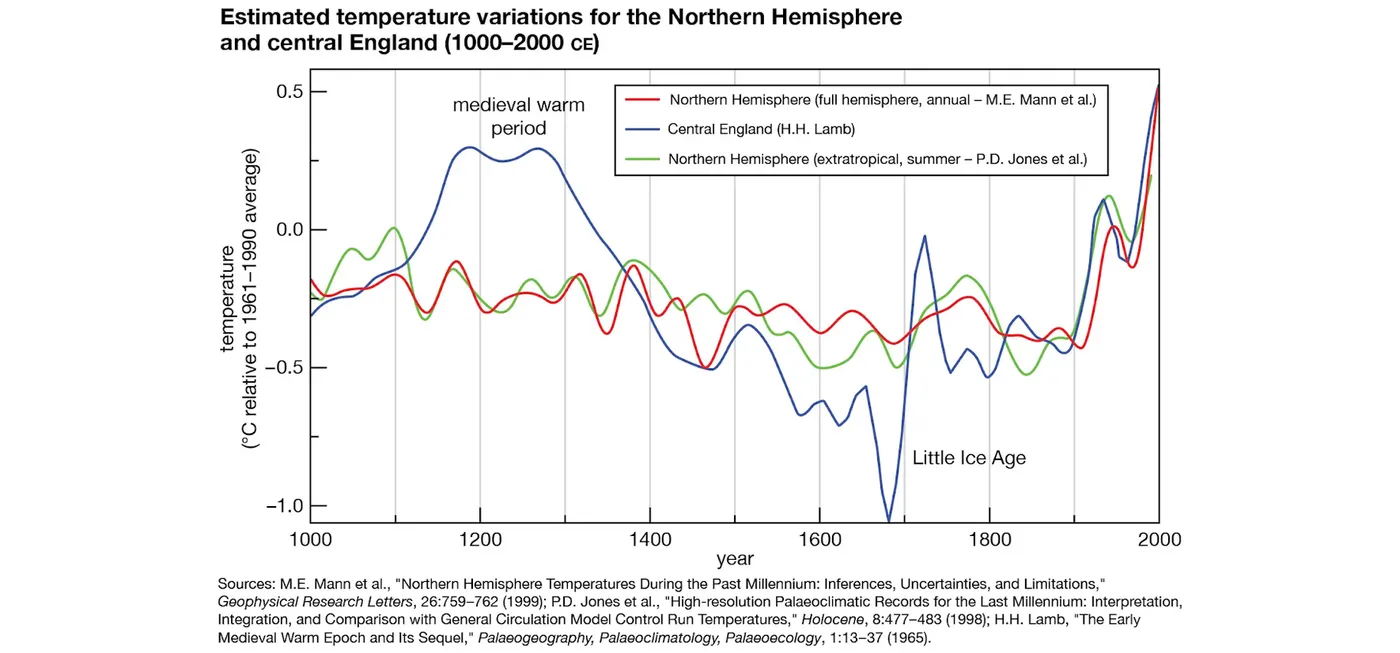
- The Little Ice Age (16th-19th century) brought colder periods, leading to poor crop yields, hunger, and higher death rates.
- Agricultural practices like the two-field and three-field systems could no longer keep up with the growing population.
- Much of the farmland was divided into small plots; if a family's crop failed, it could lead to significant hardship.
- Periodic Famines: Because of these limits, a few bad harvests in a row could cause famine. In France, the famine of 1693 to 1694 killed more than a million people, and the bitter winter of 1709 brought another.
- 18th Century Agricultural Changes:
- The Agricultural Revolution introduced new practices to address these challenges and support the growing population.
- Abandonment of the two-field and three-field systems:
- These systems left part of the land fallow to replenish soil nutrients.
- Discovery: Planting nitrogen-rich crops like clover could replenish the soil, providing more grazing land for livestock, which in turn increased meat availability.
- Farmers instead rotated crops so no field sat empty, as in the Norfolk four-field system (see 3.3).
- Increased Crop Yields:
- The second half of the 18th century saw warmer periods of the Little Ice Age.
- Crops like potatoes and maize (introduced via the Columbian Exchange) became more productive, especially benefiting the lower class.
- Expansion of Cultivated Land:
- New techniques and technologies, such as Jethro Tull's seed drill, were more effective on larger commercial farms.
- This period saw the consolidation of small farms into larger commercial operations, often enforced by the Enclosure Acts.
- Results: By the mid-1700s, the same land produced more food, and better roads and canals carried it to where it was needed, so local crop failures turned into famines less often. Death rates fell, and Europe's population grew from roughly 120 million in 1700 to roughly 180 to 190 million by 1800 (historians' estimates).
Enclosure Acts and Their Impact
- The Enclosure Acts in England led to large-scale land seizures, consolidating smaller farms into larger, more efficient commercial farms.
- Enclosure meant fencing off the open fields and common lands that villagers had shared for farming and grazing, and combining them into private farms. Parliament passed thousands of enclosure acts, mostly between 1750 and 1850.
- Large landowners gained more productive farms, but small farmers and cottagers who depended on the commons lost them. Many became hired farm workers or moved to cities, and later they supplied workers for industry (see Unit 6).
Changing Attitudes Toward Childhood
- Prior to this period, children were often viewed as miniature adults.
- Enlightenment thought shifted this perspective, recognizing childhood as a distinct developmental stage.
- Jean-Jacques Rousseau played a significant role in this change with his book Émile.
- Rousseau advocated for the education of children, arguing that responsible self-governance required proper upbringing and education.
- As a result, childhood became seen, especially among the elite, as a phase requiring nurture and attention.
- In Émile (1762), Rousseau said children should learn by exploring and experiencing the world at their own pace rather than by memorizing, and he urged mothers to nurse and care for their own babies instead of sending them to wet nurses.
- Why Attitudes Changed: As infant and child deaths declined, parents could expect more of their children to grow up, and they invested more love, time, and money in them. Families with new commercial wealth gave children their own rooms, bought toys and children's books (like John Newbery's A Little Pretty Pocket-Book, 1744), and paid for family portraits showing affectionate parents with playful children.
- Schooling: States also saw educated children as useful future subjects. Prussia (1763) and Austria under Maria Theresa (1774) passed laws requiring children to attend primary school, though many poor families still needed their children's work.
Differences Between Upper Class and Working Class Families
- In elite families, childhood was increasingly recognized as a time for education and development.
- In contrast, working-class families relied on their children for economic survival.
- Children worked alongside their parents in farms, cottage industries, or trades.
The Nuclear Family
- The nuclear family (parents and children, without extended relatives) became the norm, a trend that had been growing since the Middle Ages.
- Marriage generally occurred later in life, often in the mid to late 20s, partly due to the need for financial stability.
- Life expectancy at birth was well under 40 years in most of Europe, mainly because so many babies and young children died, and many adults died in their 40s or 50s. Marrying in the mid to late 20s therefore left a couple fewer years to have children.
Migration and Urbanization
- New farming methods and tools, such as Jethro Tull's seed drill and lighter plows with iron parts, along with the enclosure of land into large commercial farms, reduced the need for agricultural labor.
- As a result, many rural workers migrated to cities in search of work, a process known as urbanization.
- Cities offered jobs as domestic servants (the most common job for young women who moved to town), day laborers, porters, and apprentices in shops and trades. London grew to nearly a million people by 1800, the largest city in Europe.
Urbanization and Its Consequences
- Urbanization occurred on a large scale as rural workers moved to cities in search of employment.
- Cities were overwhelmed by the rapid influx of people, leading to several significant problems.
- Weakening of Community Values: In villages, family, neighbors, the parish priest, and the local lord watched over people's behavior. In big cities, young migrants lived among strangers, away from these controls, so traditional community values weakened. Historians link this to more illegitimate births, abandoned babies, and crime. Thousands of poor mothers left babies at foundling hospitals, like the one founded in London in 1739.
- Strained City Governments: Cities had no modern police forces, sewers, or clean water systems, so city governments struggled to keep people safe and healthy. Garbage and human waste filled the streets, and diseases spread quickly.
Tenement Housing
- To accommodate the growing population, tenements were constructed.
- These were quickly built apartment buildings with affordable rents for workers.
- However, they were poorly ventilated and lacked indoor plumbing.
- Poor ventilation led to the rapid spread of airborne diseases, such as tuberculosis.
- The lack of indoor plumbing forced residents to dispose of waste by throwing it out of windows onto the streets, contributing to unsanitary conditions.
Social Issues in Urban Areas
- The overcrowding and poor living conditions in cities led to increased poverty-related issues, including crime and prostitution.
- In response, authorities tried harder to police the poor and other marginal groups, like beggars, vagrants, and prostitutes:
- Paris created the office of lieutenant general of police in 1667 to patrol the streets and control beggars and crime, and London's Bow Street Runners (1749), started by the magistrate and novelist Henry Fielding, were an early paid force for catching criminals.
- Cities locked up beggars and the poor in workhouses and poorhouses, such as Paris's Hôpital Général (1656), and charities like London's Magdalen Hospital (1758) took in prostitutes to reform them.
- Vagrancy laws punished people who begged or had no fixed home with whipping, jail, or forced labor.