

4.5 - 18th-Century Culture and Arts
The Consumer Revolution
- Growing overseas trade and commercial wealth gave the middle and upper classes more money to spend, which fueled a higher demand for consumer goods across Europe. Cheaper goods from Asia and the colonies, like cotton cloth, tea, coffee, sugar, and porcelain, were within reach of more families. This demand later helped drive industrialization.
- This period of heightened consumerism is known as the Consumer Revolution.
- People began purchasing goods not out of necessity but because they wanted them, leading to a shift in consumer behavior.
- Popular items included porcelain dishes, cotton linens for home décor, and mirrors.
Social Implications of the Consumer Revolution
- Class Identity and Consumerism:
- As goods became more affordable, the middle class could buy items that were previously exclusive to the upper class.
- This shift led to a new form of social identification, where people began to define themselves by the goods they purchased rather than just by religion or regional affiliation.
- The middle class began to feel more affluent, blurring the lines between social classes.
- Privacy and Home Design:
- The Consumer Revolution also introduced a new concern for privacy.
- Previously, homes were smaller with multi-purpose rooms; many families lived in single-room houses where everyone shared the same space.
- With the rise of consumerism, people started to design homes with more rooms, each serving a specific purpose.
- A notable example is the boudoir, a room specifically for the wife to have private time or entertain other women, separate from her husband.
- Leisure Activities:
- The Consumer Revolution also led to the creation of new venues for leisure, such as coffee houses.
- Coffee reached Europe in the 1600s through trade with the Ottoman Empire and Yemen, and European colonies like Java and Saint-Domingue later grew it. It became a favorite beverage, and coffee houses emerged as places where men from many classes could gather.
- Unlike taverns, which were associated with drinking and singing, coffee houses were centers for discussing revolutionary ideas.
- In urban areas, spectator sports gained popularity, with blood sports like bull-baiting and cockfighting being common entertainment.
The Reading Revolution
- The Reading Revolution occurred alongside the Consumer Revolution, driven by increasing literacy rates and the availability of printed materials.
- Literacy spread rapidly due to new educational efforts for children and the proliferation of books and other reading materials made possible by the printing press.
- In France, the share of men who could sign their names rose from under a third in the late 1600s to nearly half by the 1780s, and women's literacy rose too. Reading was most common in cities, in Protestant areas (where reading the Bible was encouraged), and among the middle class.
Expansion of Reading Material
- The variety of reading materials expanded significantly during this period.
- In France, there was a noticeable decline in the publication of religious devotional books.
- Instead, books on history, law, science, and the arts became more common.
- Beyond books, other forms of reading materials became popular, including newspapers, periodicals, pamphlets, and notably, the encyclopedia produced by Denis Diderot.
- Britain's first daily newspaper, The Daily Courant, began in 1702, and magazines like The Spectator (1711) discussed manners, books, and ideas for middle-class readers.
Impact and Response
- The spread of new ideas through these diverse reading materials led to increased censorship, particularly from religious authorities.
- For example, the Catholic Church condemned Diderot’s encyclopedia due to its challenges to religious authority.
- The French government also canceled the Encyclopédie's official permission in 1759, but Diderot kept working in secret, and the last volumes of text came out in 1765. Banned books were often printed in the Dutch Republic or Switzerland and smuggled into France.
- Despite these censorship efforts, the Reading Revolution took hold, and people continued to read more than ever before.
- Public Opinion: As more people read newspapers and pamphlets and argued about them in coffeehouses and salons, a new force appeared: public opinion, the shared views of an educated public outside the royal court. Kings and ministers began trying to win it over. In 1781, for example, French finance minister Jacques Necker published a report on the royal budget to gain the public's trust. Public opinion would play a major role in the French Revolution (see 5.4).
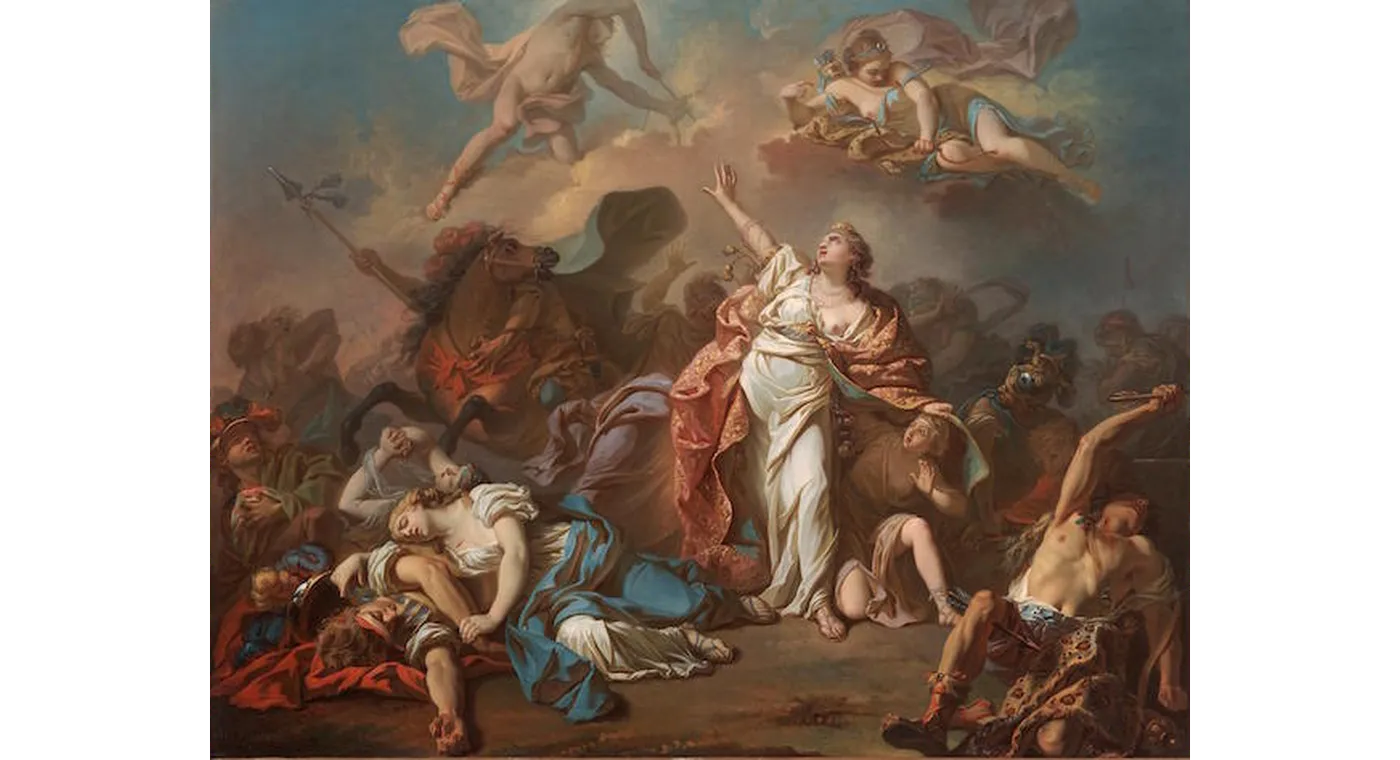
Representations of Peoples Outside Europe
- Why: Trade, exploration, and colonies brought Europeans into closer contact with Asia, Africa, the Americas, and the Pacific, and travel accounts sold well.
- Natural Sciences: Scientists described new plants, animals, and peoples. Naturalists like Joseph Banks sailed on Captain James Cook's Pacific voyages (starting in 1768), and Carl Linnaeus's system for classifying living things (Systema Naturae, 1735) sorted humans into varieties by continent. This spread knowledge but also fed later ideas of racial ranking used to justify empire and slavery.
- Literature: Writers used outsiders as a mirror to criticize Europe. In Montesquieu's Persian Letters (1721), two fictional Persian travelers poke fun at French religion, the king, and social customs. Voltaire praised China as a country run by educated officials instead of priests. Adventure stories like Robinson Crusoe (1719) and Jonathan Swift's Gulliver's Travels (1726) were best-sellers.
- Popular Culture: Europeans bought chinoiserie (Chinese-style designs on porcelain, wallpaper, and furniture), drank tea and coffee from Asia and the colonies, and enjoyed "Turkish" themes in music and opera, like Mozart's The Abduction from the Seraglio (1782).
- Effect: These images sometimes challenged accepted social norms by suggesting that European customs were just habits, not laws of nature. But they were often based on stereotypes and could also strengthen Europeans' sense of superiority.
Shifts in the Arts
- During this period, the arts shifted focus from religious themes and royal power to themes that emphasized private life and public goods.
- Baroque Art (Pre-1750):
- Baroque art celebrated religious devotion and the power of monarchs.
- Monarchs and the church embraced Baroque art for its grandeur and ostentation, which symbolized authority and power.
- Notable examples:
- Gian Lorenzo Bernini: Known for designing ornate chapels and the magnificent piazzas for the renovation of Saint Peter's Basilica in Rome.
- Johann Sebastian Bach: Composed music intended for royal courts and high church services, reflecting the era’s focus on religious and state power.
- Palace of Versailles: Louis XIV's palace (see 3.7) used Baroque grandeur, from the Hall of Mirrors to its huge formal gardens, to show off royal power, and other European monarchs built palaces in imitation of it.
Shift to Bourgeois Art
- By the 18th century, art began to reflect the tastes and values of the Bourgeois Society (the middle class).
- This period saw a move from the grand, religious, and state-centric themes of Baroque art to more down-to-earth and everyday life subjects.
- Rembrandt exemplifies this shift, painting both biblical scenes with a more relatable, earthy style and scenes from everyday life, such as The Slaughtered Ox.
- Rembrandt and Jan Vermeer painted in the 1600s Dutch Republic (see 3.5), where merchants rather than kings or the Church bought most art, so Dutch painters led the way in showing ordinary people, homes, and everyday work. In the 1700s, artists elsewhere followed.
- William Hogarth: An English artist who sold cheap prints of moral stories about everyday city life, like A Harlot's Progress (1732), to middle-class buyers.
Neoclassicism
- As the 18th century progressed, a new artistic movement, Neoclassicism, emerged.
- Neoclassical art emphasized simplicity and symmetry, contrasting with the opulence of Baroque art.
- Artists copied the styles of ancient Greece and Rome, partly inspired by the digs at Herculaneum (begun 1738) and Pompeii (begun 1748), Roman towns buried by a volcano.
- Jacques-Louis David: His Oath of the Horatii (1784) shows three Roman brothers swearing to fight for their city while the women of their family grieve. It celebrated civic virtue, meaning putting duty to the state above family and self, an Enlightenment ideal of citizenship. David later supported the French Revolution and painted The Death of Marat (1793).
- An example is the Pantheon in Paris, designed by Jacques-Germain Soufflot in a style that reflected the ideals of neoclassicism, despite being commissioned by Louis XV.
- During the French Revolution (1791), it was turned from a church into a tomb for great French citizens, and Voltaire (1791) and Rousseau (1794) were reburied there. A building meant to honor the king and the Church now honored citizens and the public good.
Literature Reflecting Bourgeois Values
- Literature during this period also shifted to focus on Enlightenment and commercial values, appealing to the Bourgeois Society.
- Daniel Defoe's Robinson Crusoe (1719): A novel about a man shipwrecked on an island who survives through hard work, careful planning, and keeping records like a merchant's accounts, reflecting the self-reliance and practical values of the middle class.
- Johann Wolfgang von Goethe: His novel The Sorrows of Young Werther (1774), told in letters by a young man destroyed by unhappy love, drew readers all over Europe into a character's private emotions. His play Faust (Part One, 1808) is about a scholar who makes a deal with the devil for knowledge and experience, showing the restless human search for meaning.
- Samuel Richardson's Pamela (1740): A novel told through letters in which a young servant resists her wealthy master's advances and is rewarded with marriage. It praised middle-class virtues like self-control and honesty and let readers into a character's private thoughts, one reason novels became so popular with bourgeois readers.