

4.6 - Enlightened and Other Approaches to Power
Definition of Enlightened Absolutism
- Enlightened Absolutism refers to 18th-century monarchs who sought to retain absolute power while also incorporating Enlightenment ideals into their rule.
- These monarchs aimed to temper their absolute authority with Enlightenment principles, shaping the exercise of their power accordingly.
Support from Enlightenment Thinkers
- Despite their advocacy for Enlightenment ideals, many significant philosophes supported the concept of royal absolutism.
- They recognized that absolute monarchy was a reality in many 18th-century states and believed that the best way to implement Enlightenment ideas was through a powerful monarch who embodied those ideals.
Key Examples of Enlightened Absolutists
- The three rulers who most exemplified this concept were:
- Frederick II of Prussia
- Catherine II of Russia
- Joseph II of Austria
- Why Central and Eastern Europe: These states had small middle classes and few strong parliaments, so reform usually had to come from the top. Their rulers also needed richer, better-run states to pay for armies and keep up with rivals (Prussia against Austria, Russia against the Ottomans). Enlightenment reforms like clearer laws, religious toleration, and schools were a way to do that.
- Limits: None of these rulers gave up absolute power, and they kept most noble privileges and serfdom because they depended on nobles to lead their armies and run their governments. They adopted Enlightenment ideas mostly when the ideas made the state stronger.
The Rise of Prussia and Austria's Shift East
- Peace of Westphalia (1648):
- Ended the Thirty Years' War and left the roughly 300 German states inside the Holy Roman Empire nearly independent: each could run its own government, choose its religion, and make alliances with foreign powers (see 2.4).
- The emperor kept his title but lost real power over the German states, which opened the door for strong states like Prussia to rise on their own.
- The Rise of Prussia:
- The Hohenzollern family ruled Brandenburg-Prussia, a set of scattered, mostly poor lands across northern Germany. Frederick William, the "Great Elector" (ruled 1640 to 1688), built a permanent standing army and a tax system run by royal officials, and he tied the Junkers (noble landowners) to the state: they served as army officers and officials and kept control over their serfs (see 3.7).
- His son became the first "King in Prussia" in 1701, and Frederick William I (the "Soldier King," ruled 1713 to 1740) doubled the army to about 80,000 men while keeping spending low. He left his son, Frederick II, a full treasury and one of Europe's best armies.
- Frederick II used that army to take Silesia from Austria in 1740 (below). Prussia became one of Europe's great powers and Austria's main rival for leadership of the German states, a rivalry that lasted until Prussia unified Germany in 1871 (see 7.3).
- Austria Shifts East:
- Because Westphalia left the emperor little power in the German states, the Austrian Habsburgs focused on the lands they ruled directly, like Austria and Bohemia, and on expanding east and south.
- After the failed Ottoman siege of Vienna in 1683, Habsburg armies drove the Ottomans back, and in the Treaty of Karlowitz (1699) the Ottomans gave up most of Hungary to Austria (see 3.6).
- The Habsburg lands became a huge multiethnic empire along the Danube, with Germans, Hungarians, Czechs, Croats, and many others, held together by loyalty to the dynasty rather than one language or nation.
- Maria Theresa:
- Emperor Charles VI had no surviving sons, so he got the other European powers to accept the Pragmatic Sanction, a royal decree saying that his daughter Maria Theresa could inherit all his lands. When she took the throne in 1740, Frederick II broke it by seizing Silesia, starting the War of the Austrian Succession (1740 to 1748).
- She held on to the rest of her lands, with key help from Hungarian nobles, and then strengthened her state: she centralized tax collection, built a larger army, and limited how much labor lords could demand from their serfs.
- She allied with her old enemy France in 1756 (the Diplomatic Revolution, see 3.6) to win Silesia back in the Seven Years' War, but failed. Her son Joseph II carried her reforms much further (below).
Frederick the Great of Prussia
- Frederick II of Prussia, also known as Frederick the Great, inherited a powerful army from his father's reign.
- As an absolutist ruler, he initially used this military power to expand Prussia’s territory.
- One of his first major actions was the seizure of Silesia, a rich Habsburg province, in 1740, which started the War of the Austrian Succession. Silesia had about a million people plus valuable farmland, mines, and textile workshops, so taking it greatly increased Prussia's population and power.
Transition to Enlightened Absolutism
- Frederick's initial actions reflected traditional absolutism rather than enlightened rule.
- Seizing Silesia was old-style power politics, but at home Frederick had admired the Enlightenment since before he became king: he wrote to Voltaire for years and later hosted him at his court (1750 to 1753). Right after taking the throne in 1740, he limited torture and declared that all religions would be tolerated.
- He described the king as the "first servant of the state" rather than the embodiment of the state itself, a stark contrast to "I am the state," a phrase often attributed to Louis XIV. After the Seven Years' War (1756 to 1763) nearly destroyed Prussia, he spent the rest of his reign rebuilding it, handing out seed and livestock to farmers and resettling ruined areas.
Enlightened Policies of Frederick the Great
- Religious Toleration:
- As a non-believer, Frederick tolerated all faiths within his kingdom.
- Although he favored Protestants in appointing state bureaucratic positions, he still recognized the importance of other religious groups.
- He let Catholic Jesuits keep teaching in Prussia even after the pope abolished their order in 1773. Jews were treated far less generously: Frederick's 1750 charter limited how many Jews could live in Prussia and which jobs they could hold, and taxed them heavily.
- Legal Reform:
- Frederick led efforts to simplify Prussia’s complex legal system.
- He abolished torture as a way to force confessions in criminal cases (limiting it in 1740 and ending it fully in 1754), aligning with Enlightenment ideals of justice and humanity.
- Bureaucratic Reform:
- Frederick adopted the German principles of Cameralism, the science of managing the economy and finances of the state, which supported the idea that monarchy is the most effective form of government.
- Cameralism emphasized that the state should use its power responsibly, focusing on the well-being of its citizens rather than purely on power accumulation.
Catherine the Great of Russia
- Catherine II, known as Catherine the Great, rose to power in Russia through a series of strategic moves.
- Catherine was married to Peter III, the ruler who had previously saved Frederick the Great during the Seven Years' War.
- However, Catherine was not content with being just the wife of a monarch; she aspired to be the ruler herself.
- In 1762, with the support of the palace guard regiments, she overthrew Peter in a coup and took the throne for herself. Peter was killed in custody a few days later; historians still debate whether Catherine ordered his death.
Enlightenment-Inspired Goals
- Despite her ruthless rise to power, Catherine was heavily influenced by Enlightenment ideals, which shaped her three major goals as a ruler:
- Westernization of Russia:
- Catherine sought to continue the efforts of Peter the Great in westernizing Russia.
- She patronized Enlightenment thinkers, writing to Voltaire for years and offering to publish Diderot's Encyclopedia in Russia after it was banned in France. She also bought Diderot's library to support him, let him keep it for life, and hosted him in St. Petersburg in 1773.
- Catherine also imported Western architects and artists to Russia, furthering the cultural and intellectual westernization of the country.
- Legal Reform:
- She wrote the Nakaz (Instruction, 1767), borrowing heavily from Montesquieu and the Italian legal reformer Cesare Beccaria, who opposed torture and harsh punishments, and she called a Legislative Commission of nobles, townspeople, and state peasants to write a new law code. It met for about a year and a half without producing one. She also allowed limited religious toleration (for example, for Old Believers and Muslims) and restricted the use of torture.
- Territorial Expansion:
- Catherine focused on expanding Russia’s territory, with the most significant expansion being the Partition of Poland.
- This partition divided Polish territory among Prussia, Austria, and Russia, greatly increasing Russia’s influence in Europe.
Limitations of Catherine’s Enlightened Absolutism
- Catherine's commitment to Enlightenment principles had its limits, as demonstrated during the Pugachev Rebellion.
- Emilian Pugachev, a Cossack and former soldier, led a rebellion in 1773, rallying serfs and Cossacks by claiming to be Catherine's dead husband, Peter III, the true tsar.
- Pugachev’s rebellion aimed to abolish serfdom, but it was ultimately crushed by Catherine’s army, led by nobles.
- After quelling the rebellion, any intentions Catherine had regarding reforming or abolishing serfdom were abandoned, highlighting the limits of her enlightened rule.
- Instead, her Charter of the Nobility (1785) confirmed the nobles' privileges, including freedom from taxes and state service and control over their serfs. Serfdom actually spread under Catherine, into newly won lands like Ukraine.
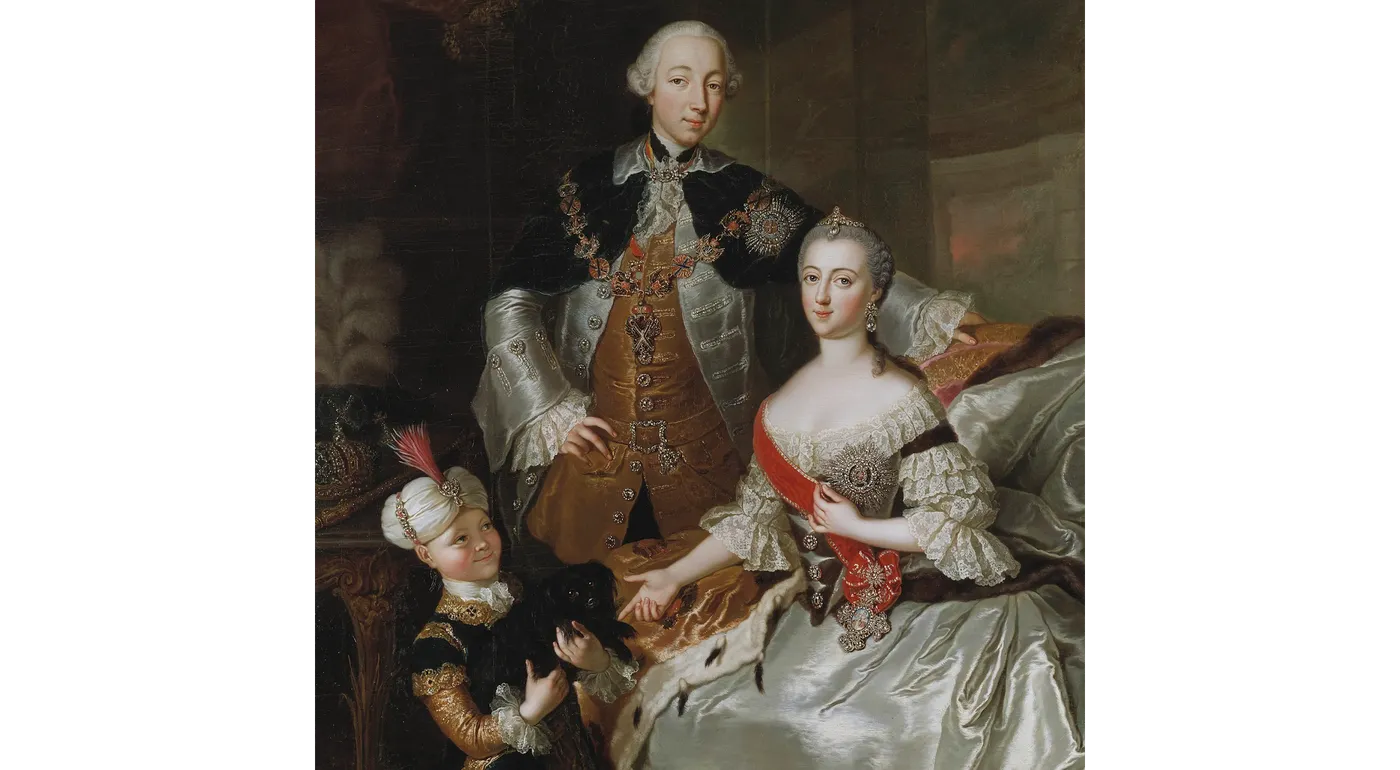
Joseph II of Austria
- Joseph II of Austria was another prominent example of an enlightened absolutist ruler who sought to implement reforms in his state.
- The son of Maria Theresa, he co-ruled with her from 1765 and ruled alone from 1780 to 1790. He pushed reform faster and further than any other enlightened absolutist.
Enlightened Reforms
- Edicts of Toleration:
- Joseph II issued the Patent of Toleration (1781), which allowed Lutherans, Calvinists, and Orthodox Christians to worship privately, own property, and hold government jobs, and separate edicts for Jews in the early 1780s that opened schools, universities, and many trades to them. This was toleration, not full religious freedom: Catholicism stayed the state religion.
- Freedom of the Press:
- He increased the freedom of the press, allowing for more open dissemination of information and ideas.
- Restrictions on the Catholic Church:
- Joseph II placed strictures on the power of the Catholic Church, reducing its influence over state matters.
- He closed hundreds of monasteries whose monks and nuns only prayed and did not teach or care for the sick, and used their wealth to pay for new parishes.
- Ending Serfdom:
- His Serfdom Patent (1781) ended personal serfdom in his lands: peasants could now marry, move, and learn a trade without their lord's permission, though they still owed labor dues. In 1789 he tried to replace those dues with cash payments, but this was canceled after his death.
Challenges and Domestic Turmoil
- Joseph's rapid implementation of these reforms, without consulting the nobility or clergy, led to significant domestic turmoil.
- The nobility and clergy were resistant to these changes, which contributed to unrest during his reign.
- Revolts and Reversal:
- His push to centralize, including making German the official language of government (1784), angered Hungarians, and the Austrian Netherlands (today's Belgium) rose up in revolt in 1789.
- When Joseph died in 1790, his brother Leopold II canceled many of his reforms to calm the nobles and restore order, although the Patent of Toleration and the end of personal serfdom survived.
Jewish Enlightenment and Haskalah
- Jewish Freedom:
- Joseph II went further than any other ruler of his time in easing restrictions on Jews, though he also wanted them to blend in, for example by requiring German instead of Hebrew or Yiddish in business records.
- His reforms included allowing Jews to serve in the military, enter higher education, and abolishing the distinguishing symbols that Jews were required to wear.
- Despite his progressive stance, other rulers like Frederick the Great and Catherine the Great did not ease anti-Jewish policies. After taking Polish lands, Catherine created the Pale of Settlement (1791), a region along Russia's western border, mostly former Polish territory, where Jews were required to live.
- Haskalah: The Jewish Enlightenment, led by the Berlin philosopher Moses Mendelssohn. It urged Jews to learn German and secular subjects like science and philosophy while keeping their faith, and it argued for religious toleration. Mendelssohn translated the Torah into German (published 1780 to 1783).
Religious Toleration by 1800
- Christian Minorities:
- By 1800, most governments in western and central Europe had stopped forcing one faith on everyone and tolerated Christian minorities. Enlightenment arguments for toleration (see 4.3) and the cost of persecution (France lost skilled Huguenot workers who fled after 1685) pushed rulers this way.
- Britain's Toleration Act (1689) let Protestant dissenters worship in their own chapels, Joseph II's Patent of Toleration (1781) did the same for Protestants and Orthodox Christians in Austria, and France's Edict of Versailles (1787) gave Protestants legal status, so their marriages and births could be officially recorded.
- Toleration had limits: most states kept an official church, and Catholics in Britain could not sit in Parliament until 1829.
- Jews:
- In some states, Jews gained civil equality, the same legal rights as other citizens. Revolutionary France granted Jews full citizenship in 1791, the Dutch (then the Batavian Republic) followed in 1796, and Napoleon's armies spread similar laws to lands they conquered.
- Elsewhere, progress was partial: Prussia gave Jews citizenship with some limits in 1812, and Russia kept Jews in the Pale of Settlement.