5.3 - Britain's Ascendency
Britain's Ascendancy (1648-1815)
- During this period, Great Britain (formed when England and Scotland united in 1707) rose to become the most powerful state in Europe. Several key events and conflicts contributed to this rise.
- The Second Hundred Years' War: From 1689 to 1815, Britain and France fought a long series of wars: the Nine Years' War, the War of the Spanish Succession, the War of the Austrian Succession, the Seven Years' War, the American Revolutionary War, and the wars against revolutionary France and Napoleon. Historians sometimes call this the "Second Hundred Years' War." These were world wars, fought in Europe and also in North America, the Caribbean, India, and at sea.
The Acts of Union (1707)
- Acts of Union: Passed by both the English and Scottish parliaments, these acts joined England and Scotland, which had shared a king since 1603, into one Kingdom of Great Britain with a single Parliament in London. (Ireland was added in 1801, creating the United Kingdom of Great Britain and Ireland.)
- Why It Mattered: The union created one large free-trade area and gave Scots access to England's colonial trade. Together with the Bank of England (1694), which let the government borrow money cheaply, it gave Britain the money and soldiers to fight long wars.
The Treaty of Utrecht (1713)
- The Treaty of Utrecht ended the War of Spanish Succession, weakening France, the Dutch Republic, and Spain economically.
- This shift allowed Britain to emerge as Europe's leading sea and trading power, while France, Britain's chief rival, was left deep in debt.
The Seven Years' War (1756-1763)
- Seven Years' War: A global conflict that further solidified Britain’s dominance. It was fought in multiple theaters, including Europe, India, and North America.
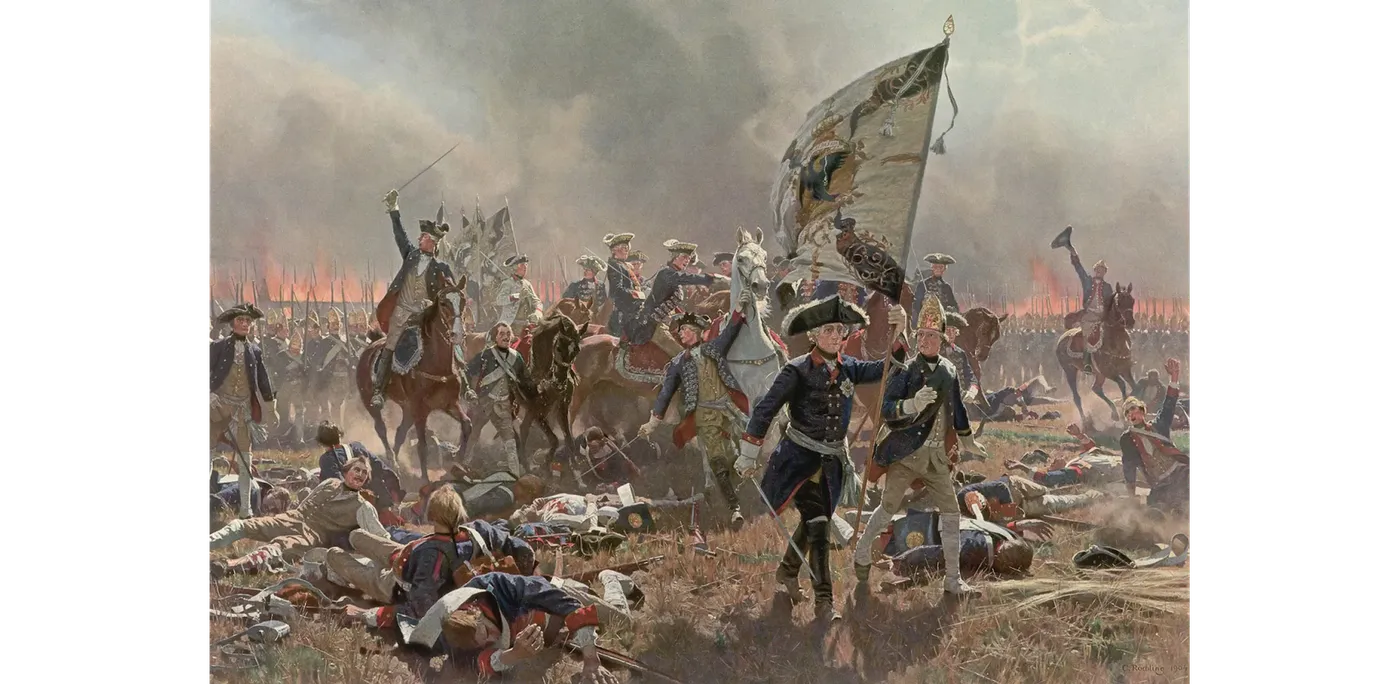
- European Theater: Centered in Prussia, where Frederick II (Frederick the Great) fought off Austria, Russia, and France. Britain paid Prussia large subsidies and sent some troops, which kept France busy fighting in Germany while Britain went after French colonies.
- South Asian Theater (India): Britain and France competed for control over India. The British ultimately prevailed (see the Battle of Plassey in 5.1/5.2). The Treaty of Paris (1763) left France only a few small trading posts, like Pondicherry, so Britain became the dominant European power in India.
- North American Theater (French and Indian War):
- The British, led by William Pitt the Elder (the government minister who directed the war from 1757), concentrated their resources to defeat the French in North America. They captured Quebec in 1759.
- The Treaty of Paris (1763) ended the war, with Britain gaining significant territory from France, including large parts of Canada and all land east of the Mississippi River. Spain also ceded Florida to Britain.
- This victory left Britain as the world's greatest superpower.
The American Revolution (1776-1783)
- Despite Britain’s global power, its North American colonies sought independence, leading to the American Revolution.
- The colonies would likely not have succeeded without the intervention of France, which joined the war to weaken Britain rather than out of ideological support for the American cause.
- France joined the war in 1778, after the American victory at Saratoga (1777), and Spain (1779) and the Dutch Republic (1780) also fought Britain. The war added greatly to France's debt, one of the main causes of the French Revolution (see 5.4).
- Even with the loss of the American colonies, Britain remained the world’s most powerful nation.
Why Britain Beat France
- Money and Credit: Parliament controlled taxes and stood behind the government's debts, so lenders trusted Britain and lent it money at low interest through the Bank of England. France had no parliament to approve taxes, its nobles and clergy paid little, and the crown had to borrow at high rates. Britain could keep paying for war after war, while France sank deeper into debt.
- The Navy: As an island, Britain needed a smaller army than its rivals and spent heavily on the Royal Navy, which protected its trade and cut France off from its colonies. Britain paid allies like Prussia and Austria to fight France in Europe while its navy and colonial forces took French colonies.
- Economic Effects: Britain gained colonies, markets, and control of key trade routes, which brought wealth and raw materials that helped make it the first industrial nation (see Unit 6). France lost most of its North American empire, and its war debts led to the financial crisis that started the French Revolution (see 5.4).
- Political Effects: Britain's war debts pushed Parliament to tax the American colonies after 1763, which led to the American Revolution. France got revenge by helping the Americans, but at a cost it could not afford.
- The Final Round (1793-1815): Britain fought revolutionary and Napoleonic France for more than 20 years, with only a short break (1802-1803), and helped pay for the coalition armies that fought France on land. Admiral Horatio Nelson destroyed the French and Spanish fleets at Trafalgar (1805), ending Napoleon's hopes of invading Britain, and the Duke of Wellington helped defeat Napoleon at Waterloo (1815). Britain kept colonies it had taken during the wars, such as the Cape Colony in southern Africa, Ceylon (Sri Lanka), and Malta, and ended the period as Europe's greatest power.