5.5 - The French Revolution's Effects
Reactions to the French Revolution Across Europe and the World
- Conservative Reaction in Europe
- The French Revolution sparked strong reactions across Europe, particularly among conservative thinkers and monarchies.
- While Enlightenment intellectuals initially supported the calls for liberty and the end of aristocratic privilege, the radical turn of the revolution, especially during the Reign of Terror, caused a shift in opinion.
- The English poet William Wordsworth, for example, lived in France in 1791 and 1792 and cheered the revolution, but the Terror and France's wars of conquest later turned him against it.
- Joseph de Maistre, a writer from Savoy (a French-speaking land ruled by the king of Sardinia) and a staunch critic of the Enlightenment, argued that the chaos and violence of the revolution proved the dangers of Enlightenment ideas. He fled when French armies invaded Savoy in 1792 and, writing from exile, defended the divine right of kings and the authority of the pope.
- Edmund Burke's Conservative Critique
- The most well-known conservative reaction outside of France came from Edmund Burke, an English writer.
- Burke’s Reflections on the Revolution in France (1790) warned the British people against the excesses of the French Revolution, defending hereditary privileges and the unrepresentative British Parliament.
- Burke argued that society is a partnership between the dead, the living, and those not yet born, so its traditions hold wisdom built up over generations. Change should come slowly through careful reform, not by tearing everything down for abstract ideas like the "rights of man." Writing in 1790, before the Terror, he predicted the revolution would end in bloodshed and military rule.
- He argued that if the British followed the French example, it would lead to chaos. When the Reign of Terror began, Burke’s predictions seemed to be validated, and his warnings helped prevent a similar radical overthrow in Britain.
- Supporters Inspired by the Revolution
- Thomas Paine, the author of Common Sense, answered Burke with Rights of Man (1791). He defended the revolution and argued that people may overthrow a government that does not protect their natural rights.
- Mary Wollstonecraft also answered Burke in A Vindication of the Rights of Men (1790). In A Vindication of the Rights of Woman (1792), she argued that the revolution's ideas of equality and reason should apply to women too, starting with equal education (see 4.3).
- In Britain, artisans and workers formed reform clubs like the London Corresponding Society (1792) to demand the vote for all men. In Ireland, the United Irishmen rebelled against British rule in 1798 with help from French troops, and British forces crushed the revolt.
- Effect: Fear of revolution made many governments more repressive. Britain's government under William Pitt the Younger suspended habeas corpus (the right not to be jailed without trial) in 1794 and banned large political meetings, and the Habsburg government arrested suspected "Jacobins" and tightened censorship.
- Violent Reaction in the Caribbean
- The French Revolution also had a significant impact on the Caribbean, particularly in the French colony of Saint-Domingue (now Haiti).
- Saint-Domingue was France’s most profitable colony, with a complex social structure that included French officials, plantation owners, merchants, free people of color, and enslaved African laborers, who made up 90% of the population.
- The brutal conditions for enslaved workers, combined with the influence of revolutionary ideas from France, set the stage for a massive uprising.
- The Haitian Revolution (1791-1804)
- Inspired by the principles of liberty and equality, but frustrated by the French National Assembly's refusal to extend these rights to the colonies, enslaved Africans in Saint-Domingue began organizing a rebellion.
- In August 1791, the rebellion erupted, leading to the destruction of hundreds of coffee and sugar plantations, severely disrupting the French economy.
- The revolution was complicated by the involvement of Spain and Britain, who wanted to weaken France and grab the colony. Spain, which ruled the eastern part of the island, armed rebel leaders, while Britain invaded in 1793 at the invitation of French planters who wanted to keep slavery.
- In 1793 French officials in the colony freed the enslaved people to win their support against Spain and Britain, and in February 1794 the National Convention abolished slavery in all French colonies. The enslaved people of Saint-Domingue had already largely won their freedom through their own efforts.
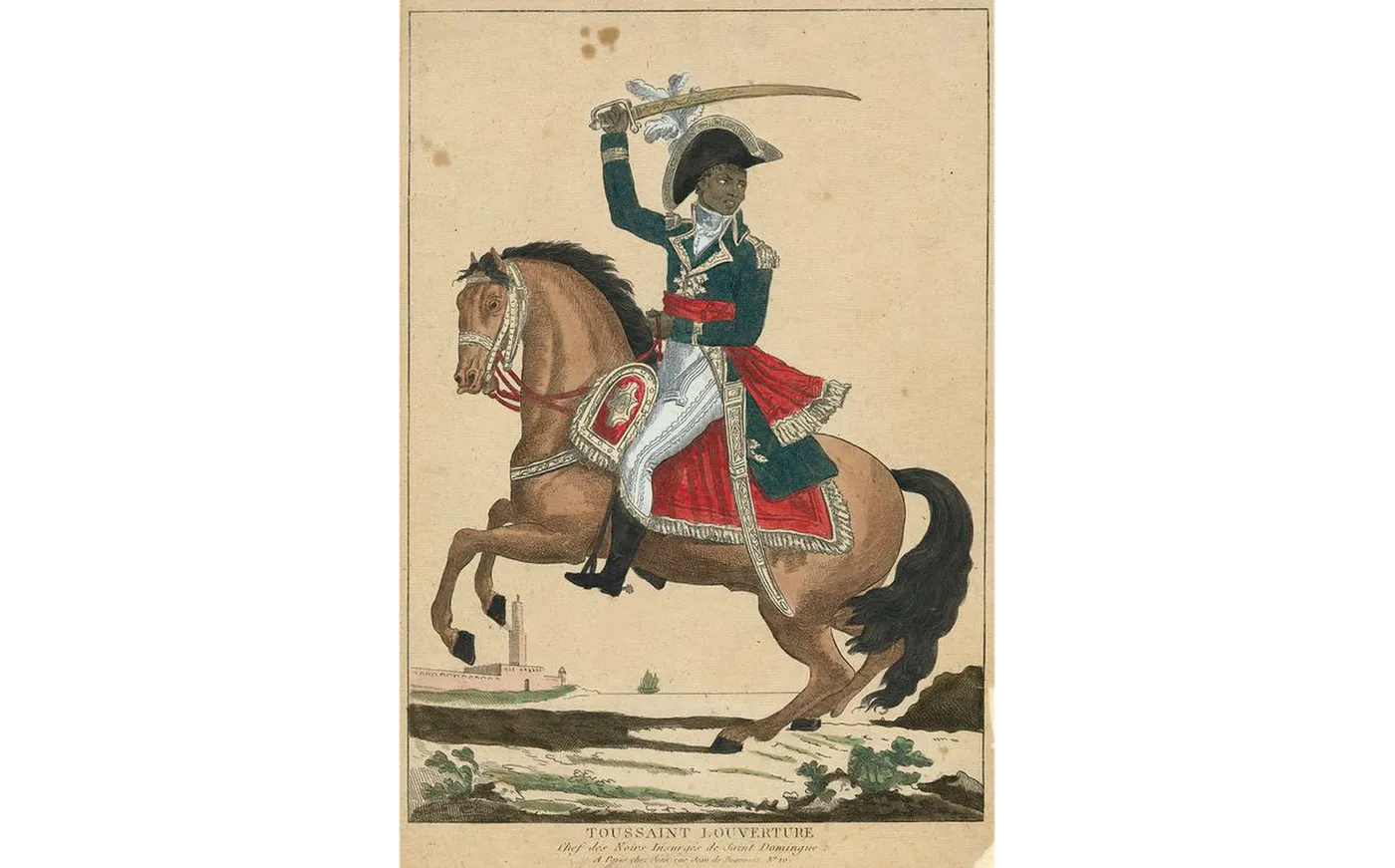
- The Rise of Toussaint Louverture
- Toussaint Louverture, a former slave who had been freed, emerged as a key leader in the revolution. At first he fought for the Spanish, but in 1794, after France abolished slavery, he switched sides and led an army against both the Spanish and the British. Spain made peace with France in 1795, and the British withdrew in 1798.
- In 1797 French officials named Louverture commander of the colony's army. In 1801 he took over Santo Domingo, the eastern part of the island that Spain had signed over to France in 1795, and issued a constitution that made him governor for life and banned slavery forever, while still calling the colony French. These moves toward self-rule increased tensions with Napoleon Bonaparte.
- Napoleon's Response and Haitian Independence
- Napoleon sought to reassert control over Saint-Domingue and re-establish slavery. In 1802 he sent a large army under his brother-in-law, General Charles Leclerc, and that year he restored slavery in Guadeloupe, another French colony. Louverture was tricked into a meeting, arrested, and shipped to France, where he died in prison in 1803.
- Louverture’s lieutenant, Jean-Jacques Dessalines, rallied the resistance and defeated the French forces, leading to the declaration of independence in 1804.
- Yellow fever killed thousands of French soldiers, including Leclerc himself, and Dessalines's army beat the French at the Battle of Vertières (November 1803). Haiti declared independence on January 1, 1804.
- The new nation was named Haiti, after Ayiti, the name the island's Taíno people used before Europeans arrived. It was the first nation founded by formerly enslaved people who won their freedom through revolt, and the second independent nation in the Americas after the United States.
- Effects: Haiti abolished slavery for good. It inspired enslaved people across the Americas and terrified slaveholders, who tightened their control. Losing Saint-Domingue, France's richest colony, also helped convince Napoleon to sell the Louisiana Territory to the United States in 1803.