5.6 - Economic Growth
Measuring Growth
Economic growth means a rising standard of living: more prosperity, longer lives, higher literacy, more freedom, better health. Economists mainly measure it using the growth rate of real GDP per capita (real GDP divided by population).
To calculate it, divide real GDP by the population, then find the percent change over time:
Example: a country has real GDP of $2 trillion and 40 million people, so real GDP per capita is $50,000. The next year, real GDP is $2.1 trillion and the population is 40.4 million, so real GDP per capita is about $51,980. The growth rate is . Real GDP grew 5%, but the population grew 1%, so output per person grew only about 4%. That’s why growth is measured per capita: if real GDP grows more slowly than the population, living standards fall.
The Rule of 70 estimates how many years it takes for real GDP per capita to double: divide 70 (or 72) by the annual growth rate. At 5% annual growth, for example, it takes about 14 years to double (70/5).
What Causes Growth: Productivity
Growth really comes down to one thing: productivity, or output per worker. Productivity depends on three things: the level of technology, and how much physical capital and human capital each worker has to work with. Improve any of them and the same workers can produce more.
- Physical capital: man-made goods used to produce other goods, tools, machines, technology, buildings.
- Human capital: the knowledge, education, skills, and experience workers bring to the table.
- Technology: better methods, inventions, and know-how that let the same workers and capital produce more, like faster computers or better farming techniques.
Productivity is measured as output per employed worker (real GDP divided by the number of employed workers), which is average labor productivity. For example, if an economy produces $24 trillion of real GDP with 160 million employed workers, productivity is $150,000 per worker.
Investment and the Growth Process
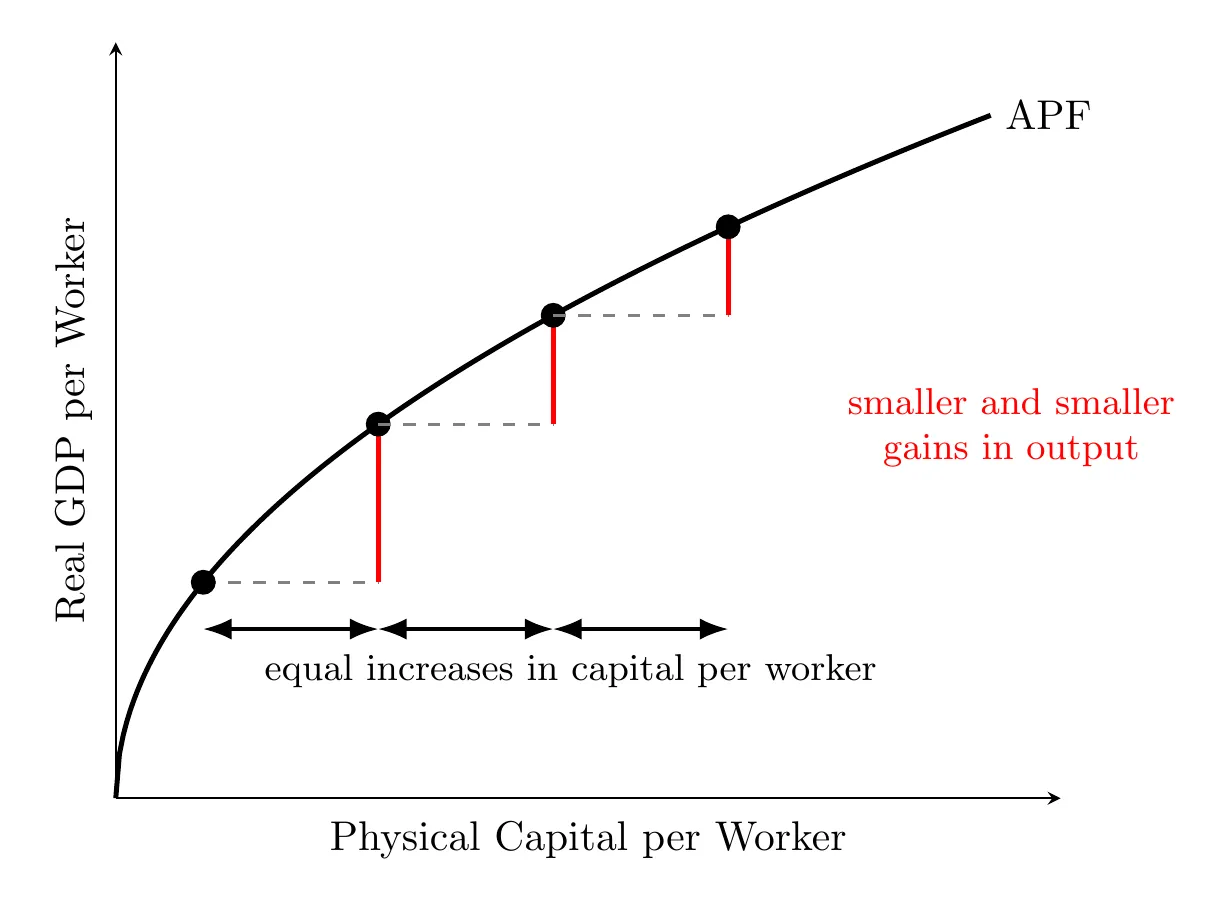
The Aggregate Production Function (APF) shows a positive relationship between output and capital per worker, but with diminishing marginal returns: the jump from hand tools to a tractor matters way more than each smaller upgrade after that.
At its simplest, the aggregate production function links total employment and total output: to produce more, firms have to hire more workers, holding capital and technology constant. So aggregate employment and aggregate output are directly related.
The APF also shows that output per person rises with both physical capital and human capital per person. In the graph below (output per worker against physical capital per worker), adding physical capital is a movement along the curve, while better technology or more human capital shifts the whole curve up, so the same capital per worker produces more output.
Investment spending, buying new physical capital, is the single biggest way to grow the capital stock. The chain goes like this: more investment → more capital → more capital per worker → higher productivity → economic growth.
Modeling Growth
Growth shows up on two familiar models:
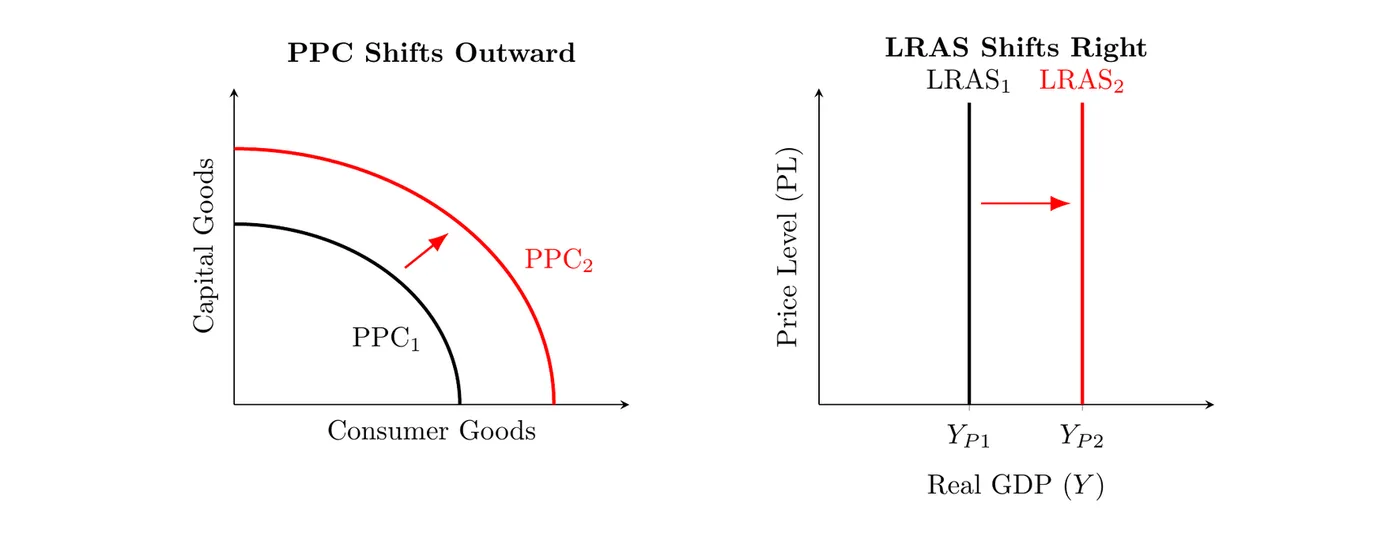
- PPC model: the production possibilities curve shifts outward.
- AD-AS model: the long-run aggregate supply (LRAS) curve shifts right.
These are two pictures of the same thing. Every point on the PPC uses all of the economy’s resources (full employment), and LRAS sits at potential output, the output the economy makes at full employment. So anything that raises the economy’s productive capacity (more capital, more human capital, better technology, more resources) shifts the PPC outward and LRAS to the right at the same time.