

2.4 - Connecting Differentiability and Continuity: Determining When Derivatives Do and Do Not Exist
Introduction: The Zooming Experiment
Consider what looks like a simple straight line on a graph.
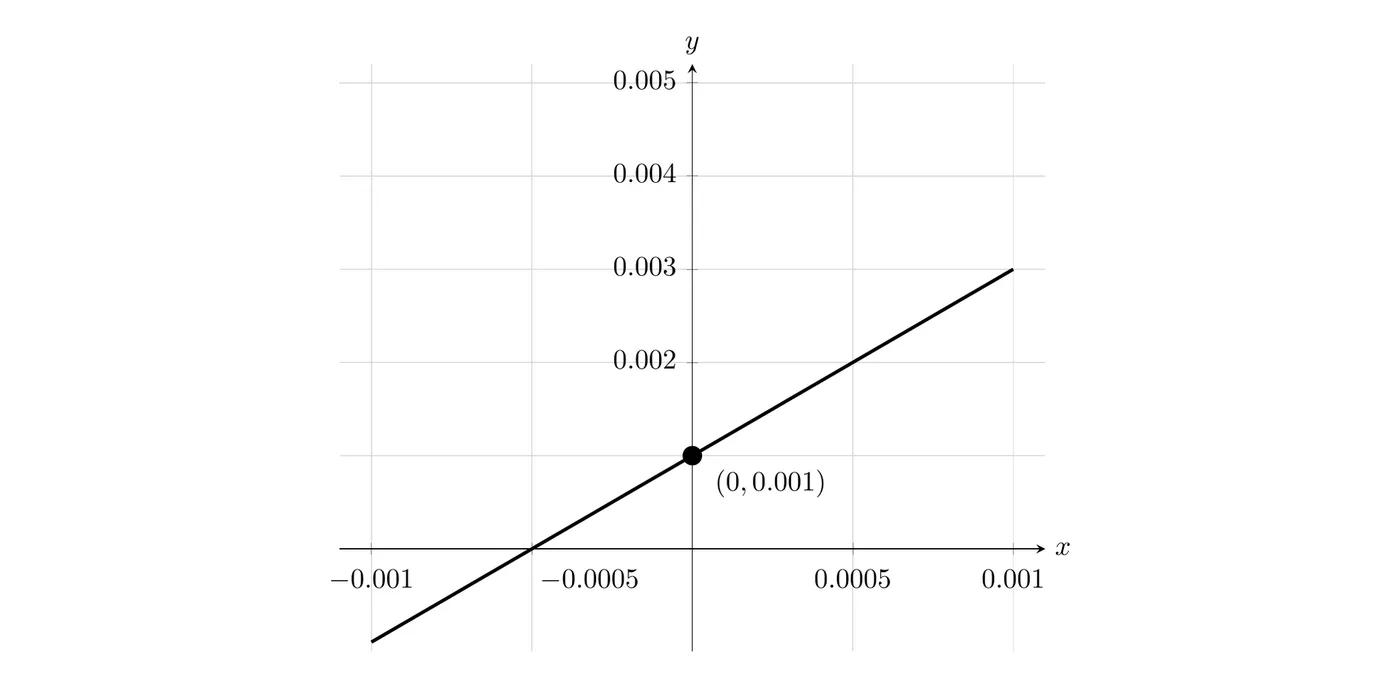
What you might write:
It looks like a straight line with slope 2 and a -intercept at 0.001.
Zoom Out: First View
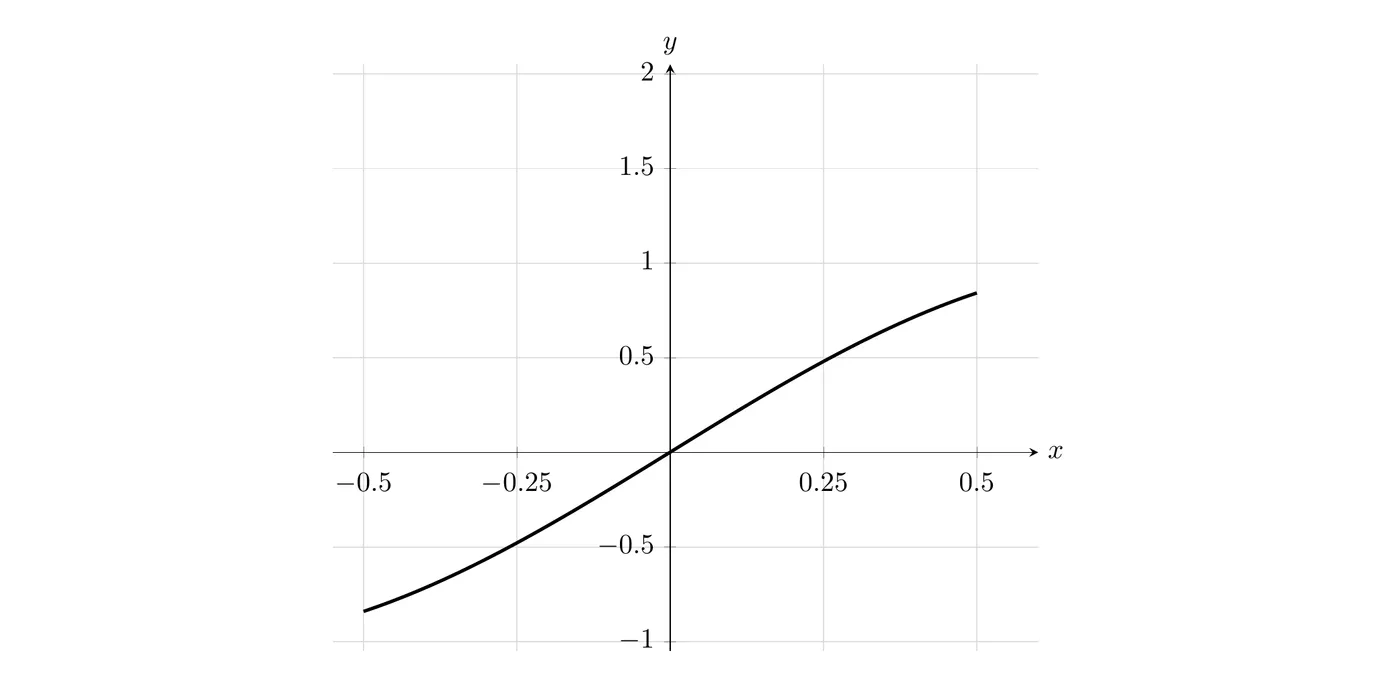
It still looks like a line, though the scale has changed.
Zoom Out: Full View
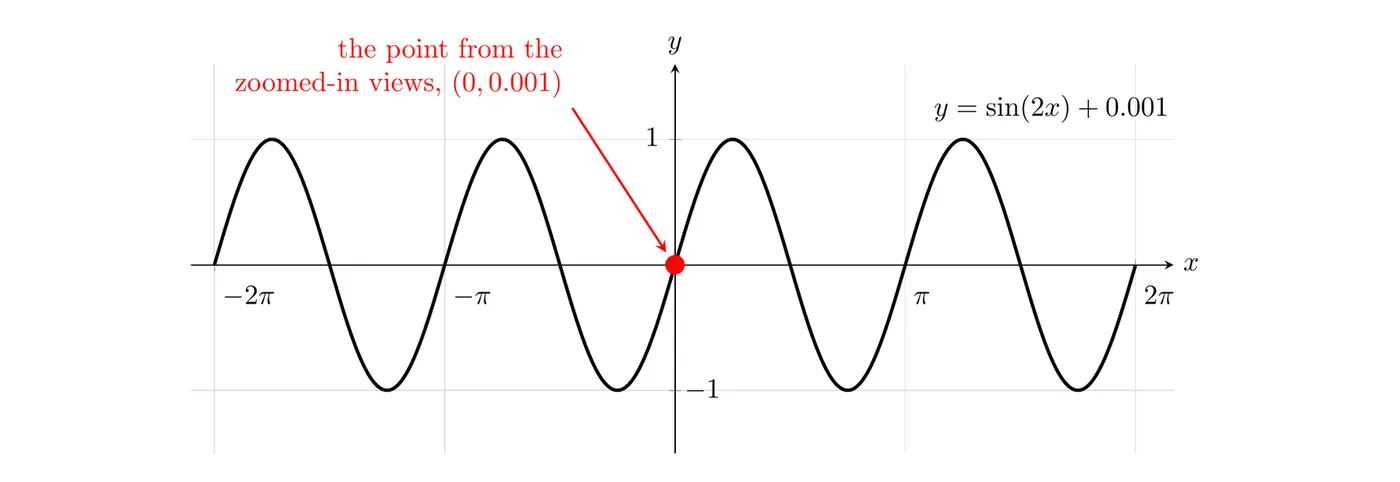
The actual equation:
Key discovery: what looked like a straight line was actually a smooth curve. When you zoom in extremely close to almost any smooth curve, it looks like a straight line.
Local Linearity
If you zoom in close enough to any point on a smooth curve, it will look like a straight line at that point. This property is called local linearity.
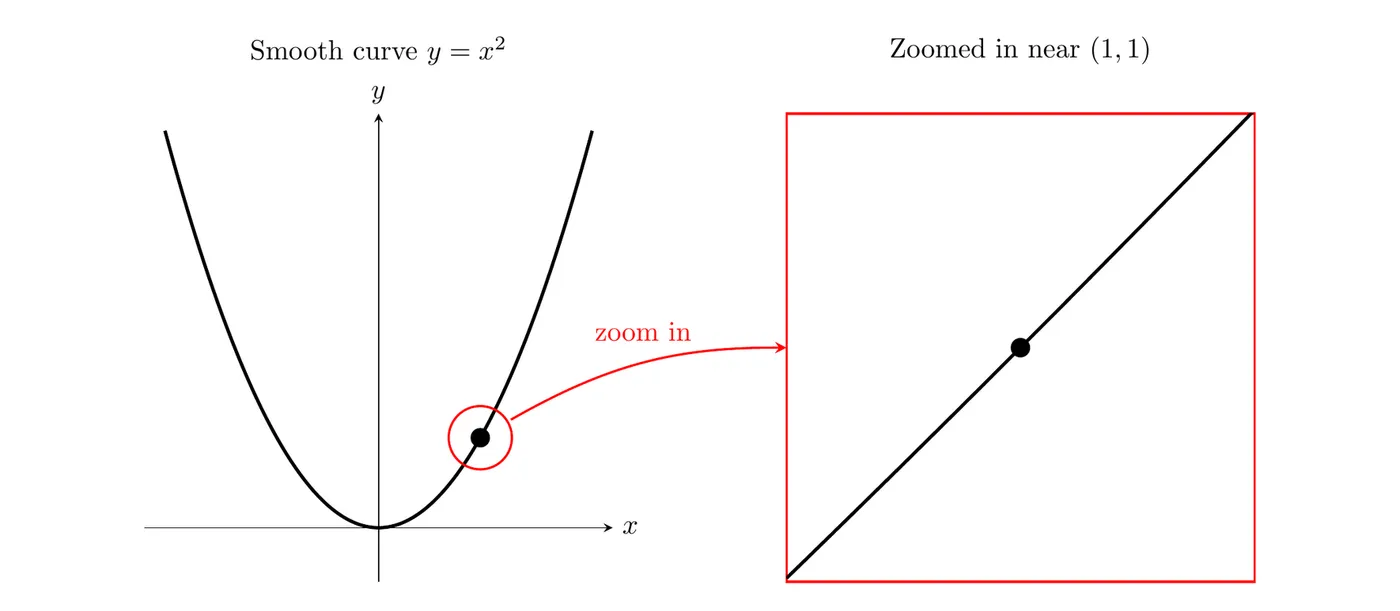
Even at a maximum or minimum, zooming in close enough makes the curve look flat, like a horizontal line.
This concept is fundamental to differentiability.
What Does “Differentiable” Mean?
A function is differentiable at a point if the derivative exists at that point.
Informal definition: a function is differentiable at a point if, when you zoom in really close, the graph looks like a straight line. That’s local linearity.
Requirements for differentiability:
- The function has to be continuous at the point
- The function has to be smooth, with no sharp corners or cusps
- The tangent line has to have a defined slope, meaning it can’t be vertical
Where Derivatives Do NOT Exist
There are three main situations where a function fails to be differentiable.
1. Discontinuities
If there’s a break in the graph, the derivative doesn’t exist at that point.
Type A: Hole (Removable Discontinuity)
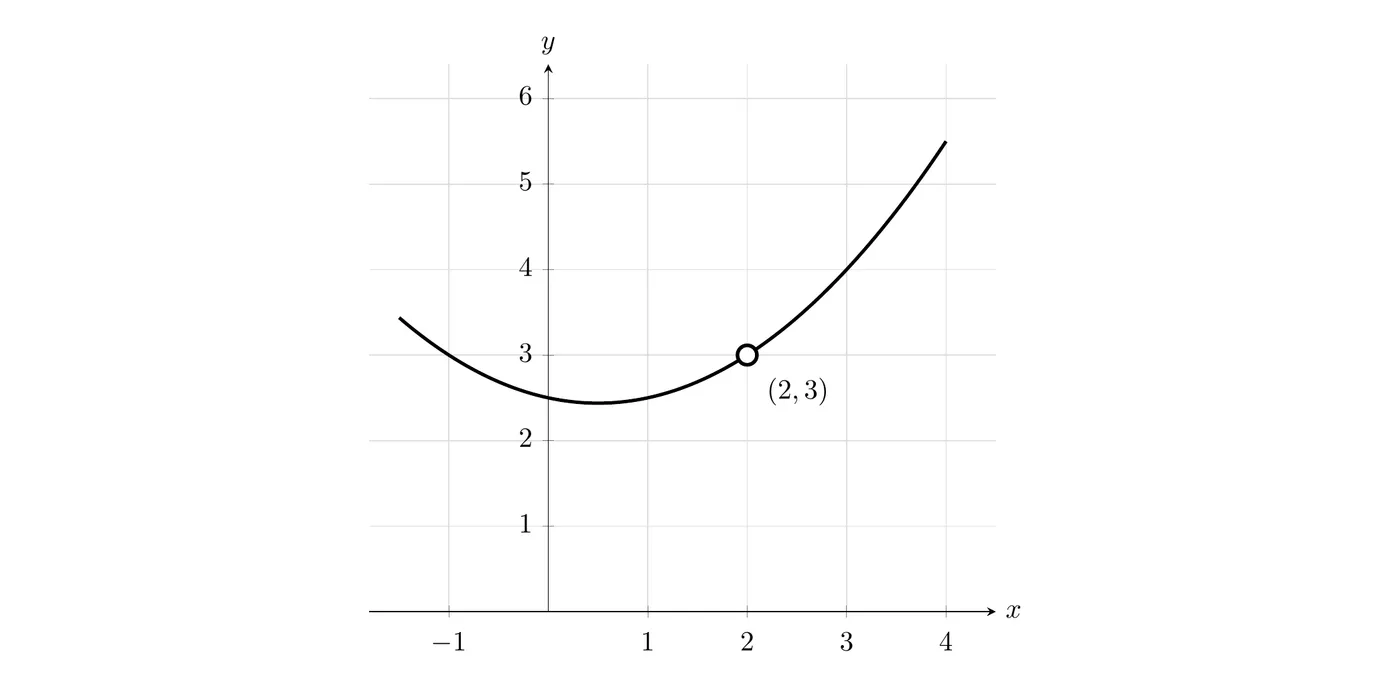
At the hole, there’s no graph, so there’s no derivative. No graph means no derivative.
Type B: Jump Discontinuity
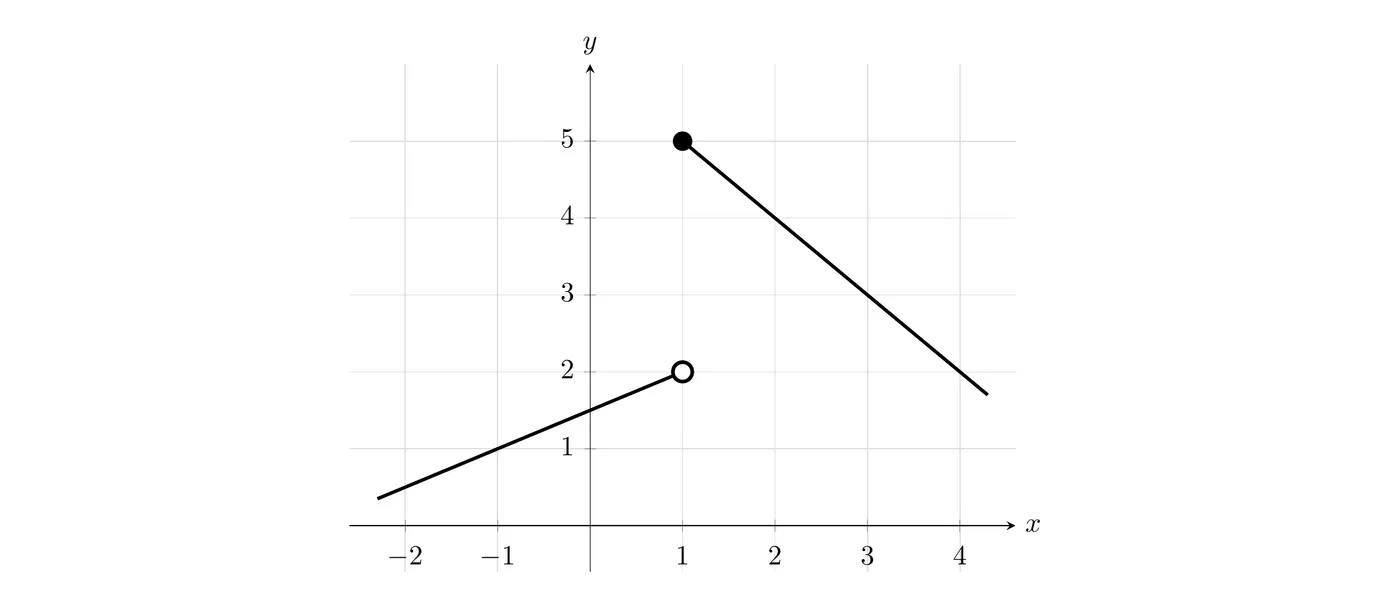
At a jump, the function skips. Zooming in doesn’t help, since it’s still a jump. No continuity means no derivative.
2. Corners and Cusps
A corner or cusp is a sharp point where the function abruptly changes direction.
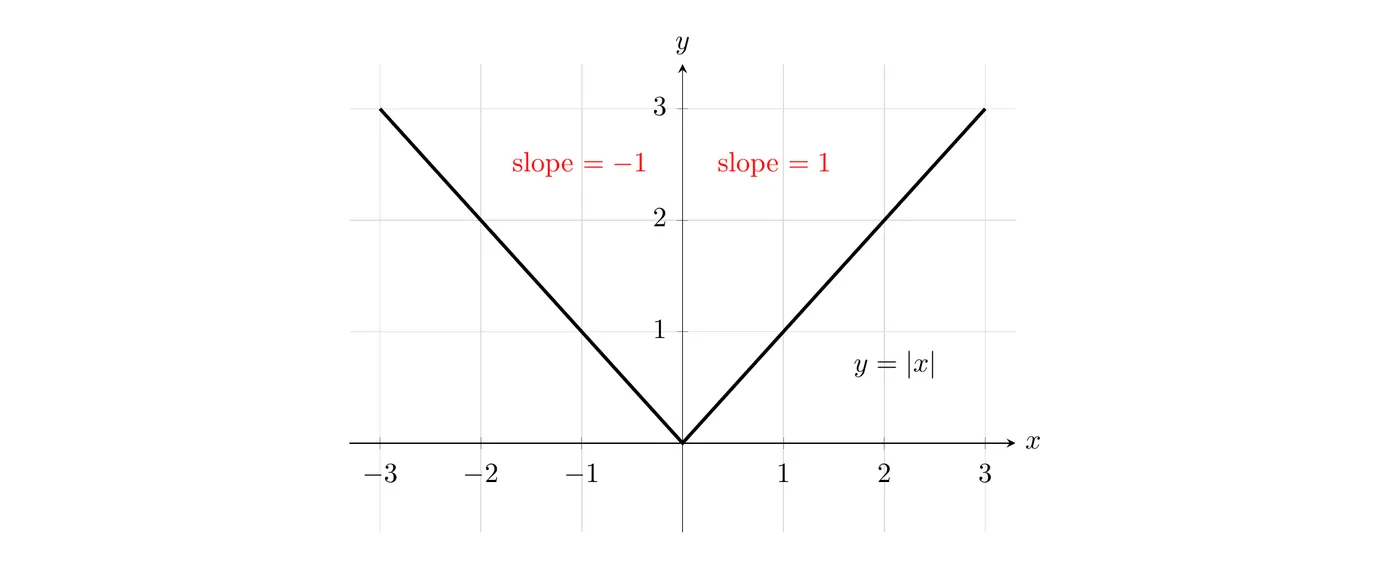
Example: has a corner at .
Why no derivative?
- From the left, the slope is
- From the right, the slope is
- These don’t match, so no unique tangent line exists
Even if you zoom in very close, the corner stays sharp. It never becomes linear.
Showing it with the difference quotient: the derivative at would be
- From the right (): , so and the limit is .
- From the left (): , so and the limit is .
The one-sided limits don’t match, so the limit doesn’t exist and doesn’t exist. That’s the algebra behind “the slopes from the left and right don’t match.”
Cusp Example:
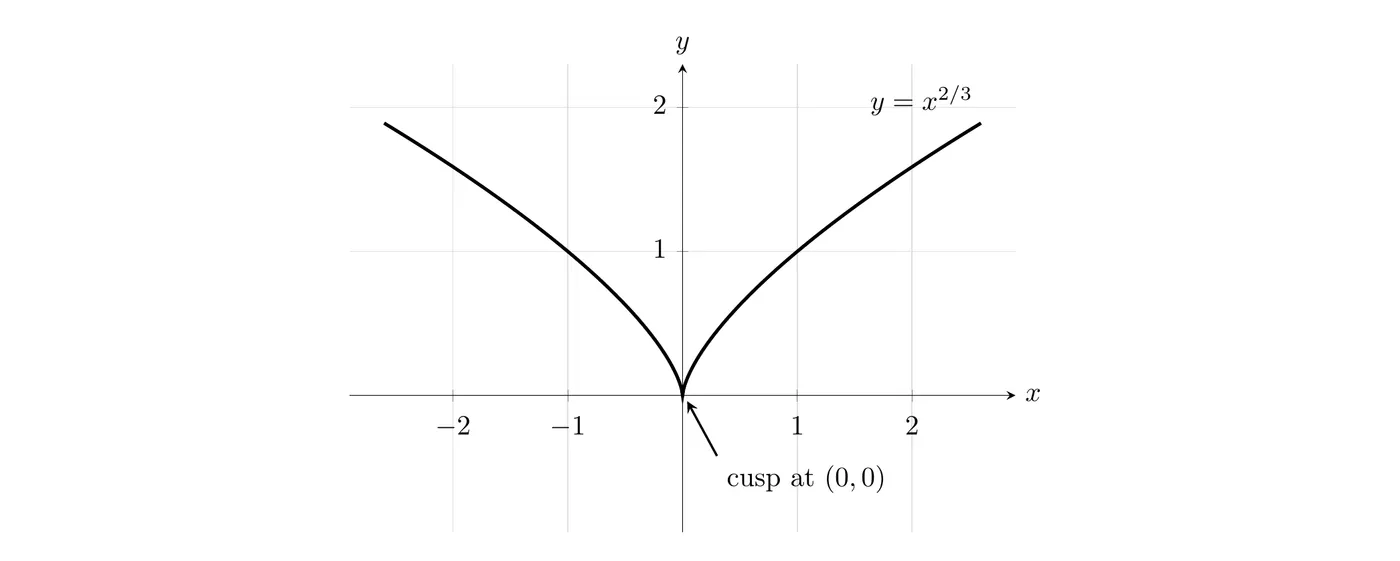
A cusp is an even sharper corner. No matter how close you zoom, it stays pointed.
3. Vertical Tangent Lines
A function has a vertical tangent if the tangent line at a point is vertical, meaning straight up and down.
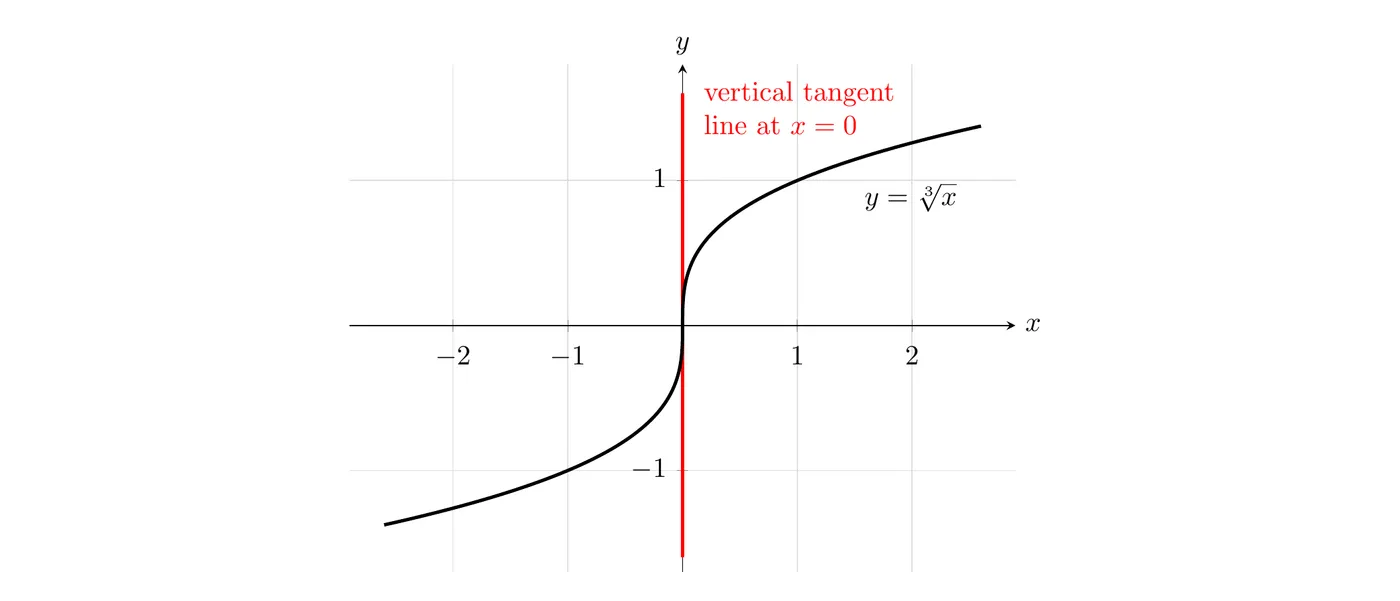
Example: at
Why no derivative?
A vertical line has undefined slope, since rise over run means dividing by zero. Since the derivative represents slope, and vertical lines have no slope, the derivative is undefined at a vertical tangent.
Showing it with the difference quotient: for at
Since is positive on both sides of , the quotient grows without bound. The slopes get steeper and steeper, which is exactly what a vertical tangent looks like. An infinite limit isn’t a number, so doesn’t exist.
Summary of Non-Differentiable Points
Type | Description | Why No Derivative |
Discontinuity | Hole, jump, asymptote | Not continuous there, so it can’t be differentiable |
Corner/Cusp | Sharp point | Left and right slopes don’t match, and it never becomes linear when zoomed |
Vertical Tangent | Tangent line is vertical | Undefined slope |
Identifying Non-Differentiable Points
Example 1: Multiple Issues
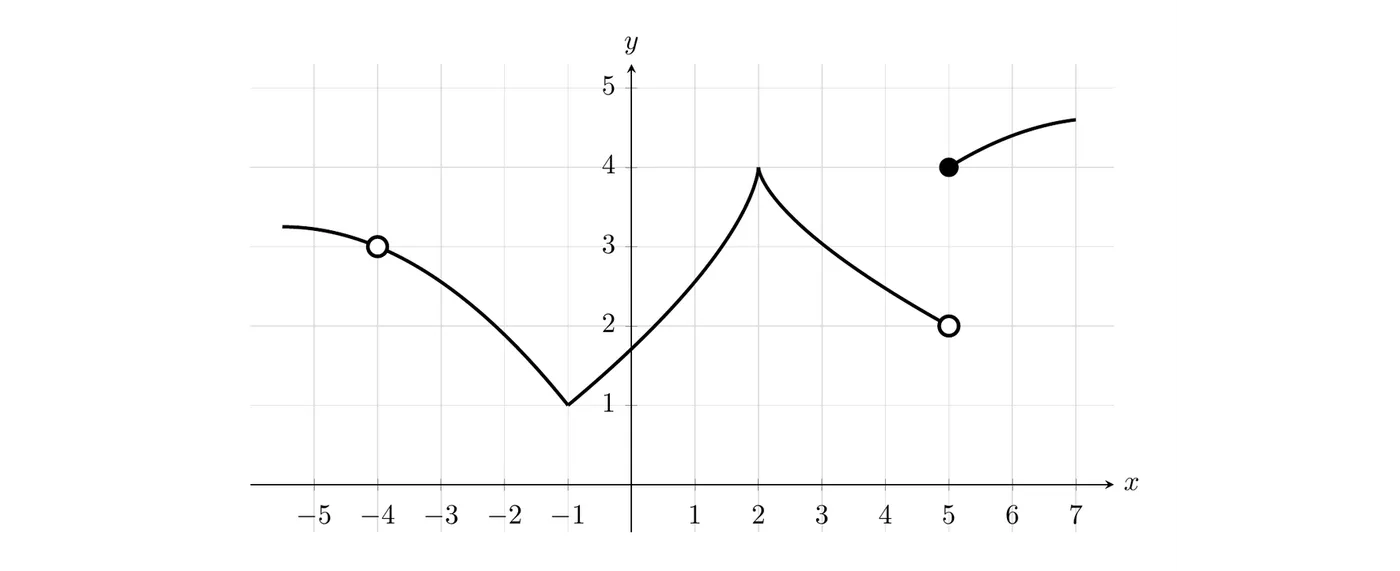
Where is the function NOT continuous?
- At : not continuous, because of the hole
- At : not continuous, because of the jump discontinuity
Where is the function continuous but NOT differentiable?
- At : not differentiable, because of the corner
- At : not differentiable, because of the cusp
Important distinction: these points ARE continuous, since the graph connects, but they are NOT differentiable, since there’s no unique tangent line.
Continuity vs. Differentiability
Two Important Statements
Statement 1: If a function is differentiable at a point, then it is continuous at that point.
TRUE ✓
Reason: differentiability requires local linearity, which means the graph has to be smooth and connected, which is continuity.
A domain consequence: if a point isn’t in the domain of , it can’t be in the domain of either. There’s no point on the graph, so there’s nothing to draw a tangent line at.
Example: simplifies to for every , so everywhere else. But is undefined (there’s a hole), so does not exist, even though the slope “1” seems to work for every . Always check the domain of the original function before you trust a derivative.
Statement 2: If a function is continuous at a point, then it is differentiable at that point.
FALSE ✗
Counterexample: is continuous everywhere but NOT differentiable at , because of the corner.
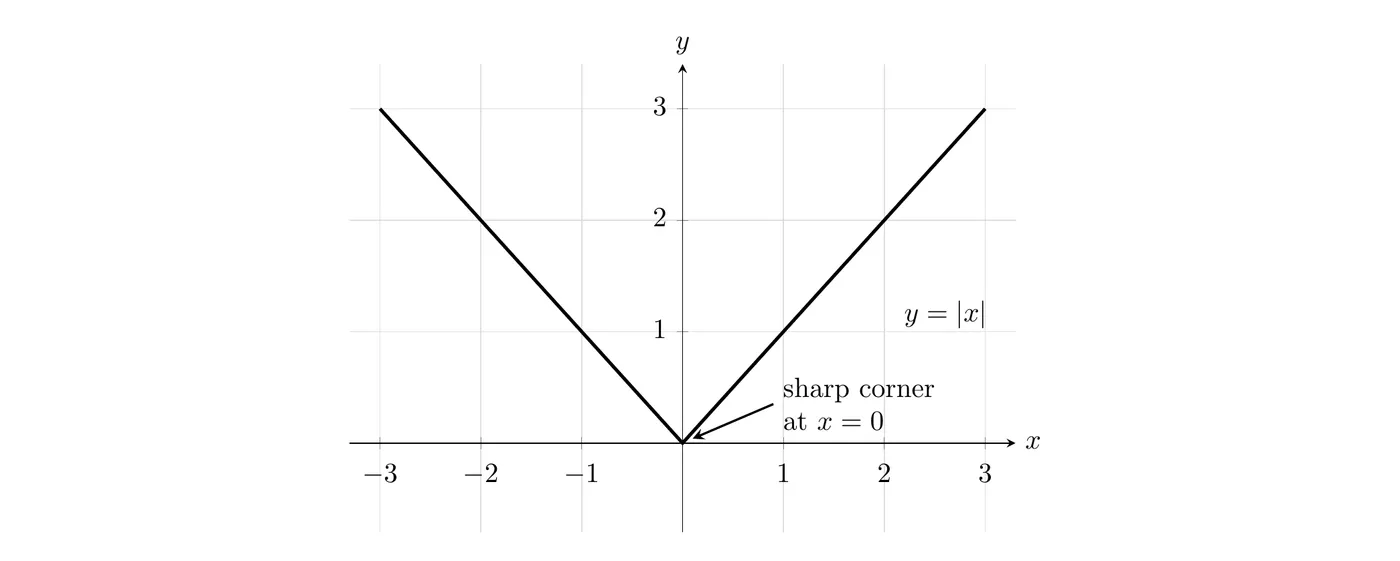
A function can be continuous without being differentiable, but it can’t be differentiable without being continuous.
Justifying Your Answer
On free-response questions, a picture isn’t enough. Name the reason:
- Not continuous, so not differentiable: show a continuity condition fails (the limit doesn’t exist, is undefined, or the two don’t match). Then say “ is not continuous at , so it is not differentiable there.”
- Continuous but not differentiable: show the left and right limits of the difference quotient aren’t equal (a corner), or that the difference quotient goes to or (a vertical tangent or cusp).
- Piecewise functions: check continuity first, then compare the slopes of the two pieces at the boundary. You’ll do this in Topic 2.6, once you have the derivative rules.
Practice Problems
Problem 1
Identify all points where is not differentiable.
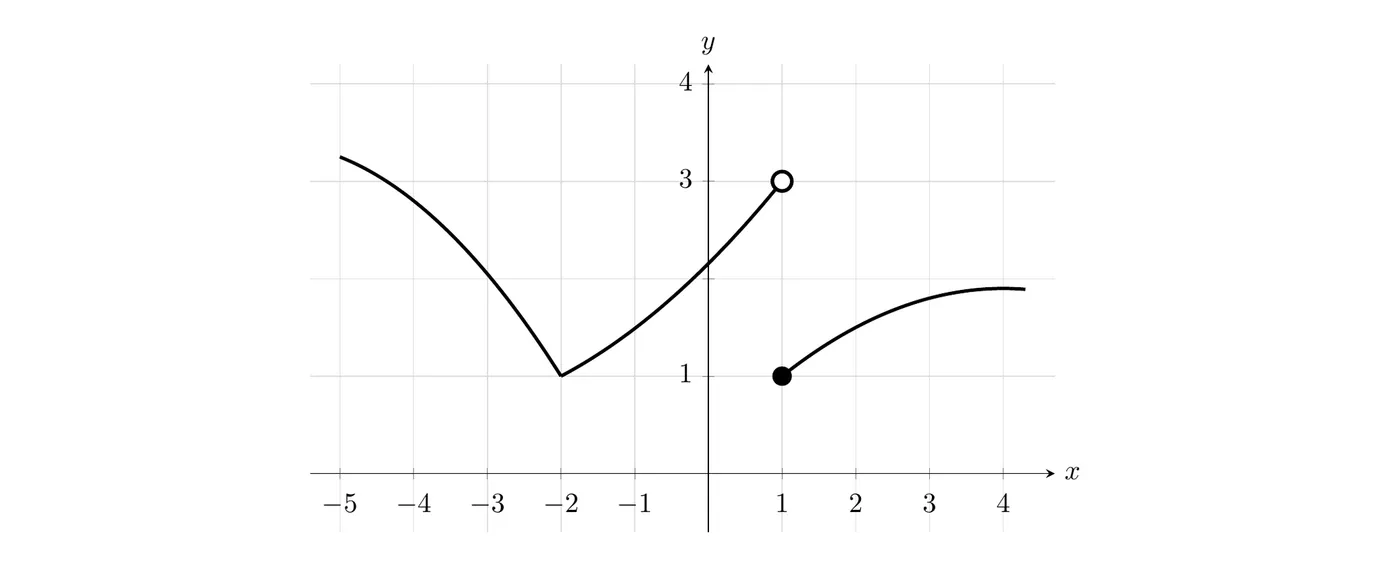
Answer:
Not continuous at , because of the jump discontinuity.
Continuous but not differentiable at , because of the corner.
Problem 2
True or False: every continuous function is differentiable.
Answer: False. Continuous functions can have corners, cusps, or vertical tangents where they’re not differentiable.
Problem 3
Can a function be differentiable at a point but not continuous there?
Answer: No, that’s impossible. Differentiability requires continuity.
Key Takeaways
- Differentiable means the derivative exists at that point
- Local linearity: zooming in on a differentiable point makes it look like a straight line
- Three reasons for non-differentiability:
- Discontinuity (hole, jump, asymptote)
- Corner or cusp (sharp point)
- Vertical tangent (undefined slope)
- Differentiable implies continuous, and it’s a one-way implication
- Continuous does NOT imply differentiable. The counterexample is at
- If a function is not continuous, it’s automatically not differentiable
- If is undefined, then doesn’t exist either
- If a function is continuous, it might or might not be differentiable
- Smooth curves are differentiable, and sharp points are not
- Most “nice” functions like polynomials, exponentials, and trig functions are differentiable everywhere in their domain
- Understanding differentiability helps you identify where derivatives don’t exist
Looking Ahead
In upcoming lessons you’ll learn shortcut rules for finding derivatives quickly. Those rules will also help you determine differentiability algebraically instead of just visually from graphs.
For now, focus on recognizing the three types of non-differentiable points from graphs.