

2.2 - Supply
This covers the Law of Supply and the direct relationship between price and quantity supplied, the difference between supply (the whole curve) and quantity supplied (one point on it), what shifts supply, and how market supply comes from adding up individual producers.
The Law of Supply
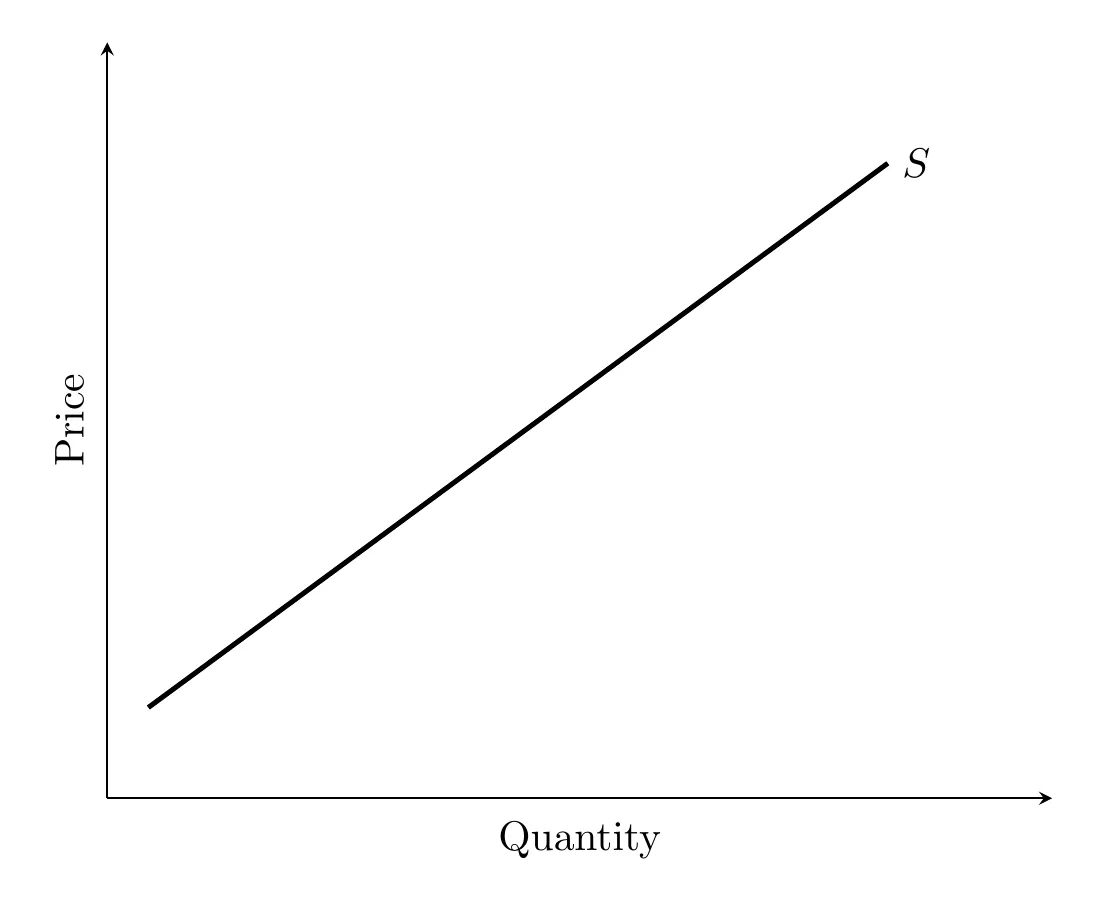
Also assumes ceteris paribus. There’s a direct relationship between price and quantity supplied: when price rises, producers sell more to chase higher profits, and when price falls, they produce less. This creates an upward-sloping supply curve.
Why supply behaves this way
Prices act as profit signals. If the price for a good drops, a producer will likely shift resources toward something more profitable. Picture a furniture maker who builds both chairs and tables: if chair prices fall, they’ll spend less time on chairs and put that wood and labor into tables instead.
The supply curve is also the marginal cost (MC) curve: its height at each quantity shows the extra cost of making that unit. Making more usually gets more expensive per unit (overtime pay, less suitable workers and machines), so producers need a higher price before they’ll supply more. That’s the other reason supply slopes upward.
Individual vs. market supply
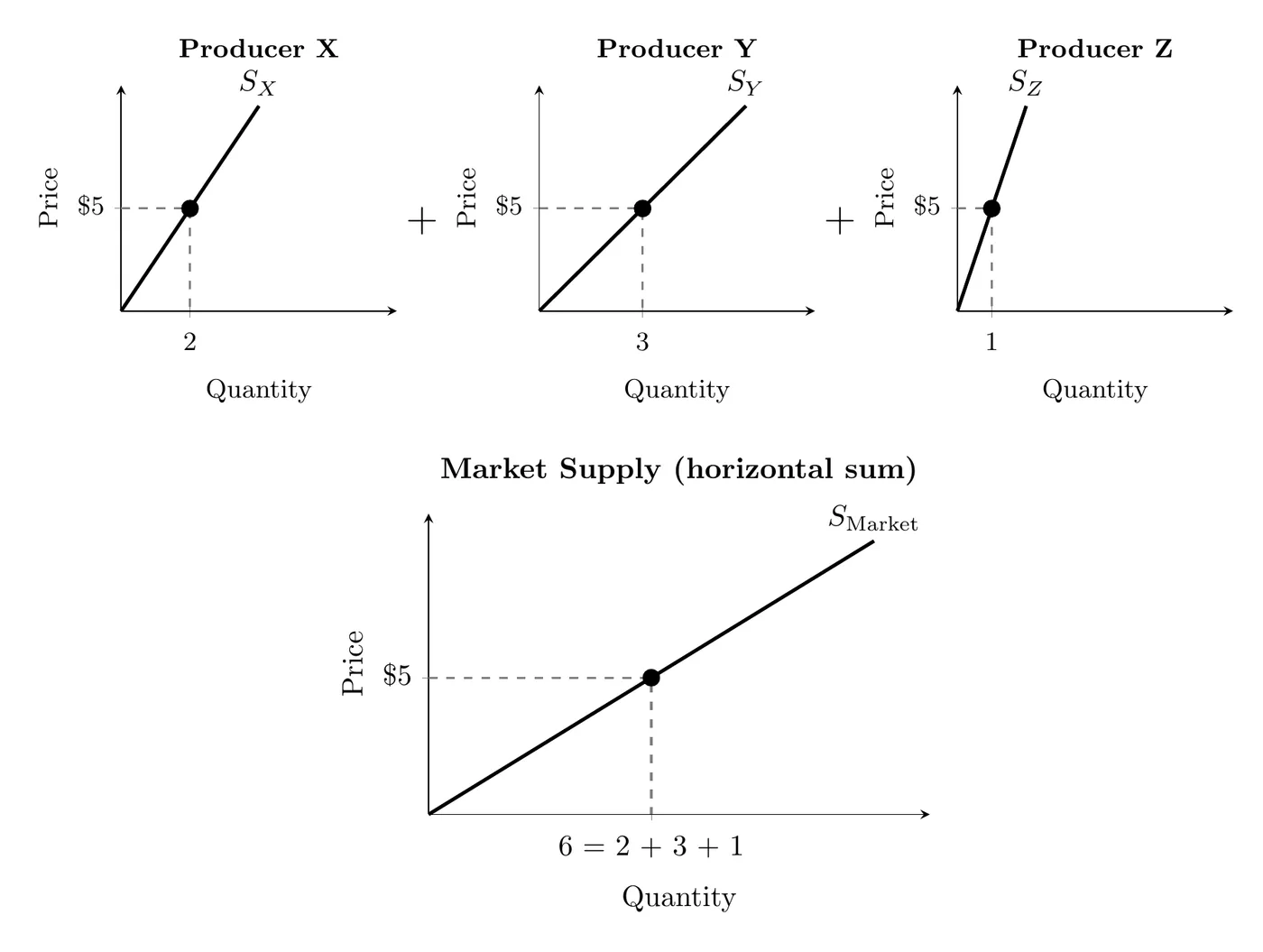
Market supply adds up every producer’s willingness to sell at each price point, often organized into a supply schedule showing total available quantity at every price.
Quantity supplied vs. supply
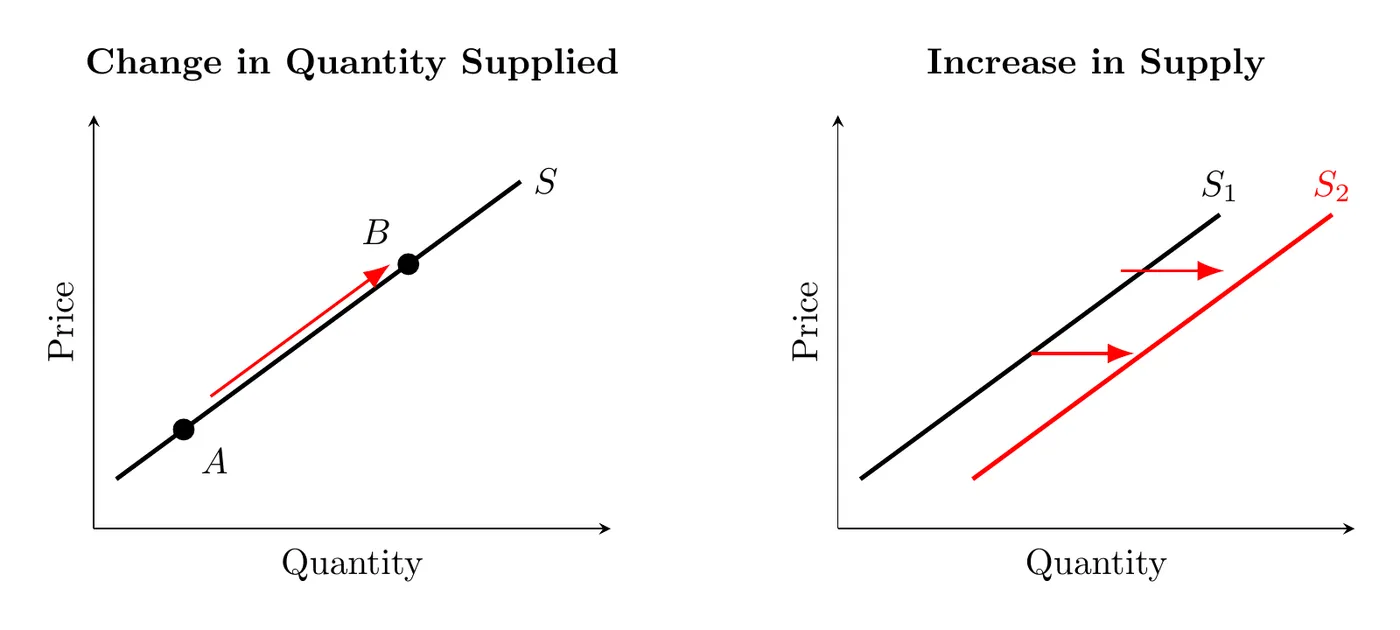
- Quantity supplied: one amount at one price. A price change moves you along the curve, that’s a change in quantity supplied.
- Supply: the whole curve or table. Price changes don’t move supply itself, only quantity supplied. Supply only shifts when quantity produced changes at every price. Right means an increase, left means a decrease.
What shifts supply
- Input prices: inverse relationship. Pricier leather means less shoe supply (shift left).
- Government tools: taxes raise costs and decrease supply; subsidies boost profitability and increase supply; regulations generally raise costs and decrease supply.
- Number of sellers: more competition means more total market supply.
- Technology: better tech increases productivity, letting more get made at the same cost, increasing supply.
- Prices of other goods: producers shift supply toward whichever product just became more profitable.
- Future expectations: if producers expect the price to rise soon, they may hold some goods back to sell later, which decreases supply today (shift left).
Takeaway
Where demand runs on consumer satisfaction, supply runs on the chase for profit. The supply curve slopes upward because higher prices justify using more resources. A price change alone just slides producers along their existing path (quantity supplied), but when the underlying environment changes, new tech, different input costs, government action, the entire supply curve shifts.