

3.10 - HBCUs, Black Greek Letter Organizations, and Black Education
The Founding of HBCUs
Discrimination and segregation in education pushed African Americans to build their own colleges and universities, and the majority of these institutions were established in the years after the Civil War.
The earliest HBCUs were actually private colleges founded largely with the backing of white philanthropists. Cheyney University, originally founded as the Institute for Colored Youth in Pennsylvania in 1837, holds the distinction of being the very first HBCU established. Wilberforce University in Ohio was founded in 1856 as a joint effort of the mostly white Methodist Episcopal Church and the African Methodist Episcopal Church. In 1863 the AME Church, led by Bishop Daniel Payne, bought the school, making it the first university fully owned and operated by African Americans themselves. Howard University, in Washington, D.C., was named after General Oliver O. Howard, who headed the Freedmen's Bureau, tying the university's founding directly to the broader Reconstruction-era effort to support formerly enslaved people.
A later wave of HBCUs came about through federal legislation rather than private philanthropy. The Second Morrill Act of 1890 required states to either prove that race played no role in admissions to their existing public institutions, or to create separate institutions specifically for Black students. As a direct result of this requirement, 18 HBCUs were established as land-grant colleges with federal funding.
During this era, HBCUs generally followed one of two educational models. Some, like Fisk University, emphasized a liberal arts education, while others, like Tuskegee Institute, followed a vocational-industrial model focused on practical trade skills. Whichever model they followed, HBCUs remained the primary source of postsecondary education available to African Americans all the way up until the Black Campus Movement of the 1960s.
Beyond the United States, HBCUs also drew students from other parts of the African diaspora. In the decades following abolition in Cuba and Puerto Rico, some Afro-Cuban and Puerto Rican students were drawn specifically to institutions like Tuskegee Institute, seeking educational opportunities not readily available to them at home.
The Lasting Impact of HBCUs
The founding of HBCUs fundamentally transformed African Americans' access to higher education and professional training, giving many people a genuine path out of poverty and into leadership roles across every sector of society. Their impact is still visible in striking numbers today: HBCUs make up only about 3 percent of colleges and universities in America, yet their graduates account for roughly 40 percent of Black members of Congress and 80 percent of Black judges nationwide.
Beyond individual advancement, HBCUs created spaces for cultural pride, serious Black scholarship, and activism, helping to close persistent racial equity gaps in higher education more broadly.
Black Greek-letter organizations grew directly out of this environment, emerging both at HBCUs and at predominantly white institutions. These organizations gave African American students spaces to support one another around self-improvement, educational excellence, leadership development, and long-term community service, values that extended well beyond graduation.
The first intercollegiate Black Greek-letter fraternity, Alpha Phi Alpha, was founded at Cornell University (a predominantly white school) in 1906, and the first Black sorority, Alpha Kappa Alpha, at Howard University in 1908. Others soon followed, including Omega Psi Phi (Howard, 1911) and Kappa Alpha Psi (Indiana University, 1911). Today nine historically Black fraternities and sororities, nicknamed the "Divine Nine," make up the National Pan-Hellenic Council. For Black students at white colleges, where they were often isolated and shut out of campus life, these groups offered support, friendship, and a network that lasted long after graduation.
Music and cultural exchange were part of this legacy too. The Fisk Jubilee Singers, a student choir from Fisk University, brought the religious and musical tradition of African American spirituals to an international audience during their global tours, introducing this deeply rooted musical heritage to audiences who had likely never encountered it before. This same cultural presence has continued to echo forward, even into popular media, HBCU life was later portrayed in the television series A Different World, a spin-off of The Cosby Show that premiered in 1987, centered around students at a fictional HBCU called Hillman College.
Required Sources
Jubilee Singers of Fisk University, 1875
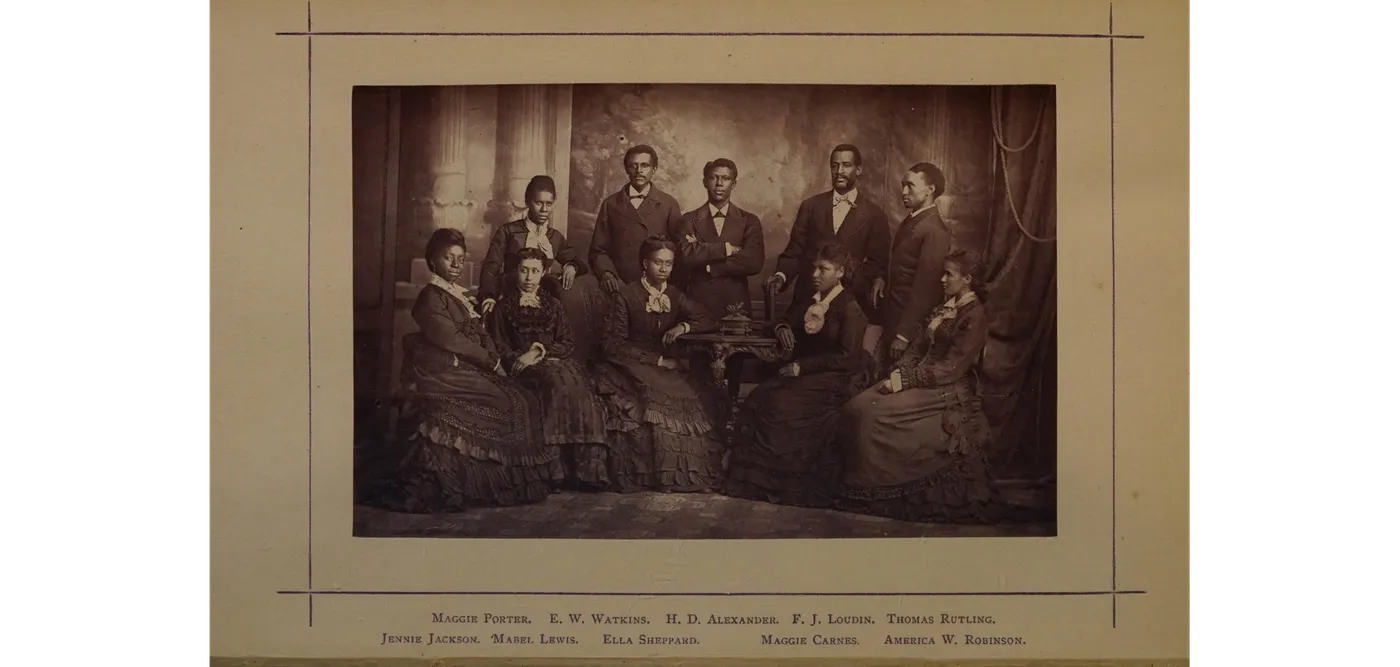
This photograph shows the very group responsible for introducing African American spirituals to a global audience, giving a visual anchor to their historic international tours and the cultural bridge-building they accomplished well before HBCUs were widely recognized institutions.
Fisk University opened in Nashville in 1866 to educate freedpeople, but within a few years it was nearly out of money. In 1871 a small student choir set out on tour to raise funds, singing spirituals that most white audiences had never heard performed on a concert stage. They toured the northern states and Europe, sang for Queen Victoria in 1873, and raised enough money to build Jubilee Hall on Fisk's campus. This photograph, from about 1875, appeared in an 1876 book telling their story.
Botanist George Washington Carver with Students in his Laboratory at Tuskegee Institute, 1902
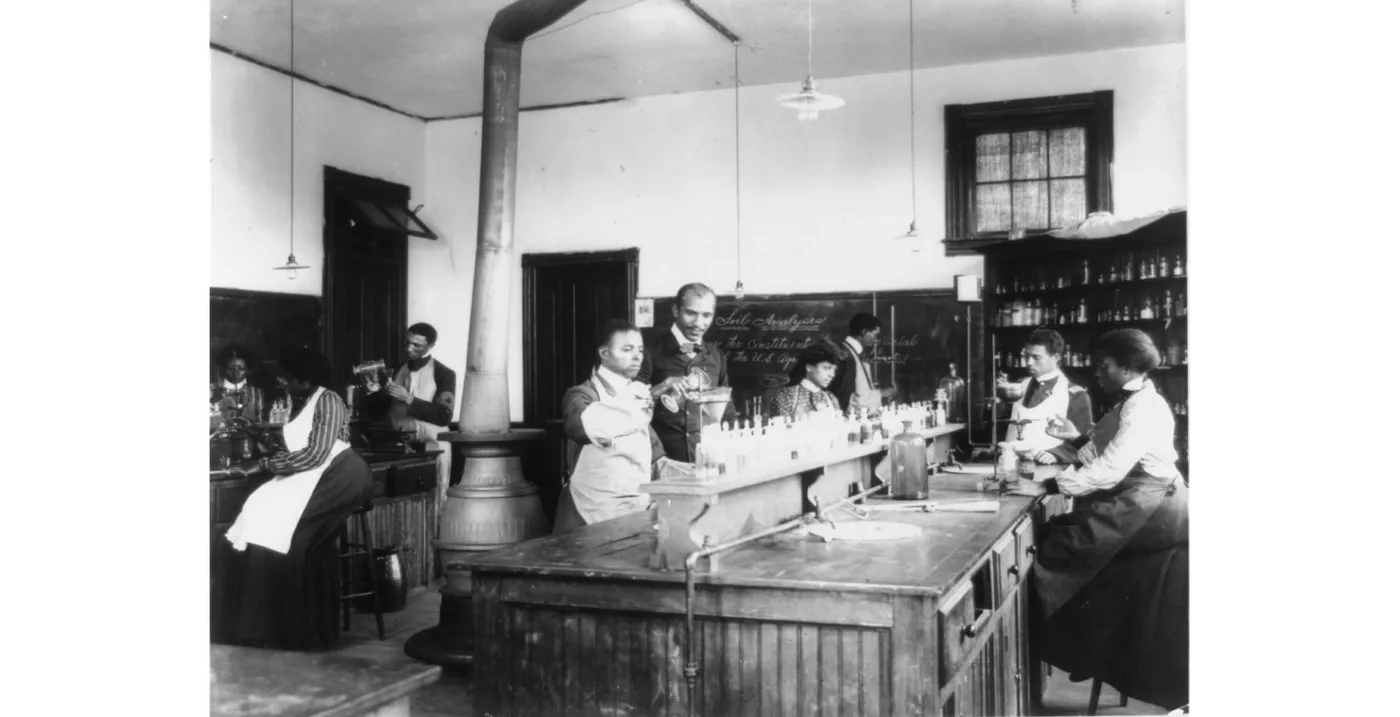
This image captures Tuskegee Institute's vocational-industrial educational model in direct practice, students engaged in hands-on scientific work under Carver's guidance. It's a clear visual example of how this model prioritized practical, applied skills as a path toward Black economic advancement.
Carver came to Tuskegee in 1896, at Booker T. Washington's invitation, to lead its agriculture program. He taught Black farmers whose soil had been worn out by years of cotton to rotate their crops, planting peanuts (which return nitrogen to the soil) and sweet potatoes, and he promoted new uses and recipes for those crops so farmers could eat and sell them. His work tied Tuskegee's vocational model to the real problems of Black farmers trapped in sharecropping and debt.
Omega Psi Phi Members with Baskets of Canned Food for Charity, 1964
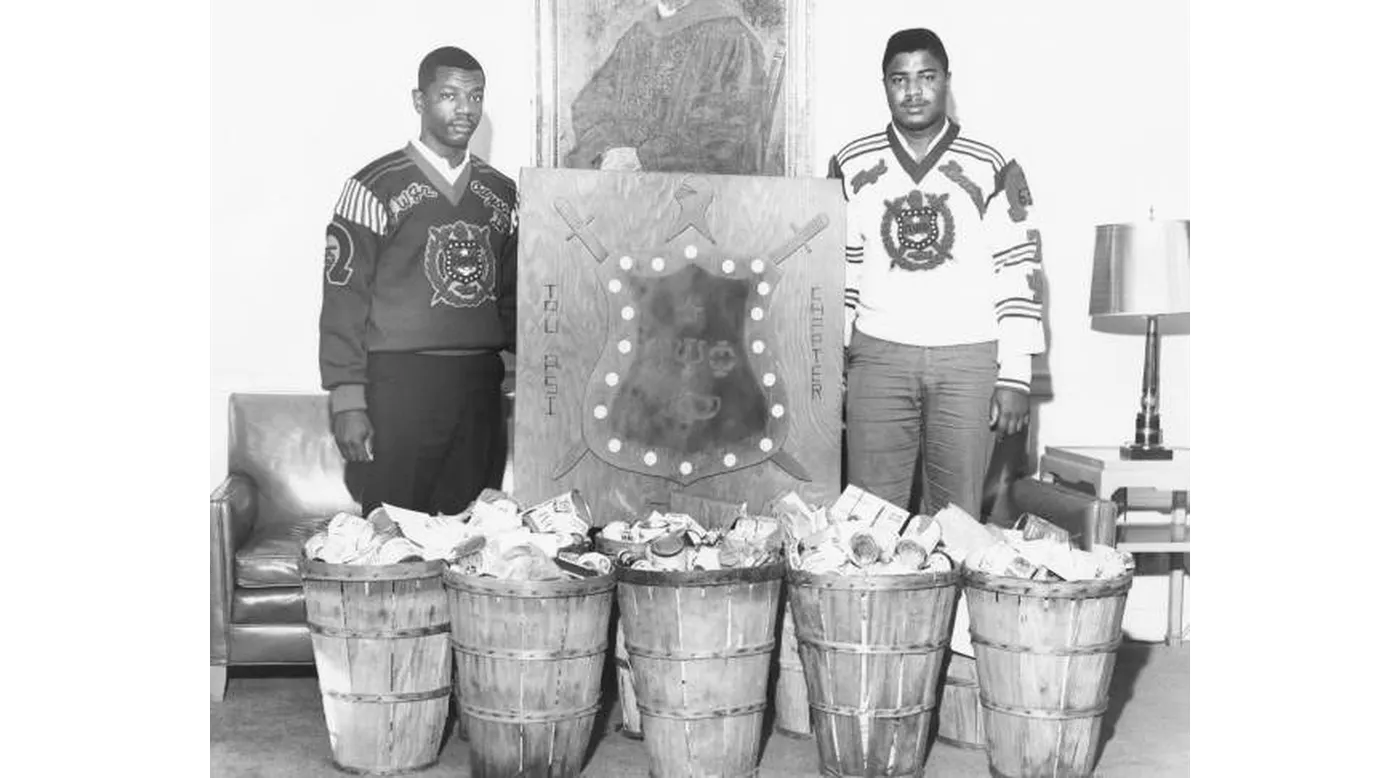
This photograph shows a Black Greek-letter organization actively engaged in community service, precisely the kind of lifelong service commitment described above. It's a reminder that these organizations extended their mission well beyond campus life and into direct, tangible support for their broader communities.
Professor Gail Hansberry with Art History Student at North Carolina Central University, 1965
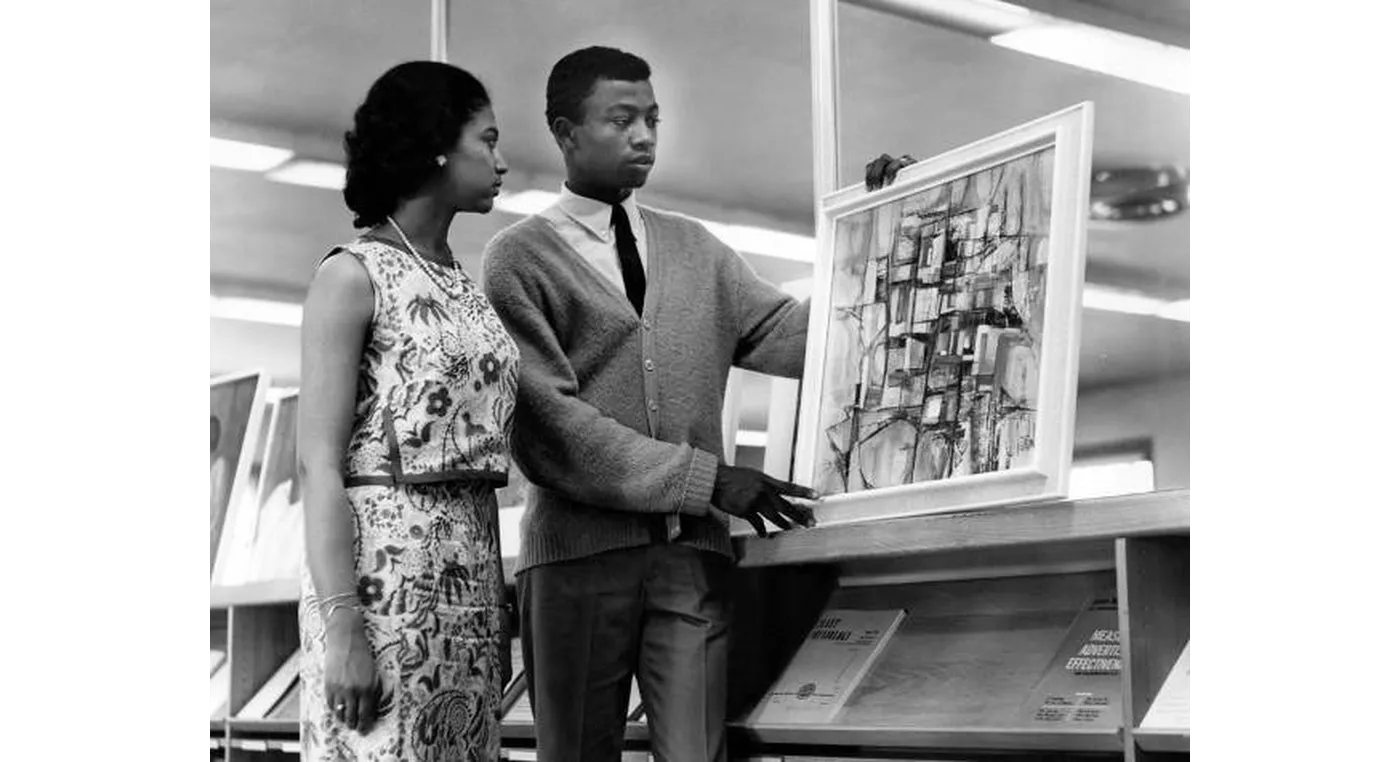
This photograph reflects the liberal arts side of HBCU education, showing scholarship and mentorship happening directly between professor and student. It reinforces the broader point that HBCUs weren't limited to vocational training alone, they also cultivated serious academic and cultural scholarship across a wide range of disciplines.