

3.14 - Symphony in Black: Black Performance in Music, Theater, and Film
Black Contributions to American Music
In the early decades of the twentieth century, the combined momentum of the Harlem Renaissance and the Jazz Age opened real opportunities for African American record labels, musicians, and vocalists to reach much wider audiences than ever before. As radio broadcasting expanded, it carried Black musical genres, blues, gospel, and jazz, into homes across the entire country.
A few examples show how this happened. In 1920, Mamie Smith's "Crazy Blues" became the first blues record by a Black singer, and it sold so well that record companies rushed to record Black artists, selling their records as "race records." In 1921, Harry Pace founded Black Swan Records in Harlem, the first major Black-owned record label, which recorded singers like Ethel Waters. And from 1927 to 1931, Duke Ellington's orchestra played at Harlem's Cotton Club, a nightclub with Black performers and whites-only audiences, where regular radio broadcasts carried his music to listeners across the country.
Blues music traces its roots directly back to slavery. It began as acoustic music in the American South, and as African Americans migrated north during the Great Migration, the genre evolved into a new, electrified form suited to urban life. Blues has always carried heightened emotional weight, exploring themes like despair and hope, love and loss, using techniques like repetition, call and response, and vernacular language rooted in Black speech and storytelling traditions.
W.C. Handy, often called the "Father of the Blues," helped bring the style to a national audience with published songs like "St. Louis Blues" (1914). After the Great Migration, Mississippi-born musicians like Muddy Waters plugged in electric guitars in Chicago, creating the electric Chicago blues sound.
Jazz has often been described as America's most distinctive contribution to the arts, full stop. Like blues, it originated within African American communities in the South, specifically New Orleans, and it developed new regional styles as musicians migrated to the North, Midwest, and West. From big band arrangements to free jazz, the genre has never stopped evolving, and it continues to develop and reinvent itself even today.
Louis Armstrong is a good example of this movement: he grew up in New Orleans, moved to Chicago in 1922 to join King Oliver's band, and became famous for his trumpet solos and singing.
Duke Ellington stands out as a towering figure across this era of musical innovation. Beyond his recordings and performances, he also produced the short musical film Symphony in Black: A Rhapsody of Negro Life in 1934, a work that depicted scenes of African American life spanning work, love, and religious experience, blending music and visual storytelling into a single artistic statement.
Black Contributions to Theater and Film
Black performers flourished across cabarets, Broadway stages, and film throughout the early twentieth century, carving out space in entertainment industries that had historically excluded or marginalized them. Hollywood itself even produced all-Black musicals during this era, most notably Cabin in the Sky in 1943, which featured a cast of prominent Black actors, musicians, and dancers working together in a major studio production.
Cabin in the Sky started as a Broadway musical in 1940 starring Ethel Waters, with Katherine Dunham and her dance company. MGM's 1943 film version, directed by Vincente Minnelli, kept Waters and added Lena Horne, Eddie "Rochester" Anderson, Louis Armstrong, and Duke Ellington's orchestra. The film gave Black performers rare starring roles in a major studio production, though it still relied on some of the stereotypes common in Hollywood at the time.
Ethel Waters holds a particularly significant distinction from this period: she became the first African American to star in her own television show, back in 1939, a genuine milestone in the history of Black representation in American broadcast media.
Required Sources
Duke Ellington, "It Don't Mean a Thing" (1943) (video, 2:45)

This performance captures Ellington at the height of his influence as a jazz composer and bandleader, giving a direct, living example of the genre's evolution described above, moving from its New Orleans roots into the polished big band sound that defined this era of American music.
Ellington composed the song, with lyrics by Irving Mills, in 1931. Its full title, "It Don't Mean a Thing (If It Ain't Got That Swing)," named the style that would take over American popular music a few years later in the swing era.
Katherine Dunham, Cabin in the Sky, 1940
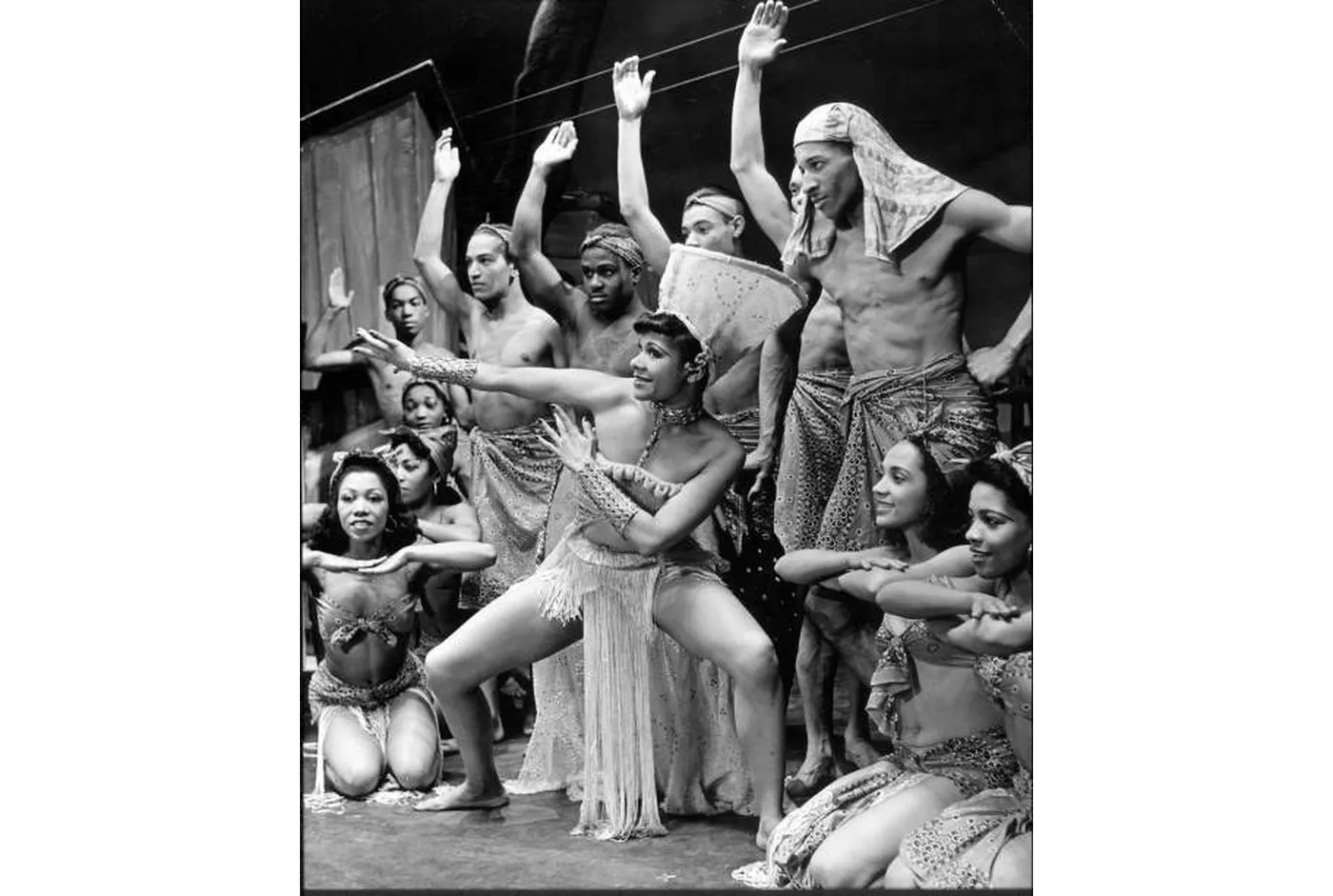
Katherine Dunham was a pioneering Black dancer and choreographer, and her involvement in Cabin in the Sky reflects how deeply Black artistic talent, spanning music, dance, and acting, shaped this landmark all-Black Hollywood musical from multiple creative angles at once.
Dunham (1909 to 2006) was both a dancer and a trained anthropologist. She studied dance traditions in Haiti and other parts of the Caribbean in the 1930s and built them into her choreography and her own dance technique. In the 1940 Broadway production of Cabin in the Sky, shown here, she played the temptress Georgia Brown, and her dance company performed in the show.
Ethel Waters in Cabin in the Sky, 1943
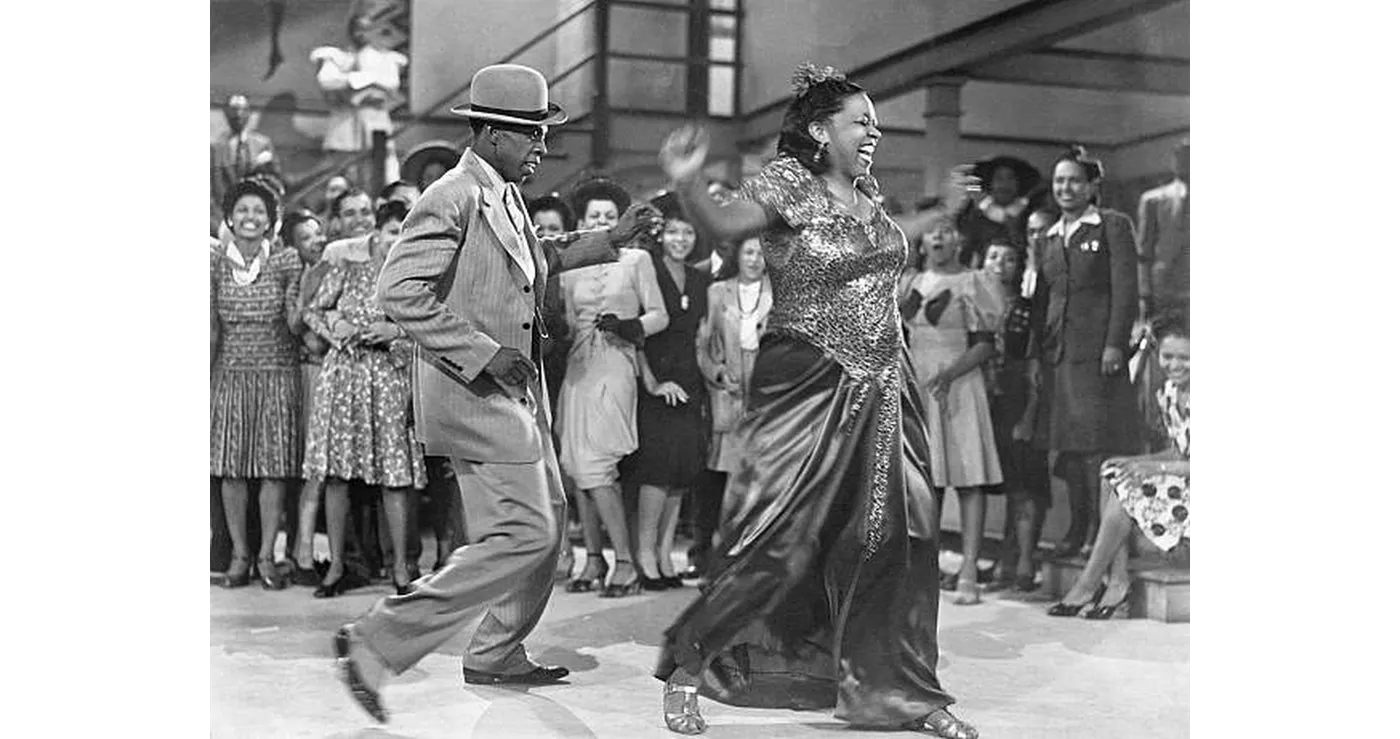
This image shows Waters starring in one of the most significant all-Black film productions of the era, just a few years after she'd already made history as the first African American to headline her own television show. Her presence in Cabin in the Sky reflects a career that broke barriers across multiple entertainment mediums simultaneously.
Cast of Cabin in the Sky, 1943
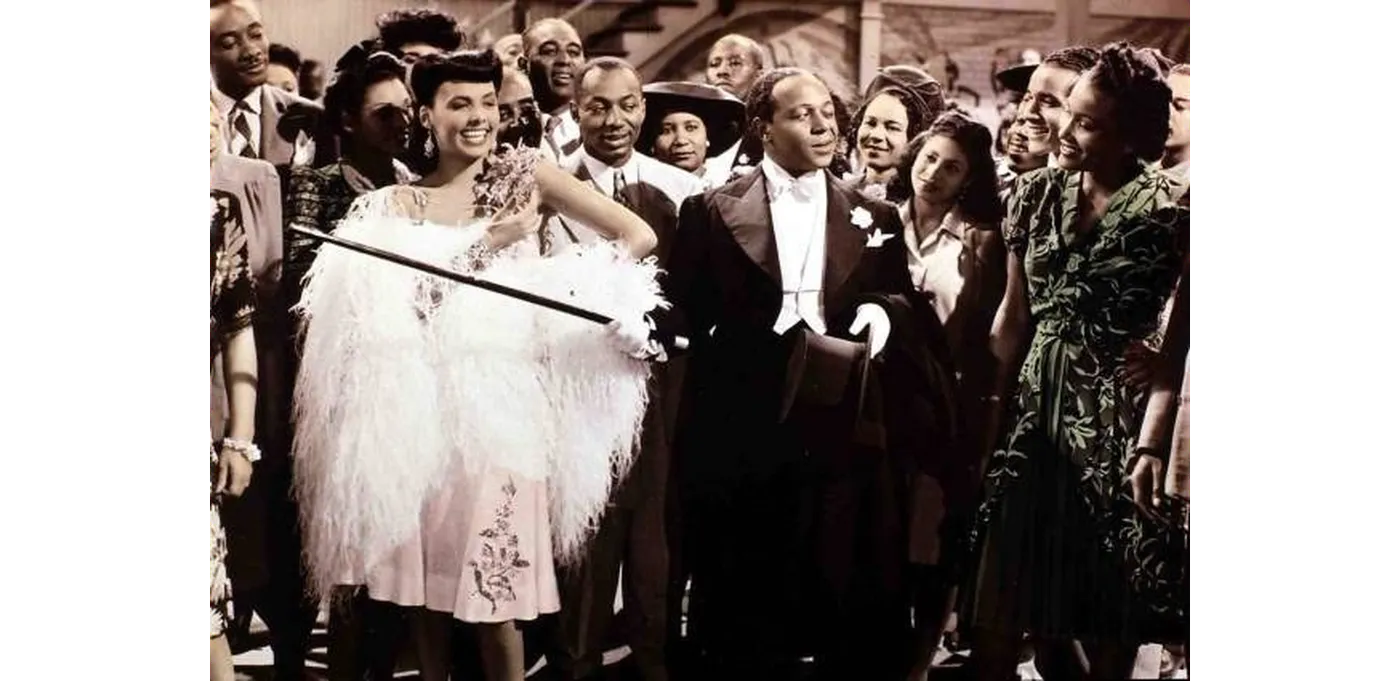
This group photograph shows the full scale of Black talent brought together for this production, reinforcing just how significant it was for a major Hollywood studio to assemble and showcase an entire cast of prominent Black performers in a single film during this period.