

3.9 - Black Organizations and Institutions
Building Economic Self-Sufficiency
Faced with ongoing exclusion from broader American society, African Americans responded by building their own businesses and organizations, institutions designed specifically to serve Black communities and strengthen their self-sufficiency. Rather than waiting for inclusion elsewhere, these institutions created independent infrastructure Black communities could rely on and control themselves.
The Black press played a crucial role in this effort. As Black newspapers expanded, they delivered news relevant to African American communities both locally and nationally, documented everyday aspects of Black community life that mainstream papers ignored, and served as a powerful vehicle for protesting racial discrimination directly. Papers like Freedom's Journal, founded in 1827 as the first African American newspaper in the country, along with later publications including The Christian Recorder, the California Eagle, the Philadelphia Tribune, the Baltimore Afro-American, the Chicago Defender, and the Pittsburgh Courier, together built a robust, independent information network for Black America.
Religious life also continued to evolve and expand during this era. African Americans kept transforming Christian worship in the United States and building their own dedicated institutions. The African Methodist Episcopal Church, founded in 1816, holds the distinction of being the first Black Christian denomination in the country, and the number of Black churches grew significantly in the years following Reconstruction. These churches became far more than places of worship, they functioned as safe spaces for organizing, cultural expression, and community gathering, and they cultivated leadership opportunities that helped develop generations of Black activists, musicians, and political leaders.
Economic institutions were just as vital. Madam C.J. Walker stands out as a defining figure here. Born Sarah Breedlove in Louisiana in 1867 to parents who had been enslaved, she worked as a washerwoman before building a business selling hair care and beauty products made for Black women. She is often called the first self-made woman millionaire in the United States. Her company trained thousands of Black women as "Walker agents" who sold her products, giving them a way to earn their own income outside of domestic work. Her products highlighted the beauty of Black people, her success drove Black economic advancement, and she gave generously to community causes, including the NAACP's campaign against lynching, Black YMCAs, and schools.
Financial institutions built specifically for Black communities mattered just as much. The Citizens Savings Bank and Trust Company, founded in 1904, holds the distinction of being the oldest continuously operating African American-owned bank in the United States. Originally known as the One Cent Savings Bank, it went on to become the first African American-owned bank to join both the Federal Deposit Insurance Corporation and the Federal Reserve System, a major milestone of legitimacy and financial integration for Black-owned banking.
Required Sources
Advertisement for Madam C.J. Walker Products, 1906 to 1950
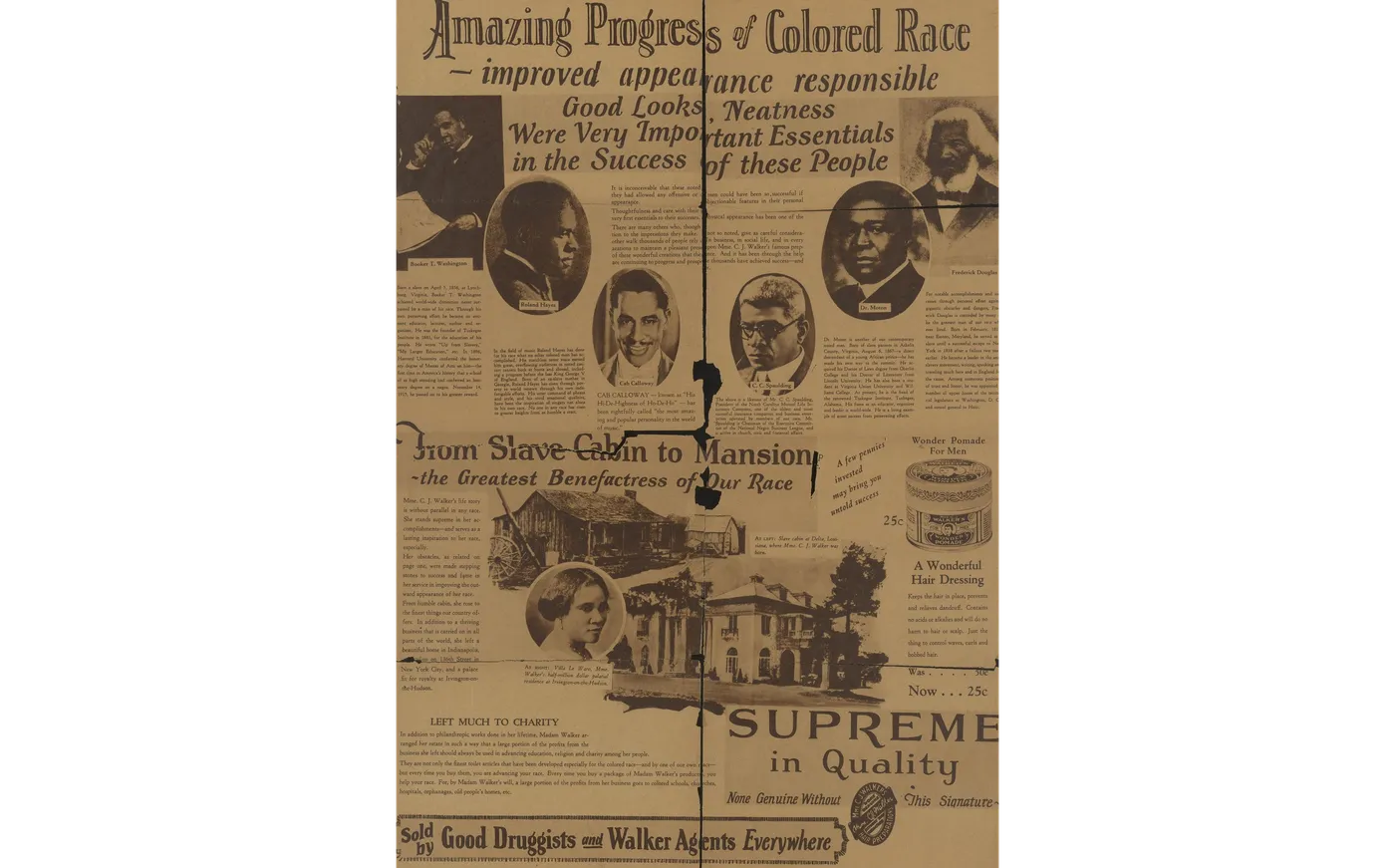
This advertisement reflects Walker's business in action, products that were marketed specifically to and for Black consumers, celebrating Black beauty at a time when mainstream advertising rarely did so. The long span of dates on this material also shows just how enduring and influential her brand remained across decades, well beyond her own lifetime.
Photograph of a Convention of Madam C.J. Walker Agents at Villa Lewaro, 1924
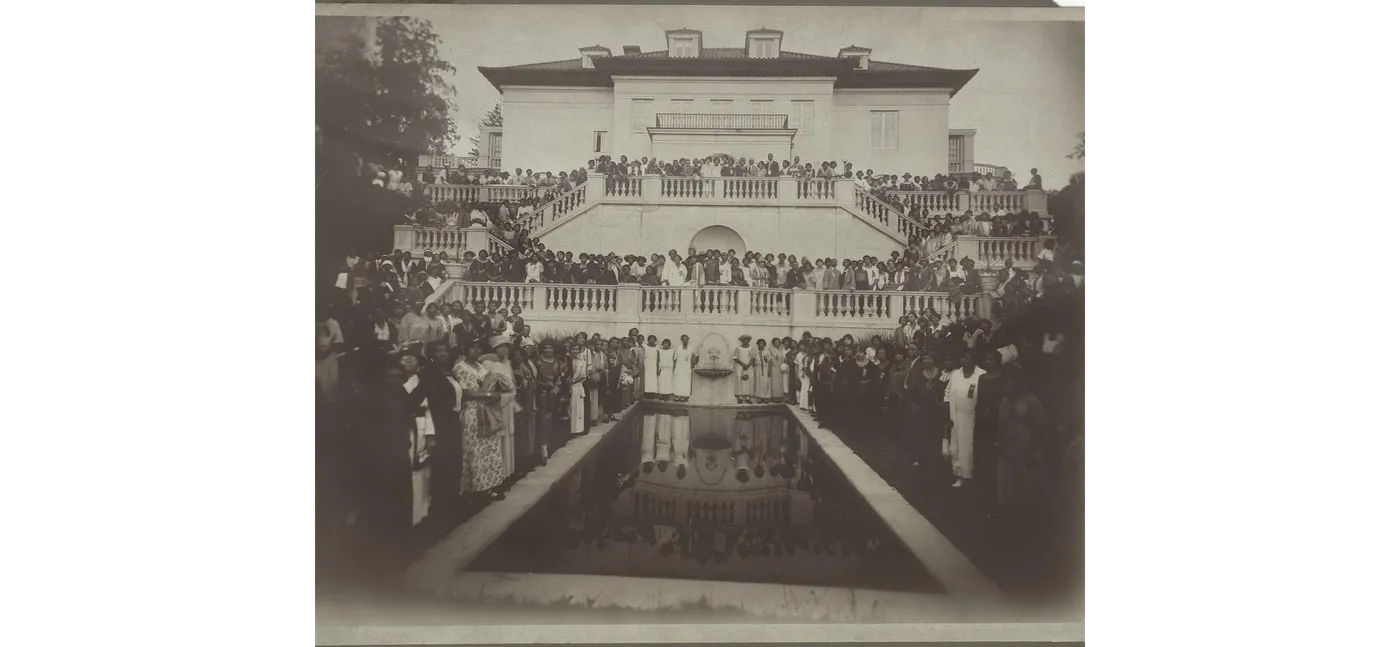
This photograph shows Walker's business model at real scale, an entire network of agents gathered together at her estate, Villa Lewaro. It illustrates how her success wasn't just personal wealth, it created genuine economic opportunity and employment for large numbers of Black women who worked as sales agents for her products.
Villa Lewaro was Walker's mansion in Irvington, New York, designed by Vertner Woodson Tandy, the first Black architect licensed in New York State. Walker died there in 1919, so this 1924 convention shows her company and its network of agents carrying on under her daughter, A'Lelia Walker.
Clock Used by the Citizens Savings and Trust Company, 1920 to 2013

This clock is a simple, functional object, but its long span of use, nearly a century, reflects the remarkable durability and stability of the Citizens Savings Bank and Trust Company itself. As the oldest continuously operating Black-owned bank in the country, its physical artifacts like this clock stand as tangible proof of an institution that outlasted segregation, economic upheaval, and generations of change while continuing to serve its community.
Black business and church leaders in Nashville, Tennessee, started the bank, including the publisher Richard Henry Boyd (the clock was donated by his descendants and the publishing company he founded). Its original name sent a message that no deposit was too small, which encouraged ordinary Black families to save at a time when white-owned banks often treated them poorly or turned them away.