

1.10 - Exploring Types of Discontinuities
Introduction to Continuity
Continuity is one of the core ideas in calculus. Knowing where functions are continuous and where they break is essential for analyzing how a function behaves.
Informal Definition: The Pencil Test
A function is continuous if you can draw its entire graph without lifting your pencil off the paper.
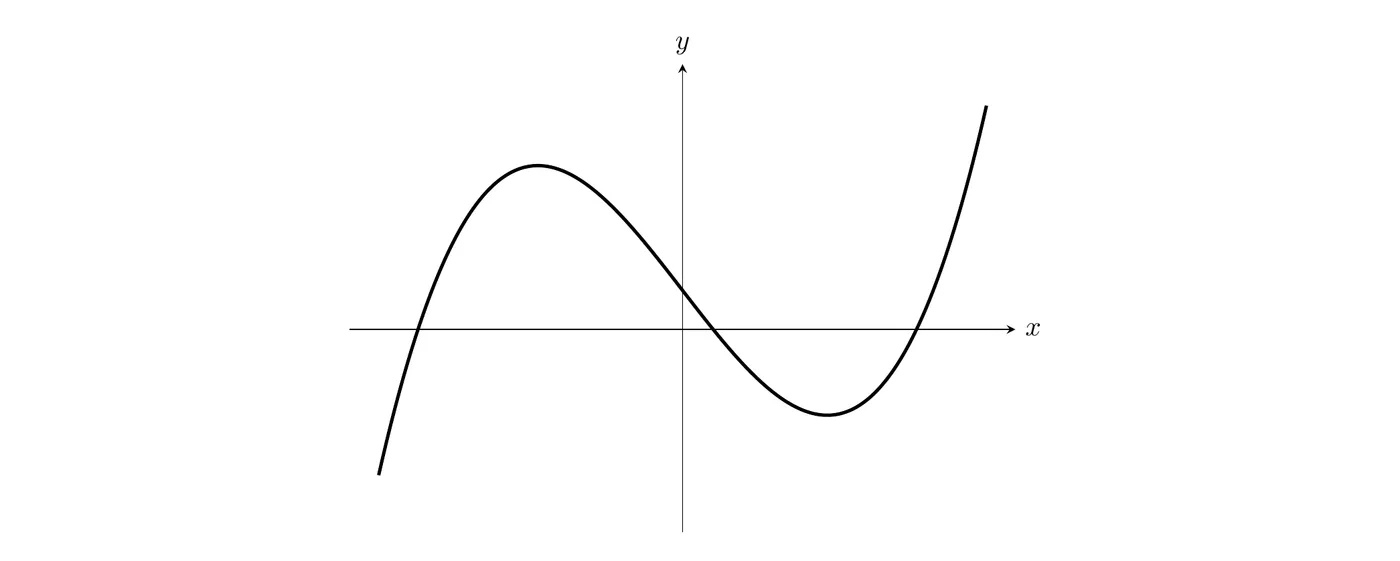
This function is continuous. You never need to lift your pencil.
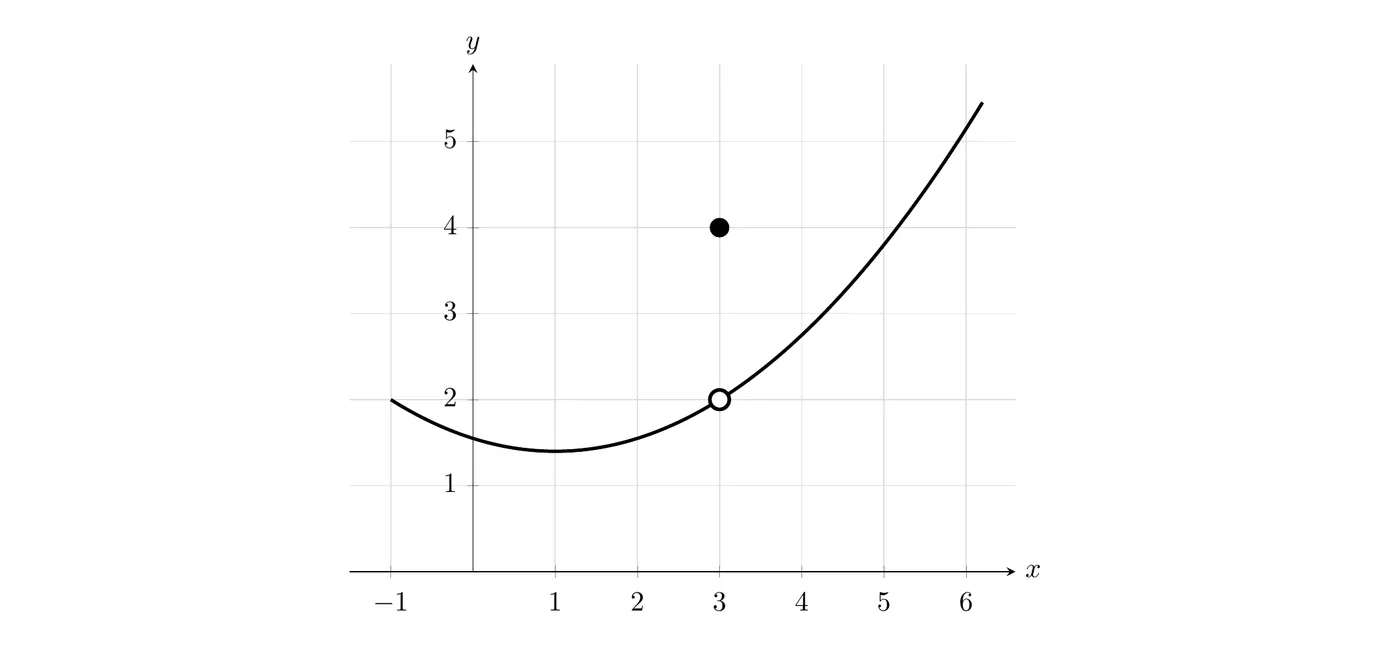
This function is discontinuous at . You have to lift your pencil to keep drawing.
Types of Discontinuities
There are three main types to know:
1. Removable Discontinuity (Hole)
A hole happens when a single point is missing from an otherwise continuous function.
Classification: Removable
Why removable? If you could fill in the hole with a single point, the function would become continuous.
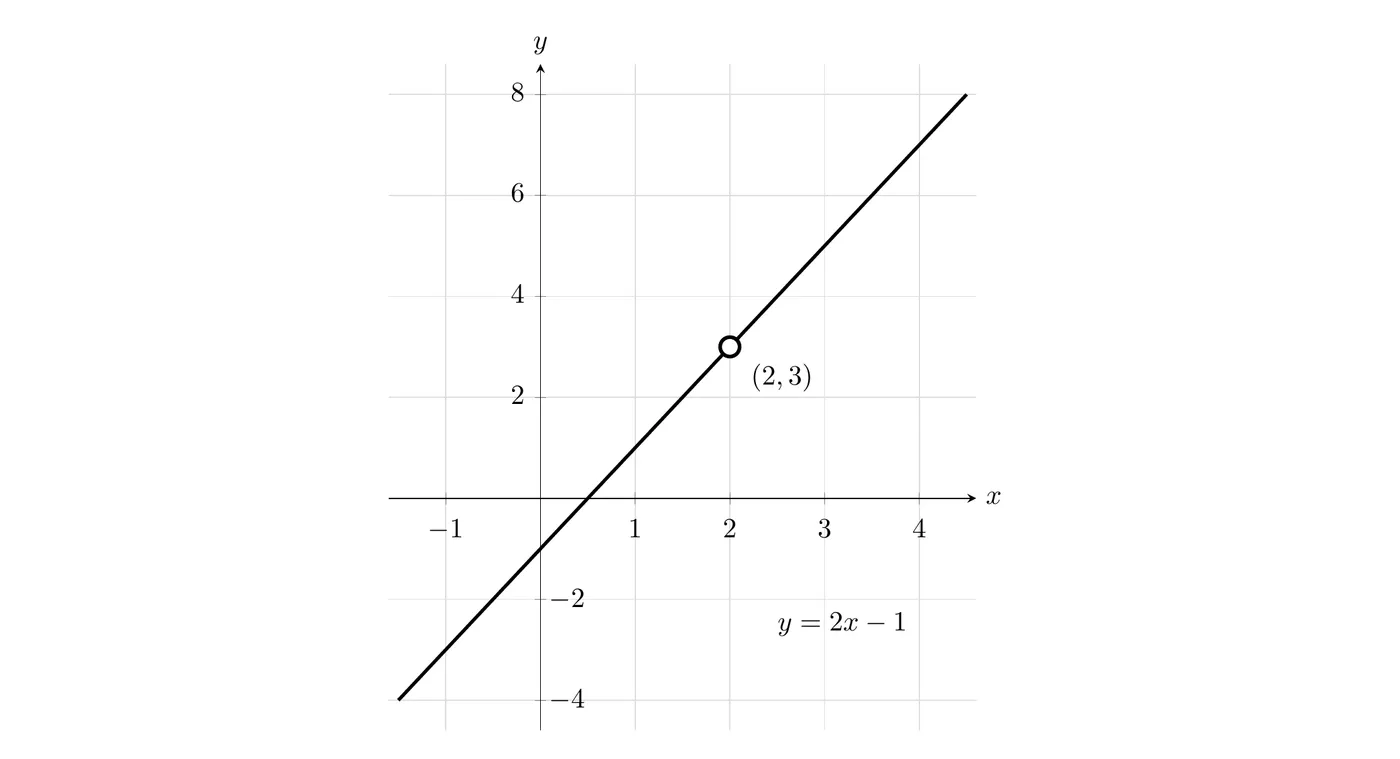
Example: The graph above has a hole at . This discontinuity could be removed by defining the function value at that point.
Same type, different look: sometimes the hole is there but the function is defined somewhere else at that , like a filled dot sitting above or below the hole. That’s still a removable discontinuity. The limit exists, it just doesn’t match the function value, so redefining that one point fixes it. (See Example 4 in 1.11.)
2. Infinite Discontinuity (Vertical Asymptote)
A vertical asymptote happens when the function heads toward infinity (positive or negative) as approaches a specific value.
Classification: Non-removable
Why non-removable? You can’t fix this by filling in a point. The function shoots off to infinity.
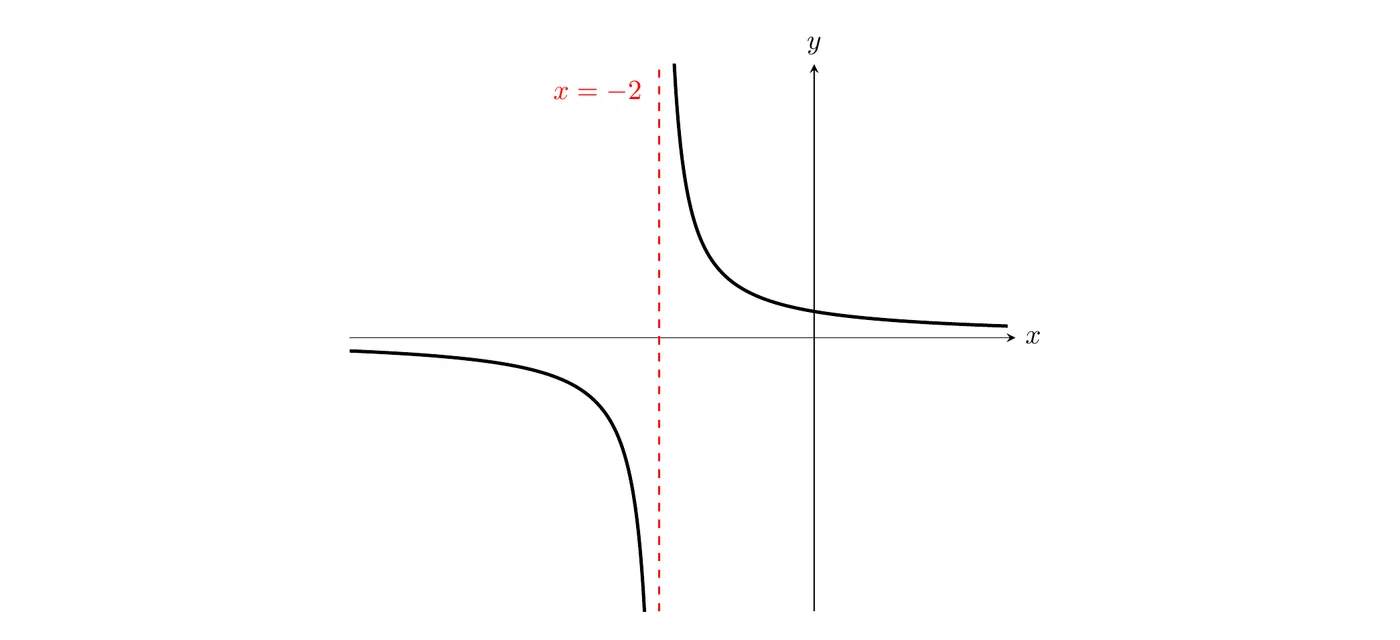
Example: This function has a vertical asymptote at . It’s undefined there and can’t be made continuous.
3. Jump Discontinuity
A jump discontinuity happens when the function suddenly jumps from one value to another.
Classification: Non-removable
Why non-removable? The left-hand and right-hand limits are different, so filling in a single point won’t connect the two pieces.
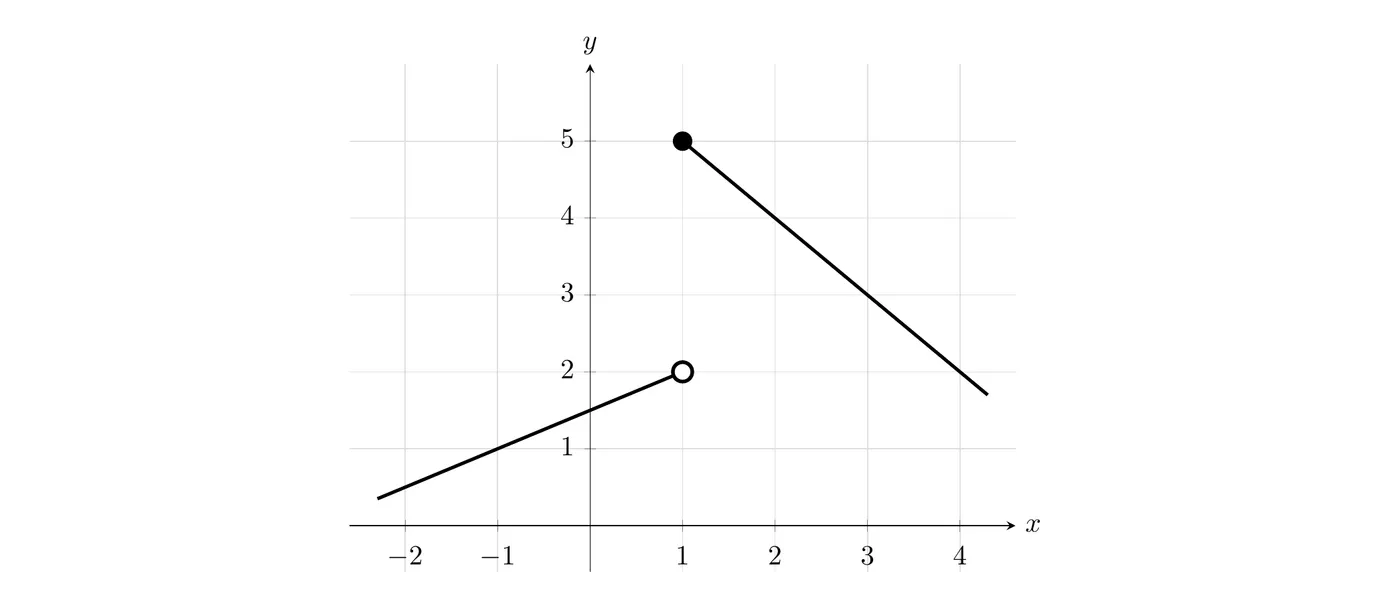
Example: This function has a jump discontinuity at . The two sides don’t connect.
Note: This lesson focuses mostly on holes and vertical asymptotes. Jump discontinuities get covered in the next lesson.
Finding Discontinuities in Rational Functions
For rational functions (fractions), discontinuities happen where the denominator equals zero, because dividing by zero is undefined.
Strategy
- Factor both numerator and denominator completely
- Set the denominator equal to zero and solve for
- Determine the type:
- If the factor cancels with the numerator, it’s a hole
- If the factor does not cancel, it’s a vertical asymptote
Example 1: Identifying Holes and Vertical Asymptotes
Find all discontinuities of
Step 1: Factor the numerator and denominator.
Numerator:
Denominator:
Step 2: Write the factored form.
Step 3: Find where the denominator equals zero.
Step 4: Determine the type.
At :
- The factor shows up in both numerator and denominator
- It cancels out
- Type: hole (removable discontinuity)
At :
- The factor shows up only in the denominator
- It does not cancel
- Type: vertical asymptote (non-removable discontinuity)
Answer:
- Hole at
- Vertical asymptote at
Example 2: Difference of Squares
Find all discontinuities of
Step 1: Factor the denominator.
The denominator is a difference of squares:
The first factor is also a difference of squares:
The second factor does not factor further (a sum of squares doesn’t factor over the reals).
Complete factorization:
Step 2: Find where the denominator equals zero.
- (imaginary)
Step 3: Analyze each value.
At :
- The factor isn’t in the numerator
- Does not cancel
- Type: vertical asymptote
At :
- The factor isn’t in the numerator
- Does not cancel
- Type: vertical asymptote
At :
- These are imaginary numbers
- We only care about real discontinuities
- Ignore these
Answer:
- Vertical asymptote at
- Vertical asymptote at
Example 3: Canceling Factors
Find all discontinuities of
Step 1: It’s already factored.
Step 2: Cancel common factors.
Step 3: Identify the discontinuities.
At :
- The factor canceled
- Type: hole
At :
- The factor did not cancel
- Type: vertical asymptote
Answer:
- Hole at
- Vertical asymptote at
A related case to watch for: if you have , one cancels and leaves , which has a vertical asymptote at . The cancellation doesn’t create a separate hole here. It just changes the nature of the discontinuity, and the asymptote is what remains.
Discontinuities in Trigonometric Functions
Trig functions can have discontinuities too, especially when they involve quotients.
Example 4: Tangent Function
Find all discontinuities of for .
Step 1: Rewrite tangent as a quotient.
Step 2: Find where the denominator equals zero.
We need .
Step 3: Solve .
Cosine equals zero at
Step 4: Substitute .
Step 5: Check that all values are in the domain.
All of fall between and .
Answer: Vertical asymptotes at
Continuous Functions
Not every function has discontinuities. Plenty of functions are continuous everywhere (or across their whole domain).
Example 5: Polynomial Function
Determine whether has any discontinuities.
This is a polynomial function. Polynomials are continuous everywhere on the real number line because:
- There are no denominators, so no division by zero
- There are no even-index radicals, so no domain restrictions
- There are no logarithms or other special functions
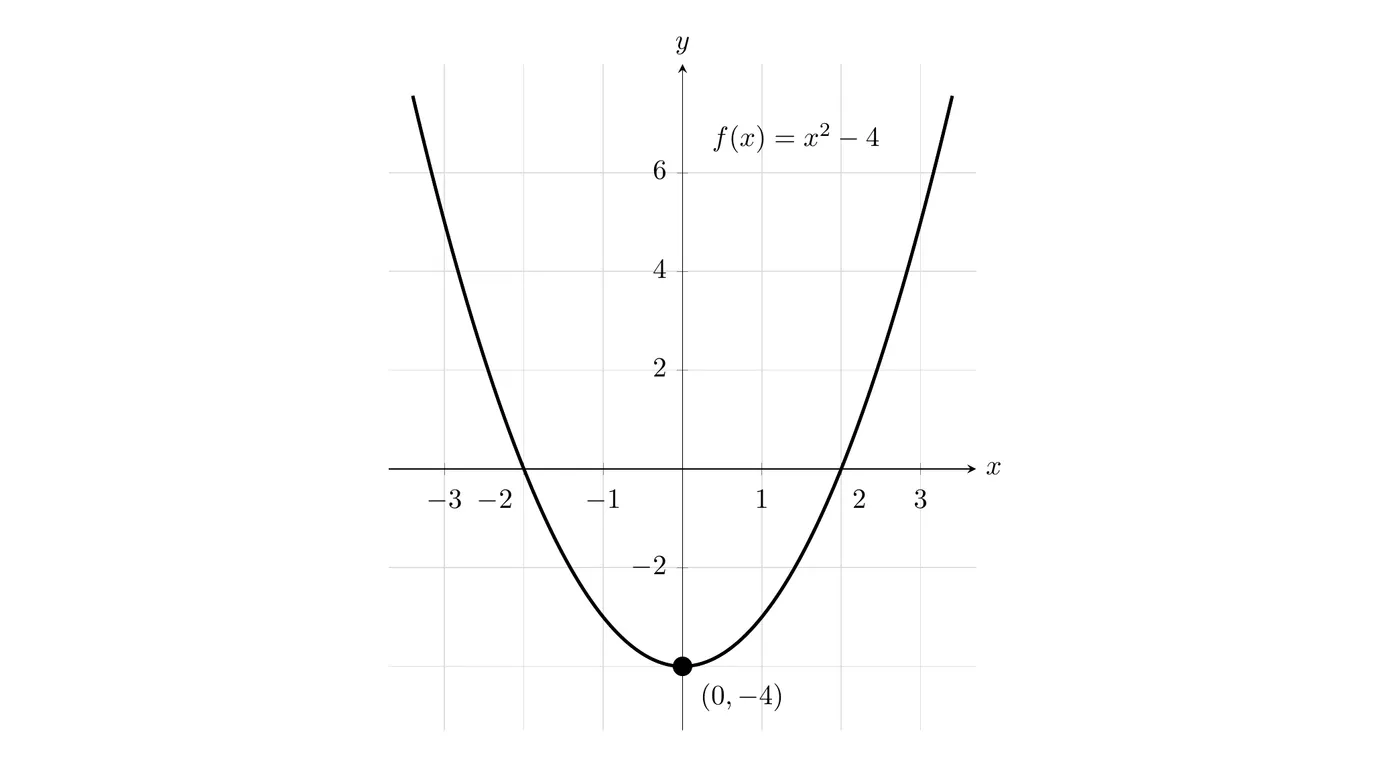
Answer: This is a continuous function. There are no discontinuities.
Summary Table
Discontinuity Type | Removable? | How to Identify | Graph Feature |
Hole | Removable | Factor cancels | Open circle |
Vertical asymptote | Non-removable | Factor doesn’t cancel | Vertical line where the function goes to |
Jump | Non-removable | Different left and right limits | Sudden vertical gap |
Classifying with limits. For any function, not just rational ones, the one-sided limits at tell you the type:
- Removable: exists, but is undefined or doesn’t equal it
- Jump: both one-sided limits exist (as real numbers) but aren’t equal
- Infinite (vertical asymptote): at least one one-sided limit is or
Practice Problems
Problem 1
Find all discontinuities and classify them:
Answer:
Factor:
- Hole at (factor cancels)
- Vertical asymptote at (factor doesn’t cancel)
Problem 2
Find all discontinuities and classify them:
Answer:
Factor: after canceling.
One factor of cancels and one remains in the denominator, so the remaining factor is what determines the behavior.
Vertical asymptote at
Problem 3
Find all discontinuities:
Answer:
This is a polynomial, so it’s continuous everywhere. No discontinuities.
Key Takeaways
- A function is continuous if you can draw it without lifting your pencil
- Holes (removable) happen when factors cancel in rational functions
- Vertical asymptotes (non-removable) happen when denominator factors don’t cancel
- To find discontinuities, factor completely and set the denominator equal to zero
- Polynomial functions are always continuous
- For trig functions, rewrite them as quotients to find where denominators equal zero
- Imaginary solutions don’t count as discontinuities. Only real numbers matter
- Always say “continuous function” or “no discontinuities” when that’s the case