1.6 - Determining Limits Using Algebraic Manipulation
Method 1: Direct Substitution
The simplest way to find a limit is direct substitution: plug the x-value straight into the function. It works whenever plugging in gives you a defined result (not 00 or some other undefined form).
Example 1: polynomial function
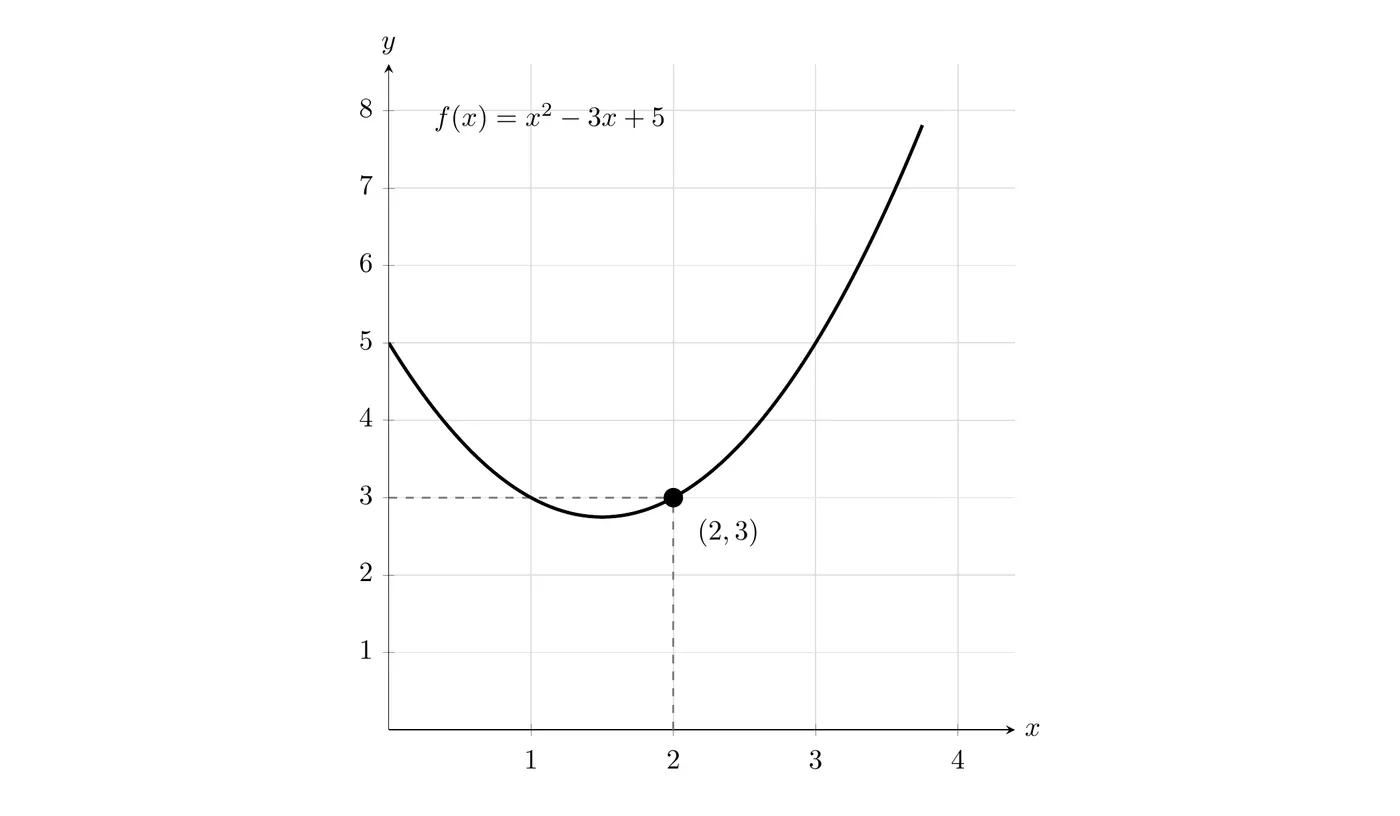
Find limx→2(x2−3x+5).
x→2lim(x2−3x+5)=(2)2−3(2)+5=4−6+5=3
Answer: 3
As x approaches 2, the function smoothly approaches y=3.
Example 2: constant function
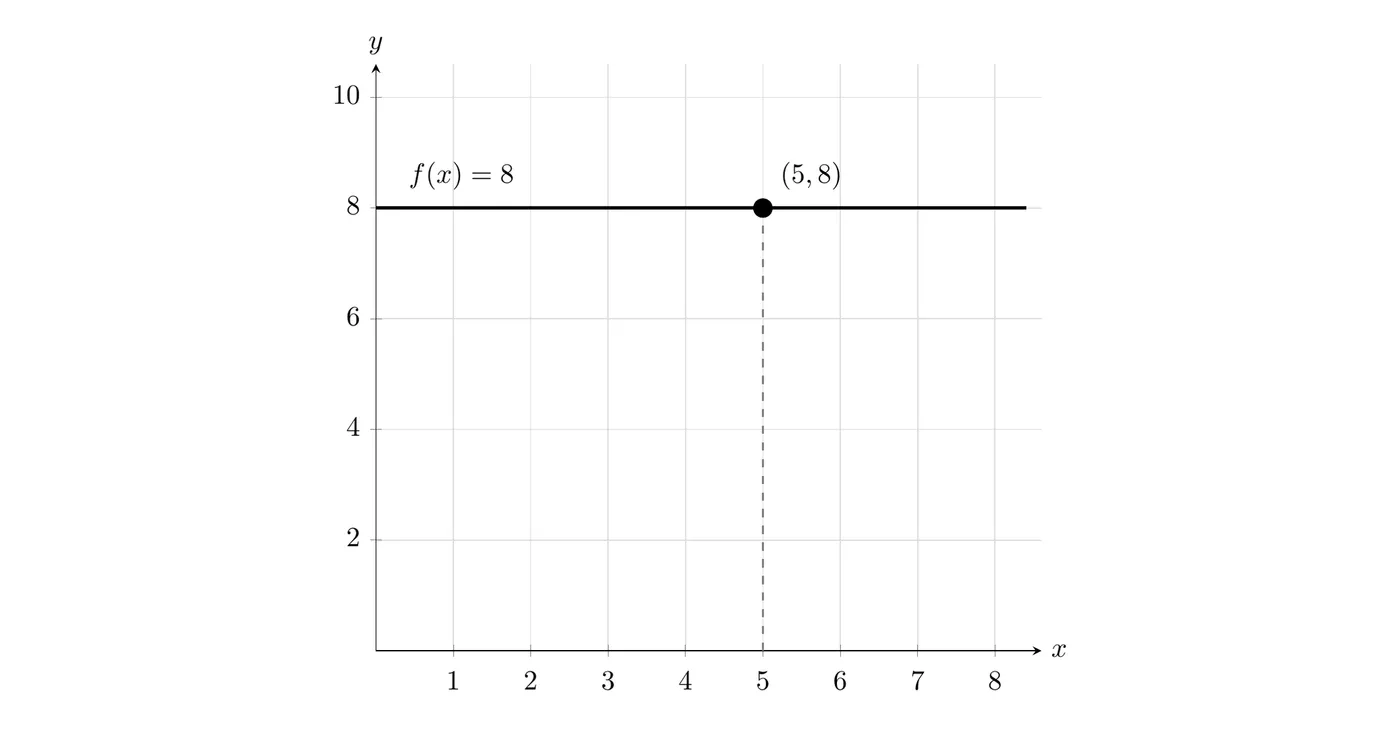
Find limx→58.
A constant function always gives the same output no matter the input:
x→5lim8=8
For any constant c: limx→ac=c
Method 2: Factor and Cancel
When direct substitution gives 00 (the indeterminate form), we have to manipulate the expression algebraically.
If substituting x=a into g(x)f(x) gives 00, that tells us:
- Both numerator and denominator equal zero at x=a
- So (x−a) is probably a common factor
- We can factor and cancel to simplify
Example 3: factor out common terms
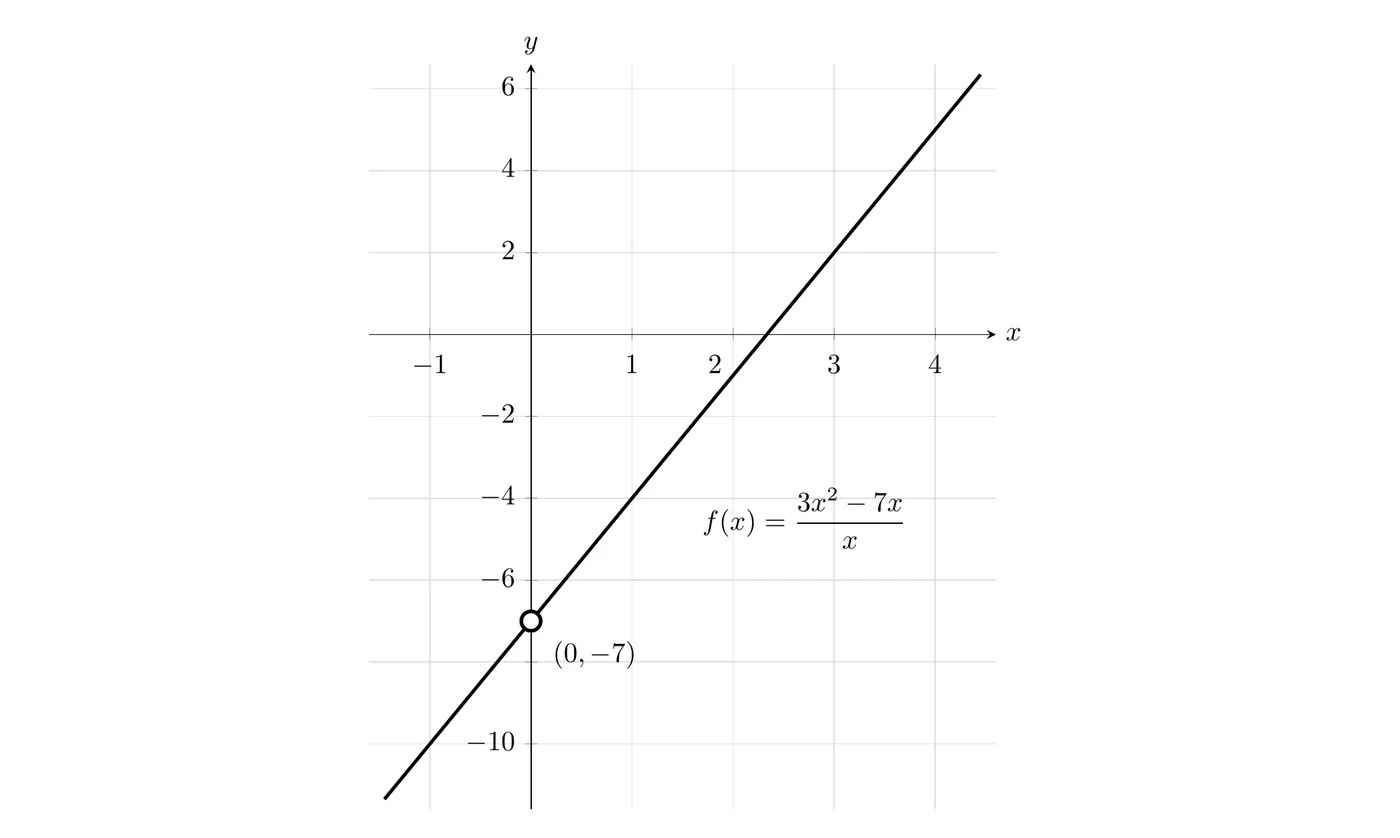
Find limx→0x3x2−7x.
Step 1, try direct substitution:
03(0)2−7(0)=00(indeterminate)
Step 2, factor the numerator:
x→0limx3x2−7x=x→0limxx(3x−7)
Step 3, cancel the common factor:
=x→0lim(3x−7)
Step 4, direct substitution:
=3(0)−7=−7
Answer: −7
The graph is a line with a hole at x=0, but the limit still exists because both sides approach −7.
Example 4: factoring quadratics
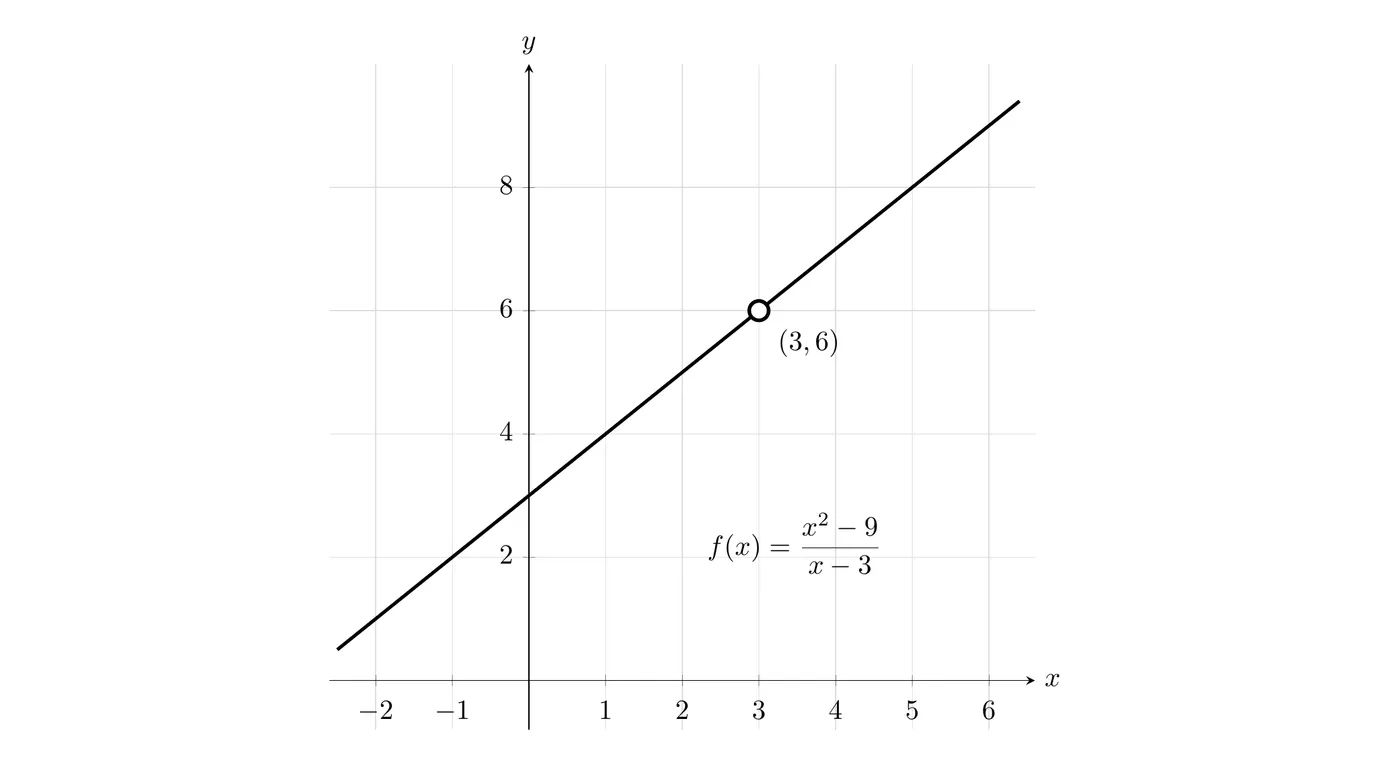
Find limx→3x−3x2−9.
Step 1, check for the indeterminate form:
3−3(3)2−9=00
Step 2, factor using difference of squares:
x→3limx−3x2−9=x→3limx−3(x+3)(x−3)
Step 3, cancel (x−3):
=x→3lim(x+3)
Step 4, substitute:
=3+3=6
Answer: 6
Example 5: factoring with non-obvious factors
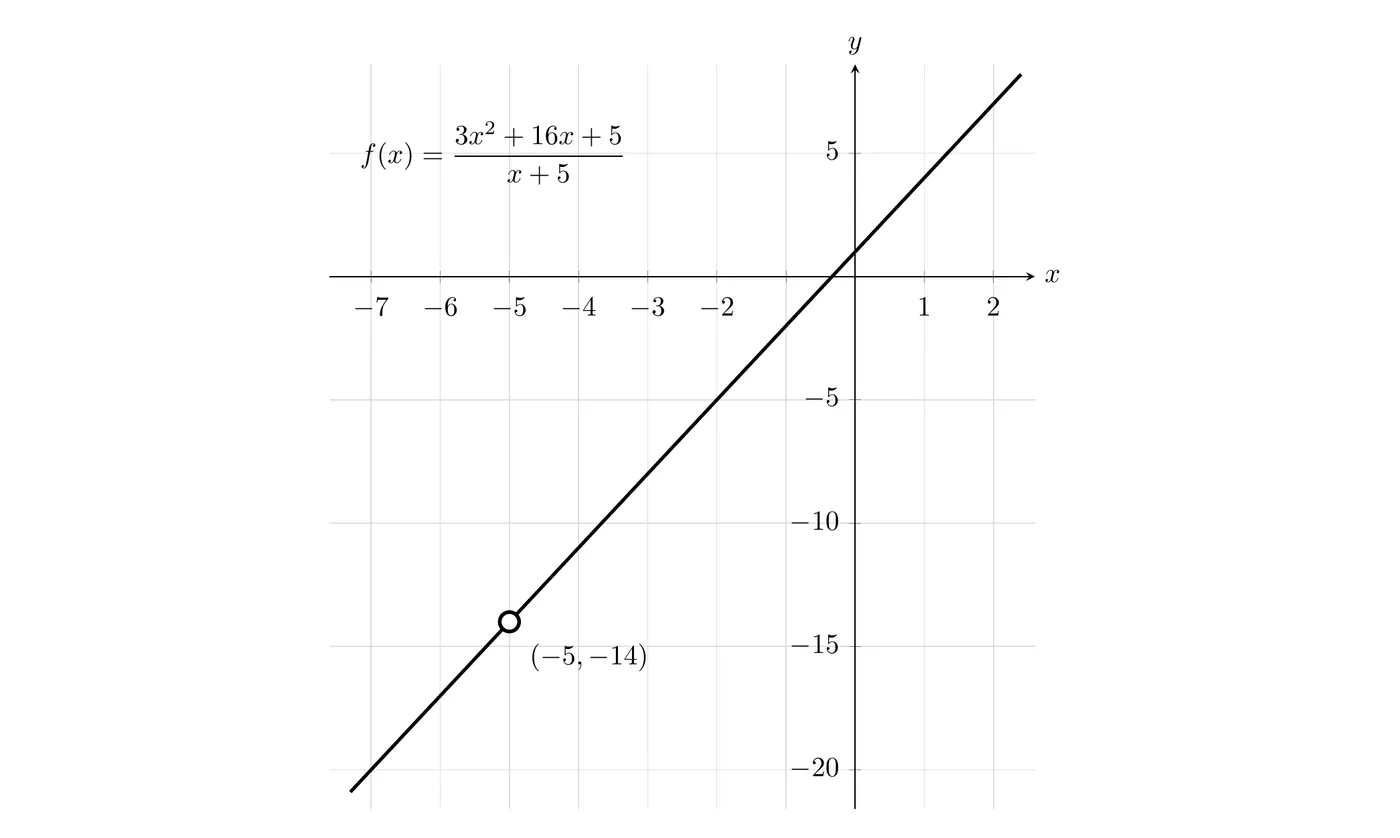
Find limx→−5x+53x2+16x+5.
Step 1, substituting x=−5 gives 00.
Step 2, factor the numerator. Since the denominator is (x+5), we know (x+5) has to be a factor of the numerator:
3x2+16x+5=(x+5)(3x+1)
Check: (x+5)(3x+1)=3x2+x+15x+5=3x2+16x+5 ✓
Step 3, simplify:
x→−5limx+5(x+5)(3x+1)=x→−5lim(3x+1)
Step 4, substitute:
=3(−5)+1=−15+1=−14
Answer: −14
Method 3: Recognizing When Limits Don’t Exist
Not every limit exists. After factoring and simplifying, if you still can’t evaluate it, it probably doesn’t exist.
Example 6: vertical asymptote
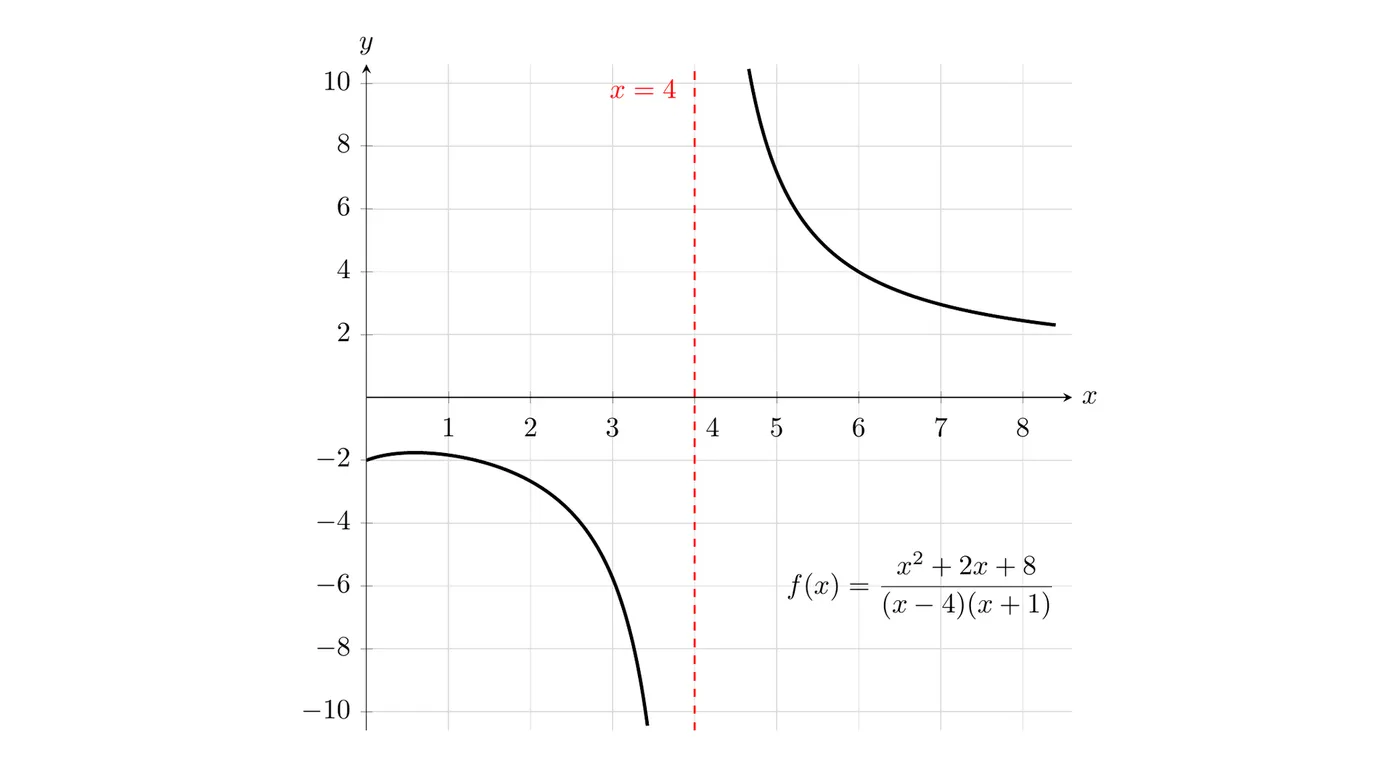
Find limx→4(x−4)(x+1)x2+2x+8.
Step 1, try direct substitution:
(4−4)(4+1)(4)2+2(4)+8=032(undefined)
Step 2, try to factor x2+2x+8. We need two numbers that multiply to 8 and add to 2. There aren’t any real numbers that do that, so the numerator doesn’t factor nicely.
Step 3, since we can’t cancel the (x−4) in the denominator, the expression can’t be simplified.
Answer: DNE
The left and right sides approach different infinities, so the limit doesn’t exist.
Special Trigonometric Limits
There are two fundamental trig limits you have to memorize.
x→0limxsinx=1x→0limx1−cosx=0
Important conditions:
- These only work when x→0
- The variable must match in numerator and denominator
Equivalent forms
These also work in reciprocal form:
x→0limsinxx=1x→0limxcosx−1=0
Memory tricks
For sine: the letter “s” in sine kind of looks like the number 1.
For cosine: the letter “c” in cosine kind of looks like the number 0.
(And remember, cosine limits involve 1−cosx or cosx−1.)
Working with Trig Limits
Example 7: sine limit with a coefficient
Find limx→0xsin5x.
We need the denominator to match what’s inside the sine.
Step 1, direct substitution gives 0tan0=00, so we need a different form.
Step 2, rewrite tangent in terms of sine and cosine:
x→0limxtan2x=x→0limxsin2x⋅cos2x1
Step 3, use the sine pattern (xsin2x→2) and substitute into the cosine:
=2⋅cos01=2⋅1=2
Answer: 2
Useful rewrites:tanx=cosxsinx, cotx=sinxcosx, secx=cosx1, cscx=sinx1, and sin2x+cos2x=1. When a trig limit doesn’t match the special forms, rewrite everything in sine and cosine first.
Practice Problems
Problem 1:limx→4(2x2−5x+1)
2(16)−5(4)+1=32−20+1=13
Problem 2:limx→2x−2x2−4
Factor: x−2(x−2)(x+2)=x+2=4
Problem 3:limx→0xsin9x=9
Problem 4:limx→0x1−cos3x=0 (using the fundamental cosine limit)
Key Takeaways
Always try direct substitution first, it’s the fastest method
If you get 00, factor and cancel common terms
The denominator often hints at what factor to look for in the numerator
If you can’t simplify and still get 0nonzero, the limit does not exist
Memorize the special trig limits:
limx→0xsinx=1
limx→0x1−cosx=0
Quick pattern: limx→0xsinkx=k
Trig limits only work when x→0
Rewrite other trig functions in sine and cosine to reach the special forms