

2.23 - The Civil War and Black Communities
Black Contributions to the Union War Effort
Thousands of free and enslaved African Americans, from both the North and South, joined the Union war effort, driven by the twin goals of ending slavery and securing real Black citizenship. Their contributions took many forms: men served as soldiers and builders, while women contributed as cooks, nurses, laundresses, and even spies.
The path into this effort looked different depending on where people started. Enslaved people in the South often fled slavery specifically to join the Union cause, while free African Americans in the North took a different route, raising money to support formerly enslaved refugees and traveling south themselves to establish schools and provide medical care.
Early in the war, in 1861, three enslaved men escaped to Fort Monroe, a Union fort in Virginia. General Benjamin Butler refused to return them, calling them "contraband of war" (enemy property that could be seized), and soon thousands of freedom seekers fled to Union lines, pushing the government to change its policies. Free Black Northerners and formerly enslaved women stepped in to help them. Harriet Jacobs did relief work and helped start a school for refugees in Alexandria, Virginia. Charlotte Forten, from a free Black family in Philadelphia, taught formerly enslaved people on the South Carolina Sea Islands. Susie King Taylor, who had escaped slavery in Georgia, served a Black regiment as a nurse, laundress, and teacher.
In total, roughly 200,000 Black men served during the Civil War. Of those, about 50,000 were free men from the North, while around 150,000 were formerly enslaved men who gained their freedom during the war itself, through Union military advances and the Emancipation Proclamation. It's worth noting that Black soldiers had actually served in every American military conflict up to that point, even long before they were legally eligible for citizenship, and the Civil War was actually the moment this recruitment became formally written into policy, through the Emancipation Proclamation itself.
Motivations and Inequities Faced by Black Soldiers
For many free and enslaved Black men, enlisting in the Union Army was more than a wartime decision, it was a statement. Serving demonstrated how they saw themselves: as legitimate United States citizens, regardless of how unevenly the country actually treated them.
That said, their path into service wasn't straightforward. African American men were initially barred from serving in the Civil War altogether, and were only permitted to join once the Union Army faced serious labor shortages, they also went on to serve in the Union Navy. Even once allowed to serve, they did so under deeply unequal conditions, receiving only half the salary paid to white soldiers, and facing an added, horrifying risk that white soldiers didn't: if captured by the Confederate Army, Black soldiers risked being enslaved or killed rather than simply taken as prisoners of war.
Black soldiers served in segregated regiments, called the United States Colored Troops (USCT), usually under white officers. In July 1863, the 54th Massachusetts Infantry led a famous assault on Fort Wagner near Charleston, South Carolina. The attack failed, but the regiment's courage helped convince many white Northerners that Black men would fight. Many Black soldiers protested the pay gap: the men of the 54th refused to accept any pay at all until it was made equal, and Congress finally equalized pay in 1864. The danger of capture was real. At Fort Pillow, Tennessee, in April 1864, Confederate troops killed many Black soldiers who were trying to surrender.
The Impact of Black Military Service on Communities
Black communities felt the weight of this service both during and after the war, and not always in the way you'd hope. During the war itself, free Black communities in the North faced real anti-Black violence from people who opposed Black military service and feared what it might mean for Black citizenship and political equality. Some white working-class men, many of them Irish immigrants who resented being drafted into a war they didn't feel was theirs, rioted against Black neighborhoods in direct response.
The worst example was the New York City Draft Riots of July 1863. For several days, mobs angry about the new draft, which let wealthier men pay to avoid service, attacked and killed Black residents and burned the Colored Orphan Asylum, although the children escaped.
Despite this, Black soldiers took genuine, deep pride in their role in preserving the Union and helping end slavery, even though they weren't immediately celebrated for it once the war ended. Since then, African American poetry and photography have helped preserve a lasting record of the participation, dignity, and sacrifice shown by Black soldiers and their communities throughout the Civil War, work meant specifically to correct a historical record that too often minimized their role.
Required Sources
Civil War-Era Photographs: Washerwoman for the Union Army in Richmond, VA, 1860s, and Photograph of Charles Remond Douglass, Circa 1864
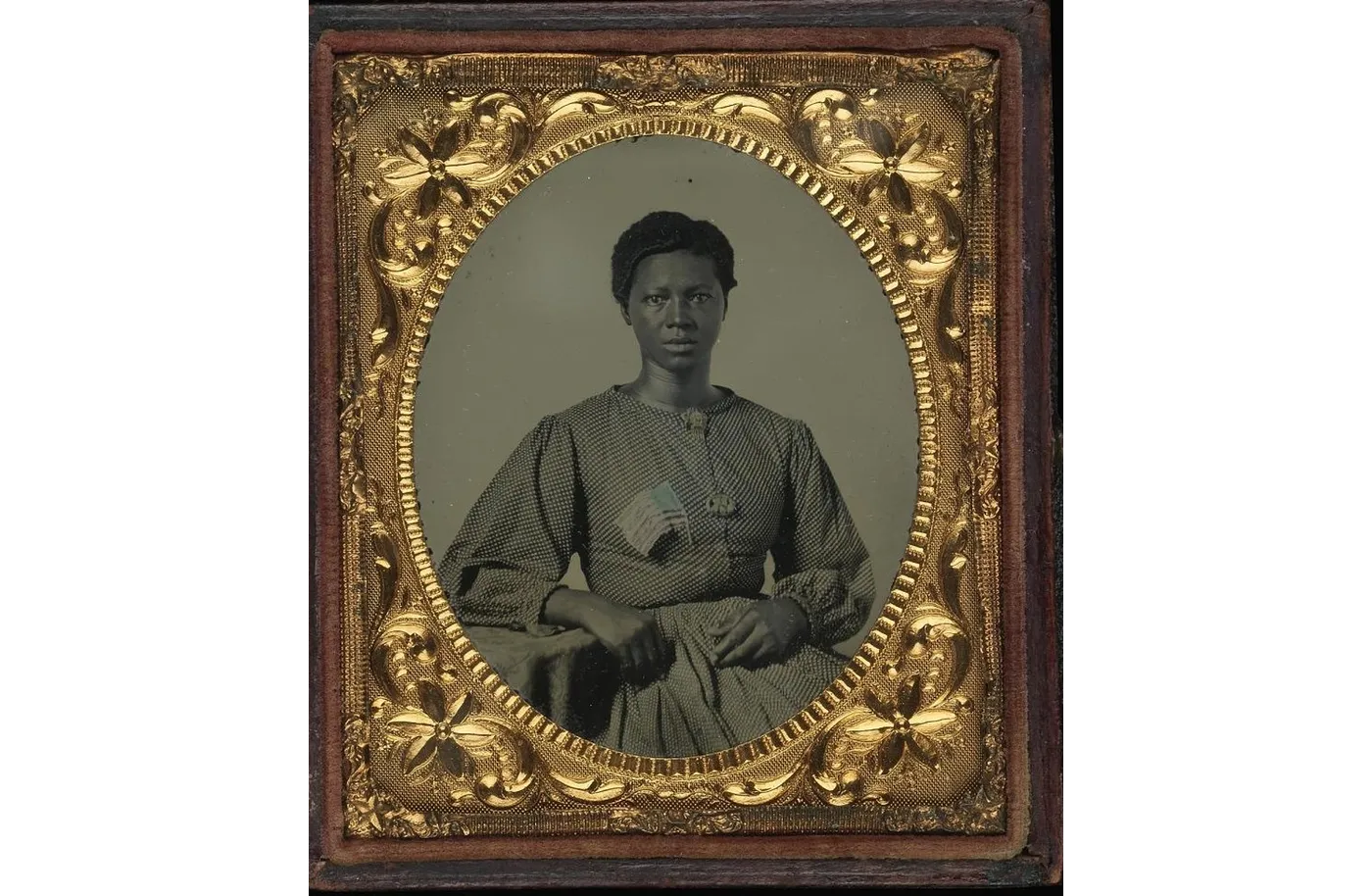
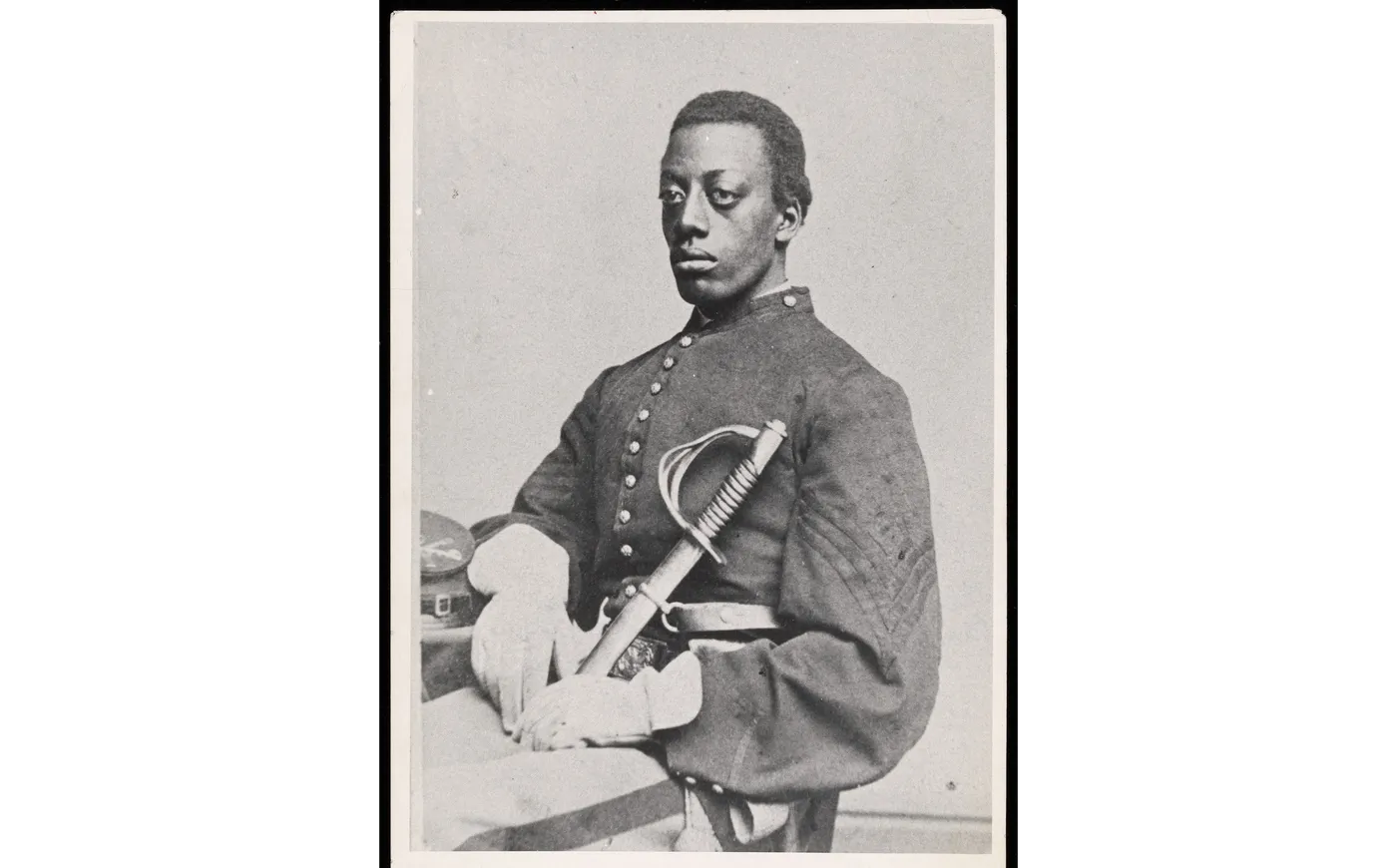
These two photographs represent two very different, equally important forms of Black contribution during the war. The washerwoman's photograph reflects the essential, often overlooked labor women performed to support the Union war effort directly, work that rarely gets the same recognition as combat service but was just as necessary to keeping the army functioning. The photograph of Charles Remond Douglass, son of Frederick Douglass and himself a Union soldier, represents the direct military service side of Black participation, a reminder that this fight for the Union and for abolition ran through prominent activist families as well as through ordinary soldiers and laborers alike.
Charles Remond Douglass enlisted in the 54th Massachusetts Infantry in 1863 and later served in the 5th Massachusetts Cavalry, so this portrait shows a young soldier presenting himself with the dignity of a citizen in uniform.
"The Colored Soldiers" by Paul Laurence Dunbar, 1895
This poem was written after the Civil War specifically to honor Black soldiers and to push back against narratives that downplayed or erased their role in the conflict, narratives that ignored just how much was actually at stake for Black liberty and citizenship in this war. Reading it alongside the photographs above helps connect the visual record of Black service to a literary one, both working to preserve the same story the historical record too often left out.
Dunbar, the son of formerly enslaved parents (his father had escaped slavery and served in the Union Army), published the poem in 1895, when Jim Crow laws were spreading and the Civil War was often remembered as a white struggle. The poem praises Black soldiers' courage, reminds readers that Black men fought and died for the Union, and asks why the nation that accepted their help in war would deny them equal treatment in peace.
[...] Ah, they rallied to the standard To uphold it by their might; None were stronger in the labors, None were braver in the fight. From the blazing breach of Wagner To the plains of Olustee, They were foremost in the fight Of the battles of the free.
[...] They were comrades then and brothers, Are they more or less to-day? They were good to stop a bullet And to front the fearful fray. They were citizens and soldiers, When rebellion raised its head; And the traits that made them worthy, Ah! those virtues are not dead. [...]
Paul Laurence Dunbar, "The Colored Soldiers" (1895), stanzas 5 and 8, as printed in The Complete Poems of Paul Laurence Dunbar (1913). Source: Project Gutenberg