

2.24 - Freedom Days: Commemorating the Ongoing Struggle for Freedom
How Legal Enslavement Actually Ended
Ending slavery in the United States wasn't a single, clean moment, it happened in stages. The 1863 Emancipation Proclamation was a wartime order that declared freedom for enslaved people held in Confederate states still actively at war with the Union. But that order didn't cover everyone. It did not apply to the four slaveholding border states that stayed in the Union (Delaware, Kentucky, Maryland, and Missouri). Maryland and Missouri ended slavery on their own in 1864 and early 1865, but in Kentucky and Delaware slavery stayed legal until the Thirteenth Amendment was ratified in December 1865.
The Thirteenth Amendment is what actually secured slavery's permanent abolition across the United States, with the notable exception of slavery as punishment for a crime. It freed roughly four million African Americans, nearly a third of the entire South's population, marking a genuinely monumental, though incomplete, first step toward freedom, justice, and inclusion for African Americans in the country of their birth.
Even the Thirteenth Amendment had gaps. It didn't apply to the nearly 10,000 African Americans who were enslaved by Indigenous nations, which were treated as separate governments. Ending slavery in Indian Territory required the U.S. government to negotiate separate treaties with these nations in 1866. The treaties ended legal slavery, but they did not settle the freedpeople's place in the nations. The Cherokee, Creek, and Seminole treaties promised freedpeople citizenship, yet those rights were often denied or challenged, and the Chickasaw Nation never adopted its freedpeople as citizens at all, so many freedpeople were left without full rights as tribal citizens.
Why Juneteenth Matters
Juneteenth marks a very specific moment: the end of slavery in Texas, the very last state still in rebellion. It commemorates June 19, 1865, the day enslaved people in Galveston, Texas, were finally informed of their freedom, through a Union general's public reading of General Order No. 3. This order holds a distinct historical significance beyond just announcing freedom, it was the first official document to explicitly mention racial equality, declaring "an absolute equality of personal rights and rights of property between former masters and slaves."
Juneteenth isn't an isolated tradition either. African American communities have a long, continuous history of commemorating local Freedom Days, a practice that stretches back at least to the celebration of abolition in New York on July 5, 1827. Juneteenth is simply one of many such Freedom Days that communities have celebrated consistently over generations. It took over 150 years from that first celebration for Juneteenth to become an official federal holiday, which finally happened in 2021.
New York's law ending slavery took effect on July 4, 1827, and many Black New Yorkers held their main celebration the next day, July 5, partly to avoid clashes with white crowds on the Fourth. Much later, President Joe Biden signed the law making Juneteenth a federal holiday on June 17, 2021.
The earliest Juneteenth celebrations had their own distinct traditions: singing spirituals, wearing new clothing to symbolize newfound freedom, and coming together for feasting and dancing. At the time, the holiday was also known by other names, Jubilee Day and Emancipation Day.
Ultimately, Juneteenth and other Freedom Days commemorate three interconnected things at once: the role African Americans' ancestors played in the long struggle to end legal slavery, the way African Americans embraced a freedom that was real but still deeply fraught, one that required ongoing struggle for equal rights and protection even after emancipation, and African Americans' enduring commitment to seeking joy and validation among themselves, regardless of how belatedly the nation as a whole chose to formally recognize this history.
Required Sources
General Order 3, Issued by Maj. Gen. Gordon Granger, 1865
Major General Gordon Granger, the Union commander who had just arrived in Texas, issued General Order No. 3 in Galveston on June 19, 1865, nearly two and a half years after the Emancipation Proclamation took effect. The short order announced that "all slaves are free" and promised "an absolute equality of personal rights and rights of property between former masters and slaves," the first official document to mention racial equality this way. But the same order also told freedpeople to stay at their present homes and work for wages, and warned that they would not be allowed to gather at military posts or be "supported in idleness." That mix of a promise of freedom and limits on it shows the fraught freedom that Freedom Days commemorate.
The people of Texas are informed that, in accordance with a proclamation from the Executive of the United States, all slaves are free. This involves an absolute equality of personal rights and rights of property between former masters and slaves, and the connection heretofore existing between them becomes that between employer and hired labor. The freedmen are advised to remain quietly at their present homes and work for wages. They are informed that they will not be allowed to collect at military posts and that they will not be supported in idleness either there or elsewhere.
Maj. Gen. Gordon Granger, General Order No. 3, District of Texas, Galveston (June 19, 1865). Source: National Archives, "National Archives Safeguards Original 'Juneteenth' General Order" (transcription of the handwritten order)
Photographs of Juneteenth Celebrations: West Philadelphia (2019), Louisville (2021), and Galveston (2021)
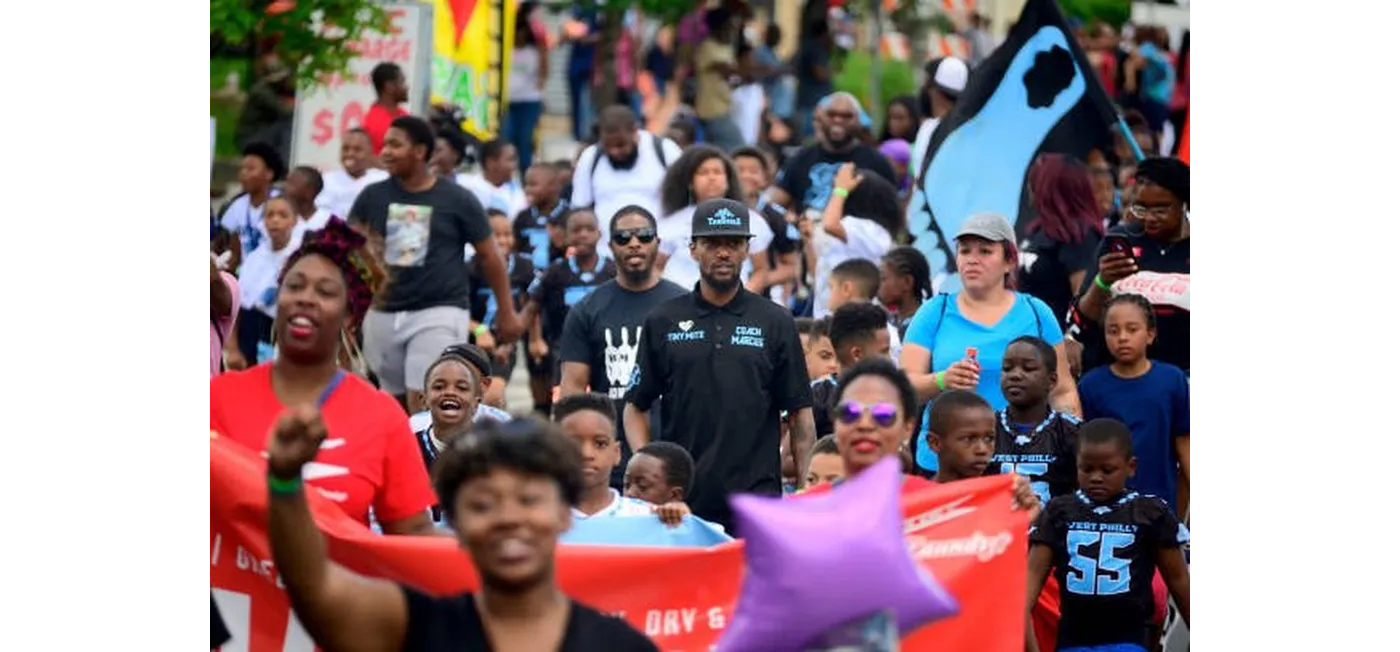
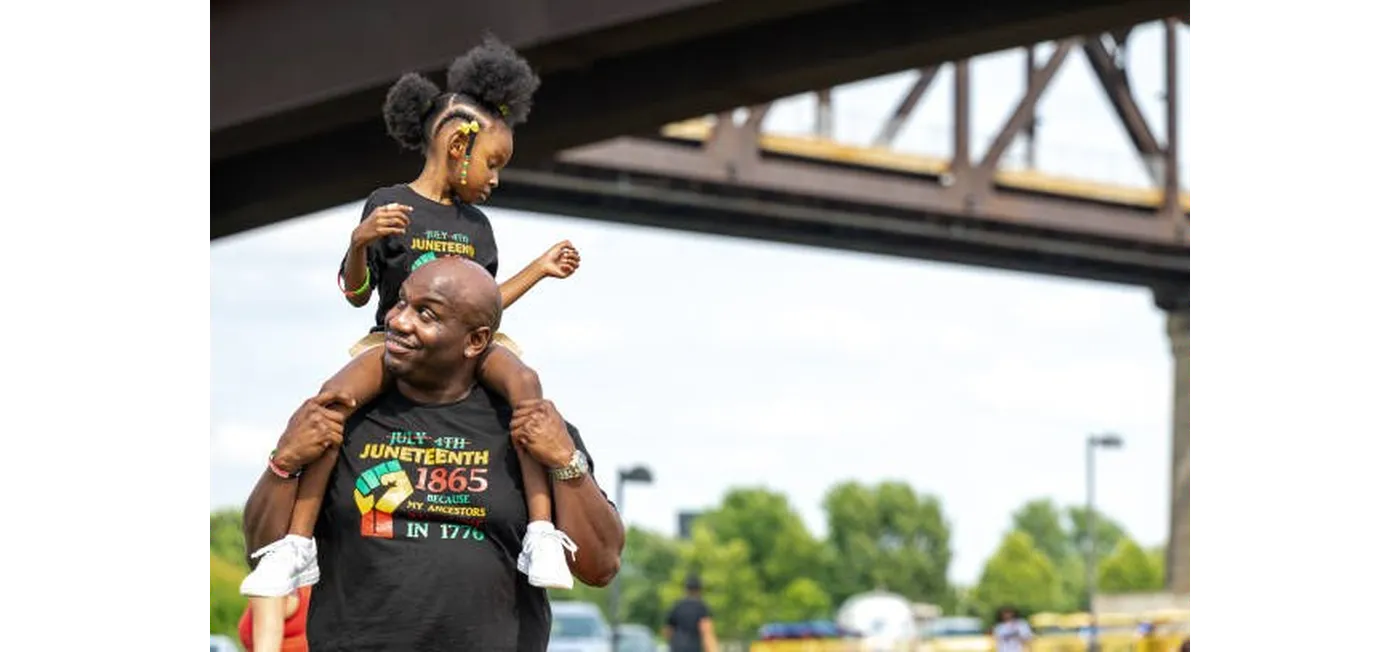
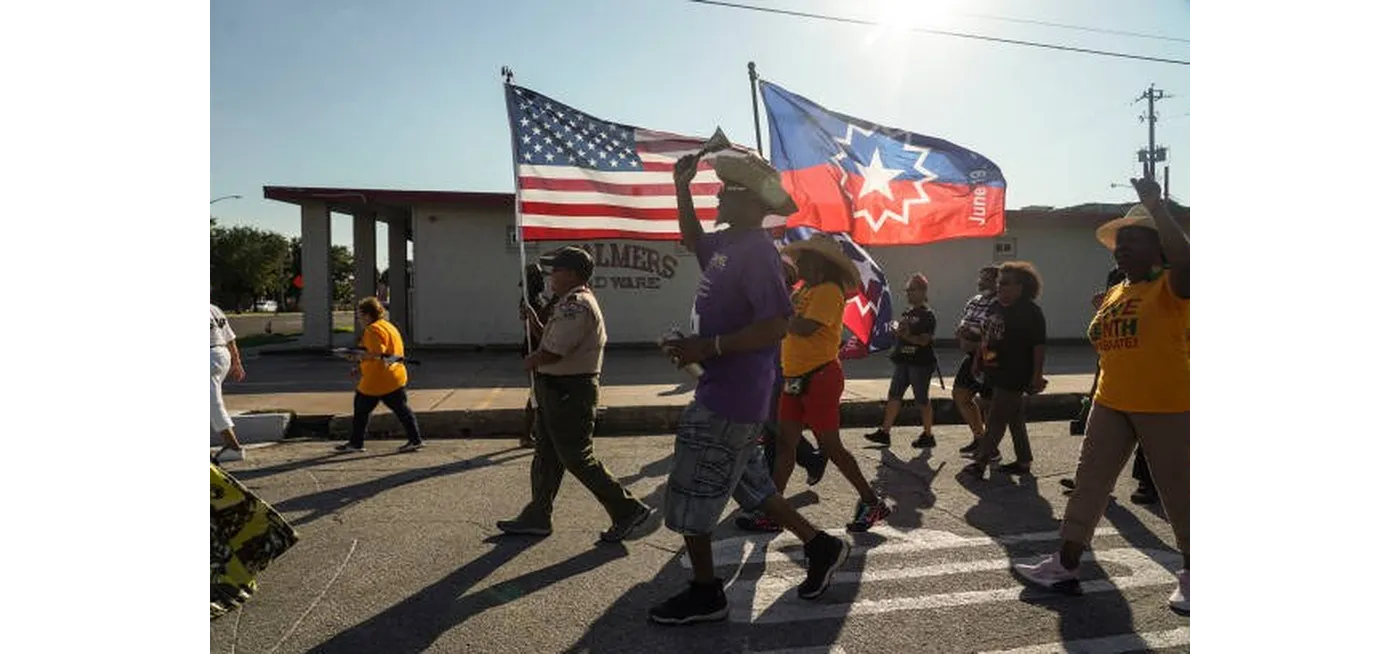
These three photographs, spanning different cities and years, show Juneteenth being celebrated in the present day, more than 150 years after the very first commemorations. Seeing celebrations happening simultaneously in Philadelphia, Louisville, and Galveston itself (the very city where the holiday's history began) reflects how thoroughly this originally local Texas tradition has spread into a nationwide celebration, especially notable given that these photos were taken the same year Juneteenth officially became a federal holiday.