

2.6 - Labor, Culture, and Economy
The Range of Roles Enslaved People Performed
Enslaved people, regardless of age or gender, carried out an enormous range of labor, domestic, agricultural, and skilled work, in both cities and rural areas. In some places, domestic and agricultural work were treated as fairly separate roles, but that separation wasn't fixed, enslavers could reassign someone to entirely different work whenever it suited them.
It's also worth knowing that not every enslaved person was bound to an individual owner. Some were instead bound to institutions themselves, like churches, factories, and colleges.
Many enslaved Africans arrived in the Americas already carrying valuable skills from home, including blacksmithing, basket weaving, and expertise in cultivating rice and indigo. Enslavers took full advantage of these skills, along with specializations many African Americans developed once in America, working as painters, carpenters, tailors, musicians, and healers. But even as enslavers exploited this labor and treated skilled people as commodities, African Americans used these very same skills to survive, build culture, and form community, turning forced labor into a foundation for identity and resilience.
Labor Systems and Their Cultural Impact
Enslaved agricultural laborers typically worked under one of two systems, the gang system or the task system, and each one shaped culture differently.
Under the gang system, laborers worked together in groups from sunup to sundown, closely supervised by an overseer, cultivating crops like cotton, sugar, and tobacco. Out of this system came work songs, sung in English with syncopated rhythms, that helped keep a shared pace of labor. These songs became an early and important form of African American musical expression, born directly out of the conditions of forced group labor.
Under the task system, by contrast, people worked more independently, aiming to complete a set daily quota rather than working in a supervised group. This system was typically used for crops like rice and indigo. Because it involved less direct oversight, it allowed some enslaved people more room to preserve their own linguistic practices. One notable result was Gullah, a creole language that developed in the Carolina lowcountry, blending African languages with English in a way that could survive precisely because there was less constant supervision.
The Economics of Slavery
Slavery didn't just shape the South, it created deep economic interdependence between the North and South as a whole. Cities that had no direct involvement in the African slave trade still benefited economically from the broader system slavery created.
Enslaved people and their labor were, quite literally, foundational to the American economy. And yet the people who embodied and produced that wealth were completely alienated from it themselves. Over centuries, this arrangement entrenched deep, lasting wealth disparities along racial lines in America. Enslaved African Americans earned no wages they could pass down to their children, and they had no legal right to accumulate property of their own. Any exceptions to this depended entirely on the personal decisions of individual enslavers, not on any right the enslaved person actually held.
Required Sources
Sugar Cane Harvest, Antigua, West Indies 1823, 1826 (this plate was published in 1823)
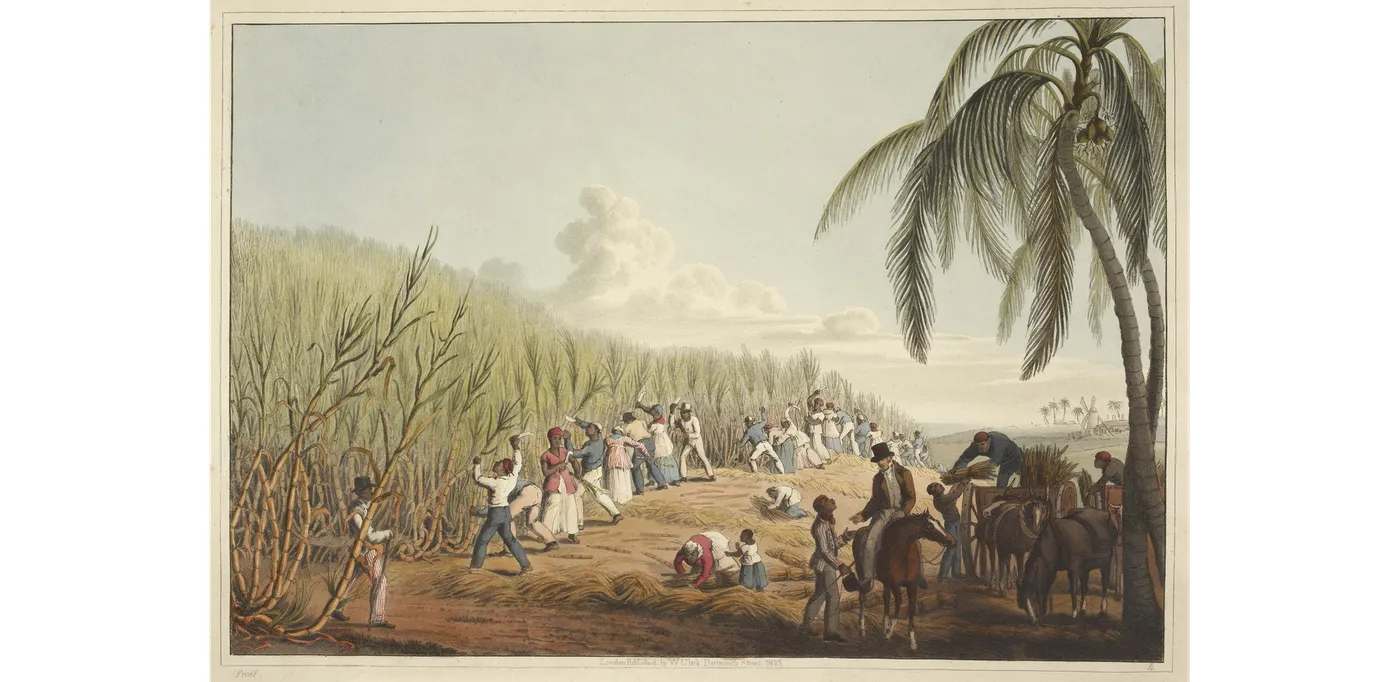
This image shows enslaved laborers engaged in sugar cane harvesting, a crop closely associated with the gang labor system described above. Seeing the harvest depicted visually helps illustrate just how physically demanding and closely supervised this kind of agricultural work was, the exact conditions that gave rise to the coordinated work songs enslaved people created to manage the grueling pace of group labor.
Broadside Advertising "Valuable Slaves at Auction" in New Orleans, 1859
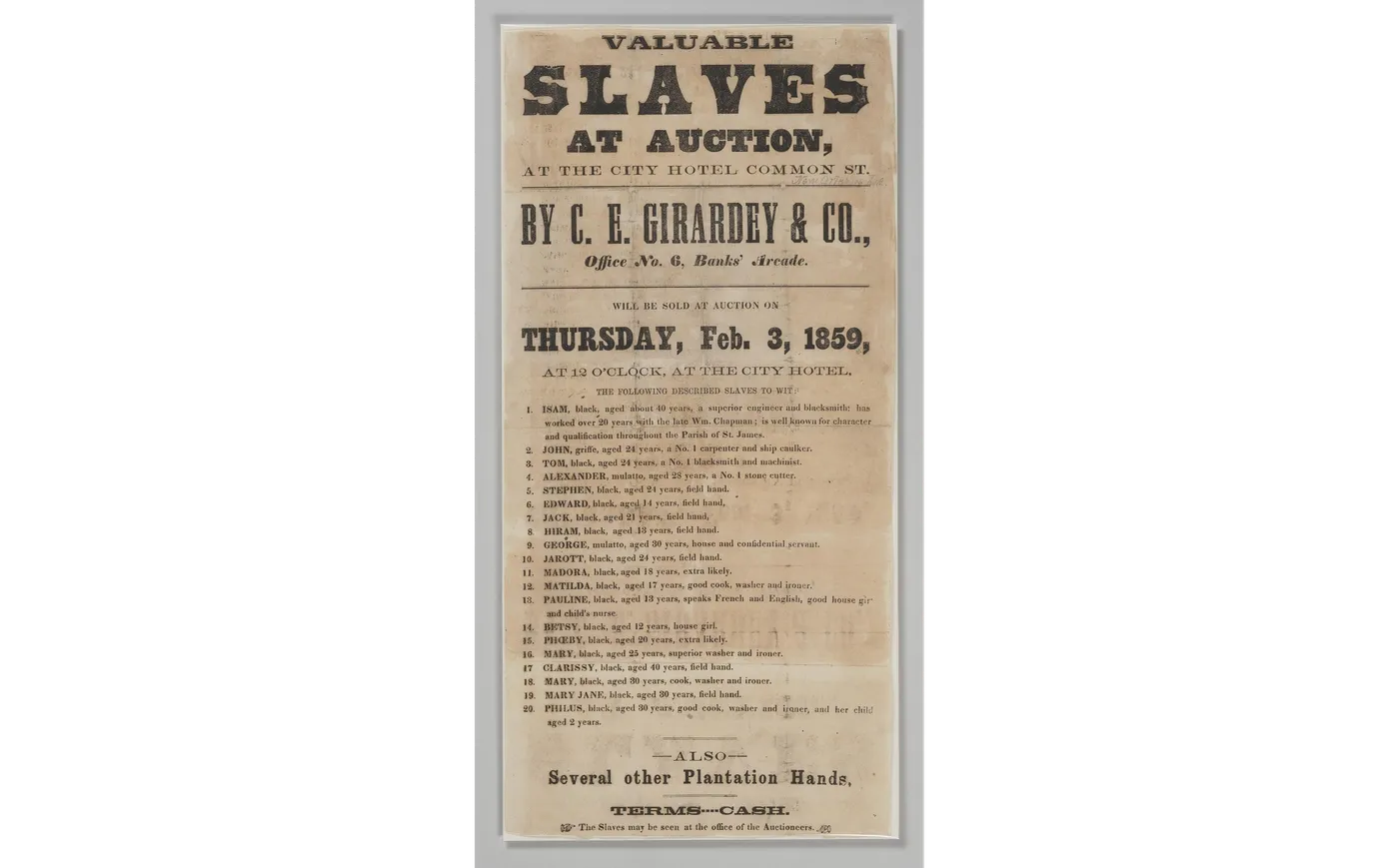
This broadside is a direct window into the sheer range of specialized labor enslaved people performed, listing jobs like engineer, ship caulker, and ironer alongside each person's age and other identifying details. It also captures something specific to New Orleans: the lingering influence of French and Spanish racial classification systems in the city, since enslaved people here are labeled using terms like "black," "mulatto," and "griffe" (meaning three-quarters Black and one-quarter Indigenous). This detail is a reminder that the language used to commodify enslaved people varied by region and colonial history, layering additional systems of racial categorization on top of the basic brutality of the auction itself.
Rice Fanner Basket, Circa 1863
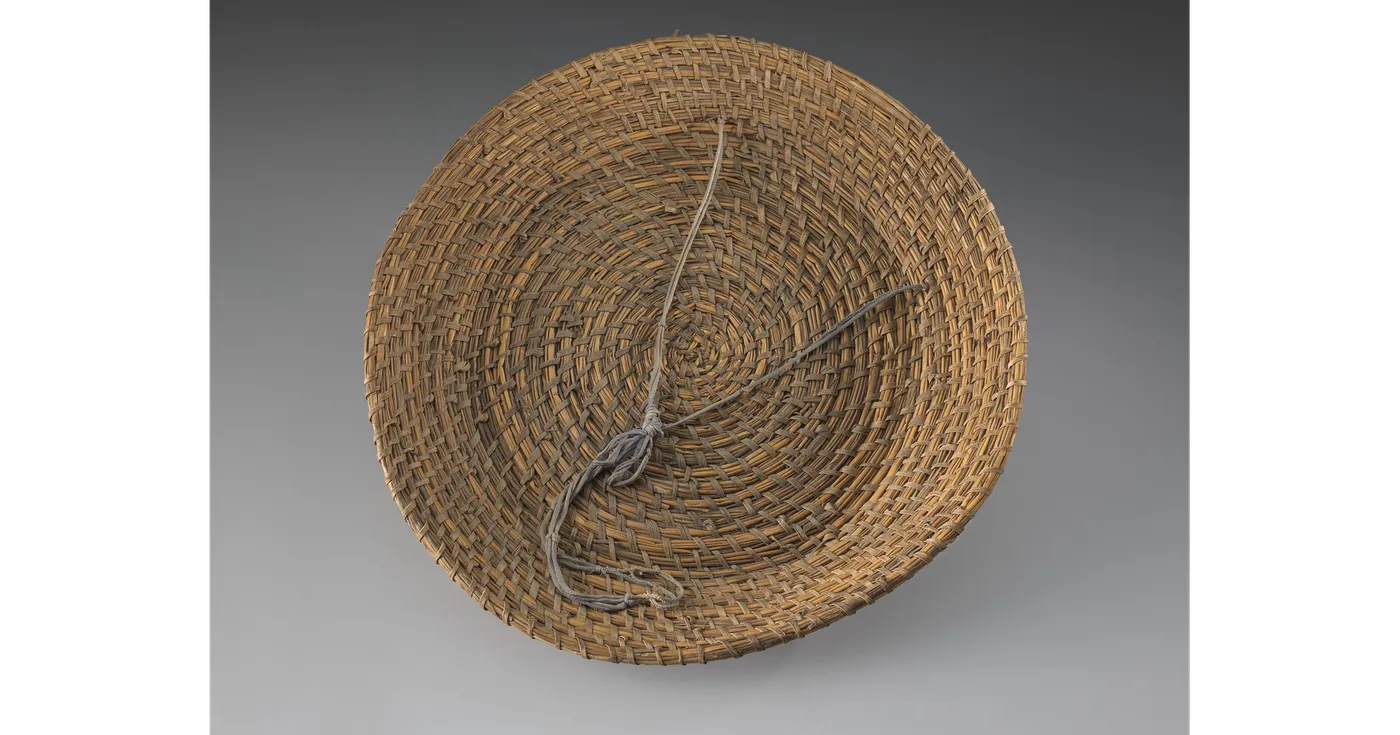
This basket represents a direct, physical thread connecting African skill and knowledge to the American South. The coiled weaving technique used in Carolina lowcountry basket-making closely resembles basket-making traditions still practiced today in Senegal and Angola, showing just how intact this knowledge remained across the Middle Passage. It's also worth remembering that some African women smuggled rice seeds hidden in their hair during the crossing to the Americas, meaning this basket represents not just a woven object, but a broader story of enslaved Africans carrying agricultural knowledge, and literal seeds, across the ocean with them, knowledge that then became foundational to the task-based rice economy of the lowcountry.