

4.19 - African Americans and Sports
Breaking Barriers in the Nineteenth Century and Beyond
Starting during Reconstruction, African American athletes demonstrated real skill and broke real barriers within racially segregated sports throughout the nineteenth century. Oliver Lewis won the very first Kentucky Derby in 1875, and two years later, William "Billy" Walker won the Derby as well. Lewis and Walker set a precedent that would hold for decades, most Kentucky Derby winners were African American all the way until the early twentieth century.
In 1895, Black athletes in Halifax, Nova Scotia founded the Colored Hockey League of the Maritimes, an organization that actually predated the National Hockey League. This league established teams across the Maritime provinces of Canada, showing that Black athletic organizing wasn't limited to the United States alone.
Because racial segregation shut African Americans out of mainstream sports leagues, Black athletes built their own institutions instead. Immediately after the Civil War, African Americans founded baseball clubs and associations across the country. These grew into the professional "Negro leagues" (the first successful one, the Negro National League, formed in 1920), which persisted all the way until the 1960s. It wasn't until 1947 that Jackie Robinson became the first Black player in Major League Baseball, integrating a sport that had operated separately along racial lines for decades.
African American Olympians have brought home numerous gold medals for the United States as well. Jesse Owens is one of the most celebrated examples, winning four gold medals at the 1936 Olympics in Berlin, a remarkable achievement made all the more striking by the fact that he returned home to the very same racial discrimination he had left behind, a stark contradiction between international celebration and domestic reality.
After the Berlin Games, Owens was honored with a ticker-tape parade in New York, but he still had to ride the freight elevator to his own reception at the Waldorf-Astoria hotel, and President Franklin Roosevelt never invited him to the White House.
Athletes as Advocates for Racial Equality
Throughout the twentieth and twenty-first centuries, African American athletes haven't just broken barriers through athletic achievement, many have used their public platforms directly to advocate for racial equality.
In 1967, boxer Muhammad Ali refused to enlist in the U.S. Army and participate in the Vietnam War. He cited religious reasons for his refusal, but he also pointed directly to the racism he and his community continued to face at home, famously stating, "The real enemy of my people is right here."
Ali, who had joined the Nation of Islam, was stripped of his heavyweight title, banned from boxing for more than three years, and convicted of draft evasion. The Supreme Court overturned his conviction in 1971.
At the 1968 Olympics, Tommie Smith and John Carlos staged one of the most iconic moments of nonviolent protest in sports history, raising a Black power fist on the medal podium to express solidarity with the broader Black Freedom movement happening back in the United States.
Smith won gold and Carlos won bronze in the 200-meter race at the Mexico City Games. On the podium they wore black gloves and no shoes (black socks, to represent Black poverty), and silver medalist Peter Norman of Australia wore a badge supporting their cause, the Olympic Project for Human Rights. The U.S. Olympic Committee suspended Smith and Carlos and sent them home, and both faced years of threats and criticism.
More recently, in 2016, Colin Kaepernick and other NFL players began kneeling during the national anthem, driven by frustration over the persistent problem of police brutality. This peaceful protest spread to athletes in other sports as well, helping bring the issue of police brutality into the national spotlight in a way that resonated well beyond the football field.
Kaepernick first sat during the anthem in 2016, then switched to kneeling as a more respectful form of protest. He became a free agent after that season and no NFL team signed him. In 2017 the protests spread across the league after President Donald Trump said team owners should fire players who knelt.
Required Sources
Jockeys Compete at the Washington Races, 1840
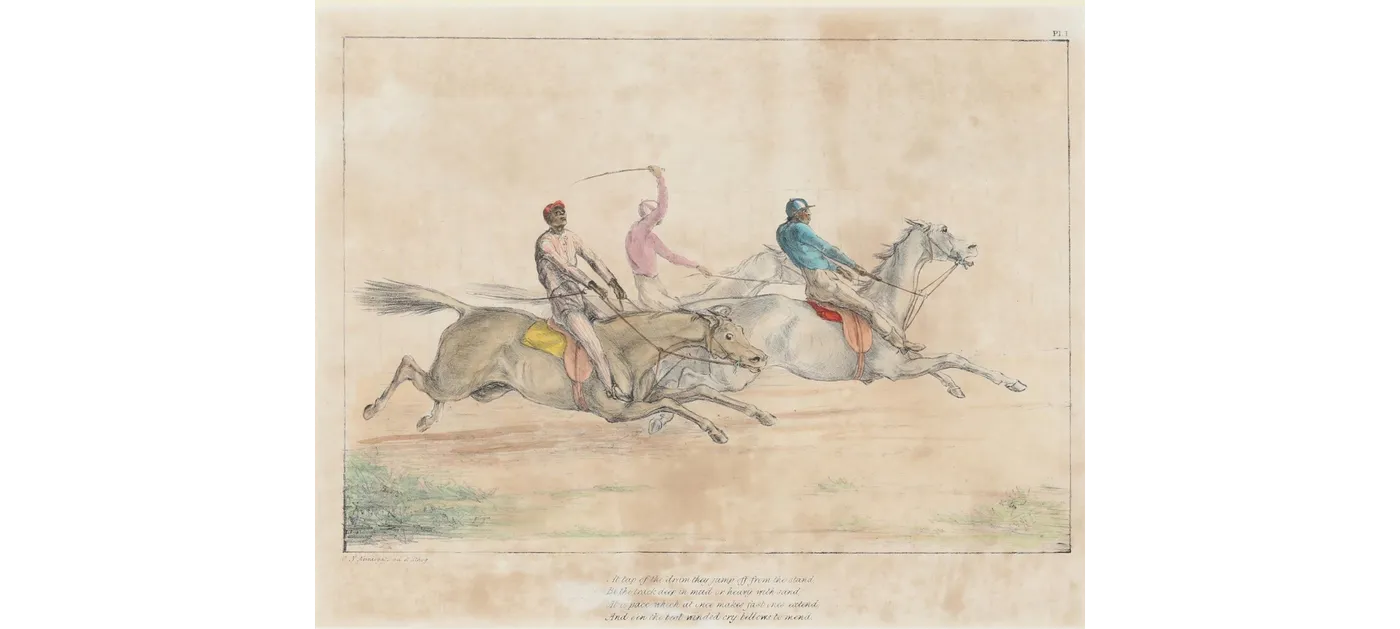
This hand-colored print shows the start of a race at the Washington Races in October 1840, two decades before the Civil War. In that era, especially in the South, many of the jockeys and trainers who did the skilled work of racing were enslaved Black men, and their expertise made money for the white men who owned them and the horses. That history helps explain why Black jockeys like Oliver Lewis and Billy Walker dominated the early Kentucky Derbies after emancipation, and it shows that Black athletes' contributions to American sports go back to before the Civil War.
Tommie Smith and John Carlos Raise Clenched Fists During XIX Summer Olympics, 1968
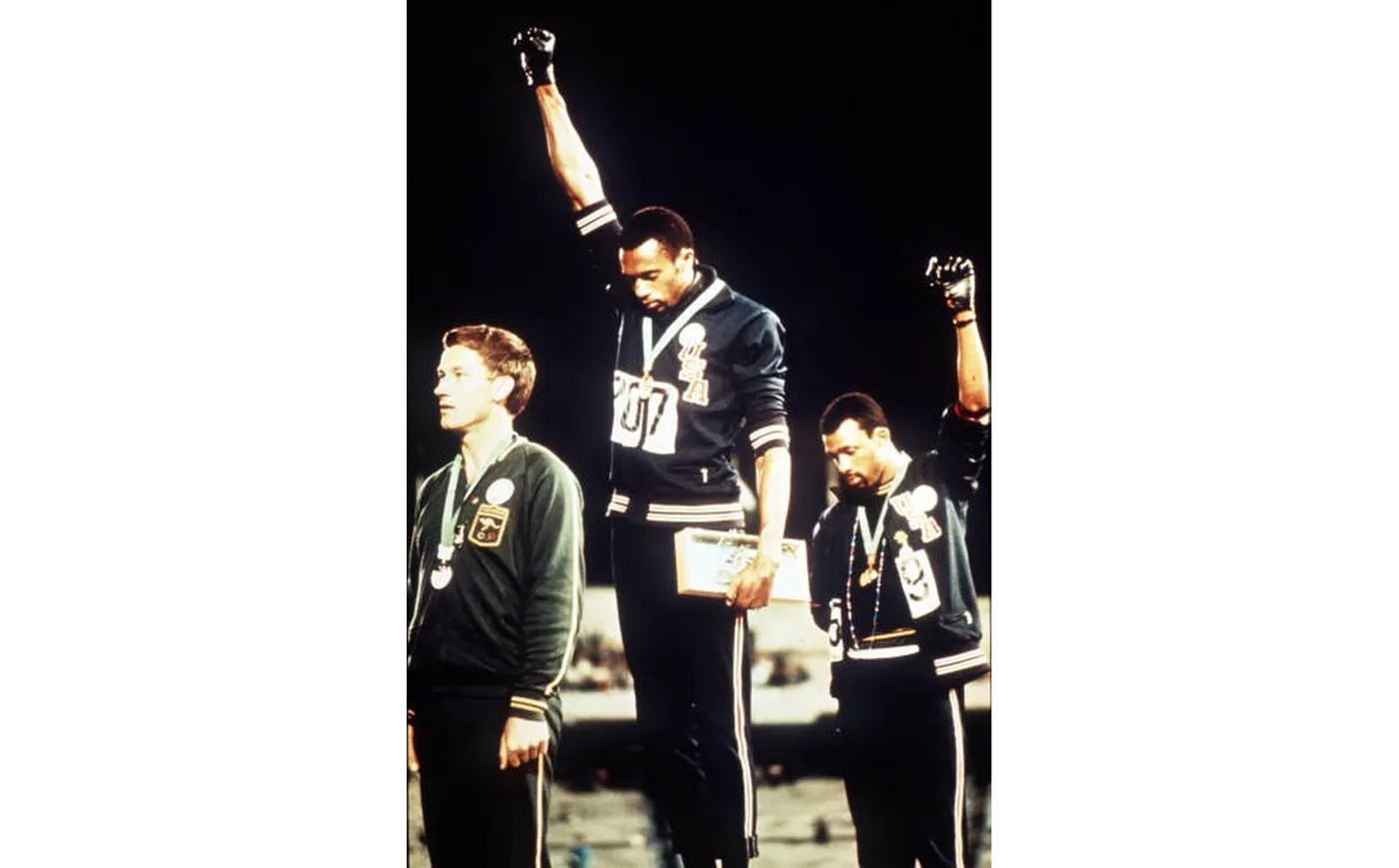
This photograph captures one of the most enduring images of athlete activism in history, the raised fists on the medal podium becoming an instantly recognizable symbol of solidarity with the Black Freedom movement. Seeing the image itself conveys the power and risk of that gesture in a way that description alone can't fully capture, performed on one of the largest global stages available at the time.
Seattle Seahawks Versus San Francisco 49ers, 2017
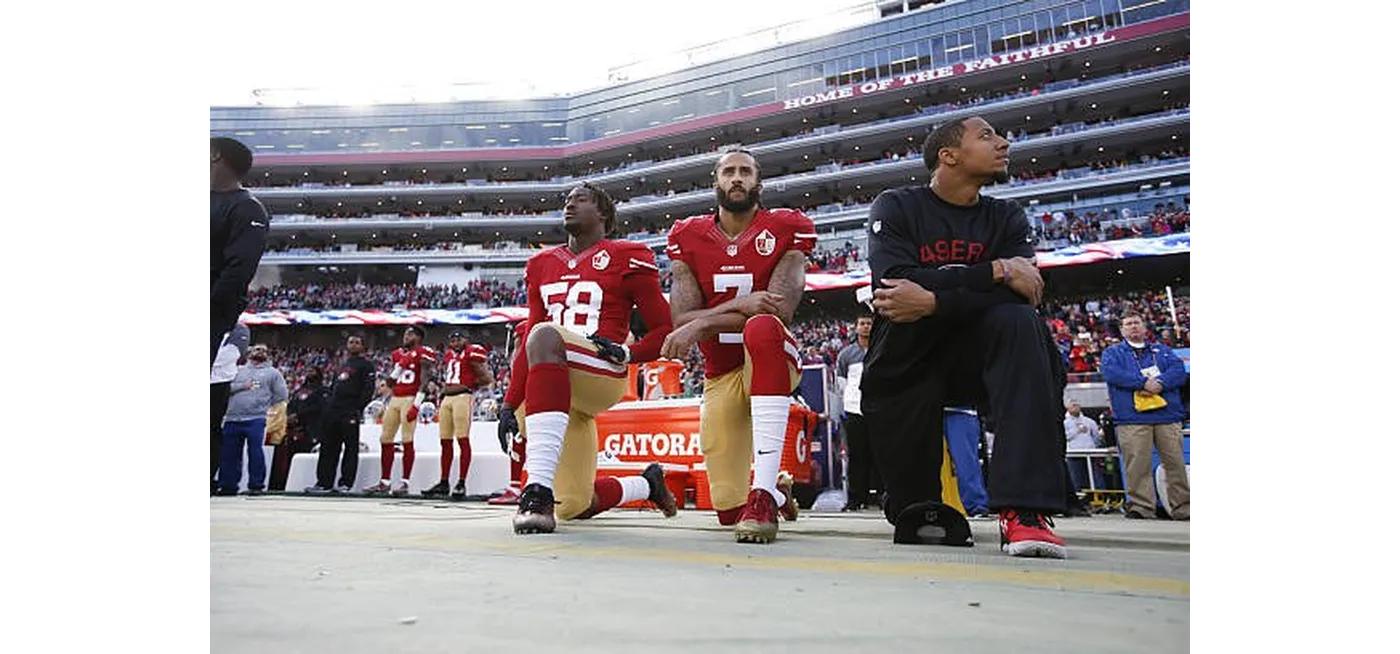
This photograph from January 1, 2017, the 49ers' last game of the 2016 season, shows Colin Kaepernick kneeling during the national anthem with teammates Eric Reid and Eli Harold. Reid had joined Kaepernick's protest early that season, and players on other teams joined in over the following months. Like Smith and Carlos's raised fists in 1968, the kneeling was a peaceful, silent protest on a huge public stage, and it drew both strong support and fierce criticism, showing how athletes have used their platforms to push for racial equality.