

4.20 - Science, Medicine, and Technology in Black Communities
Scientific and Technological Contributions
African American inventors and scientists have had a genuinely global impact, with major contributions across agriculture, technology, medicine, science, and engineering. George Washington Carver, born enslaved, went on to become a botanist and professor who developed methods for preventing soil depletion, work significant enough that he served as an agricultural counselor to President Theodore Roosevelt.
African American women played instrumental roles in the U.S. aeronautics and space programs as well. Katherine Johnson, a mathematician, worked at NASA, and her calculations for space travel were essential to successfully launching astronauts to the moon and safely bringing them home. Mae Jemison, a physician, engineer, and NASA astronaut, became the first African American woman to travel in space in 1992, adding her own historic milestone to this legacy of achievement.
Johnson, engineer Mary Jackson, and supervisor Dorothy Vaughan started as "human computers" in a segregated unit at what became NASA's Langley Research Center in Virginia, doing by hand the math for flight tests and space missions. Johnson calculated the flight path for Alan Shepard's 1961 flight, the first by an American in space, and checked the computer's math for John Glenn's orbit of Earth in 1962. Their story reached a wide audience through the book and film Hidden Figures (2016).
Building Black Medical Institutions
African Americans have contributed in essential ways to the American healthcare system as a whole, including providing free, community-based care that encouraged early diagnosis and treatment of illness. African American physicians worked directly with local governments to help establish some of America's first nonsegregated hospitals, both in the late nineteenth century and later during the mid-twentieth-century Black hospital movement.
Because Black medical professionals were initially barred from joining the American Medical Association, African Americans built their own institutions to fill that gap. They established medical schools at places like Meharry College, Howard University, Morehouse, and other HBCUs, along with the National Medical Association, to support the training and professional development of Black doctors who had nowhere else to turn.
Individual African Americans have also made landmark contributions to medicine throughout history. Onesimus, an enslaved man, brought awareness of variolation (deliberately infecting a person with material from a smallpox sore to cause a milder case and lasting immunity) to the British American colonies, a practice that helped curb smallpox during Boston's 1721 epidemic, long before modern vaccination existed. Daniel Hale Williams founded Provident Hospital in Chicago in 1891, the first Black-owned hospital in the United States, and in 1893 he performed what is often called the first successful heart surgery, repairing the sac around the heart of a man who had been stabbed. More recently, Kizzmekia Corbett played a central role in developing the Moderna COVID-19 mRNA vaccine, extending this legacy of Black medical innovation into the twenty-first century.
A History of Exploitation Alongside Innovation
It's essential to understand that African Americans' relationship to American medicine includes a painful history of involuntary experimentation on Black bodies, alongside the unequal care many still experience today. In the 1840s, three enslaved teenagers, Anarcha Westcott, Lucy, and Betsey, along with other Black women, were subjected to violent surgical experimentation without anesthesia by Dr. J. Marion Sims. Sims became known as the "father of modern gynecology" through this inhumane treatment, but today, these women are rightly recognized as the "foremothers of modern gynecology," a reframing that centers their suffering and contribution rather than his reputation.
This pattern of exploitation continued well into the twentieth century. In 1927, Vertus Hardiman, then just five years old, and other African American children from Lyles Station, Indiana, were given heavy doses of radiation at a county hospital after their parents were told it was a new treatment for scalp ringworm. The children were unknowing victims of what is often described as a radiation experiment, and Hardiman was left with a disfiguring wound for the rest of his life. From 1932 to 1972, the U.S. Public Health Service ran a study of untreated syphilis on hundreds of Black men in and around Tuskegee, Alabama, telling them they were being treated for "bad blood" and withholding treatment even after penicillin became the standard cure in the 1940s, a study that stands as one of the most notorious ethical violations in American medical history. In 1951, physicians at Johns Hopkins University Hospital in Baltimore performed unsanctioned research on cervical cancer cells taken from Henrietta Lacks without her knowledge or consent. Her cells, now known as HeLa cells, became "immortalized" in laboratory research and have since been used in the development of the polio vaccine, coronavirus vaccines, and treatments for AIDS and Parkinson's disease, among many other medical advances, an enormous, uncompensated contribution to global medicine taken from her without permission.
Disability, Eugenics, and Civil Rights
During the early twentieth century, the rise of eugenics intensified the stigmatization of people considered inferior based on race and ability. As a result, Black people with disabilities faced multiple, compounding forms of systemic oppression, harassment, institutionalization, and violations of their basic rights, including forced sterilization carried out under eugenicist policy.
More than 30 states passed forced sterilization laws, and the Supreme Court upheld them in Buck v. Bell (1927). These practices lasted for decades. In 1973, two Black sisters in Montgomery, Alabama, Minnie Lee and Mary Alice Relf, ages 12 and 14, who were described as having intellectual disabilities, were sterilized at a federally funded clinic after their mother, who could not read, was asked to mark the consent form with an X. Their lawsuit exposed similar cases and led the federal government to adopt stricter consent rules for sterilizations it paid for.
Real legal protection didn't arrive until decades later. In 1990, the Americans with Disabilities Act built on the civil rights legislative achievements that had already outlawed Jim Crow, extending similar protections specifically to people with disabilities, prohibiting discrimination in areas including housing, employment, and government programs.
President George H. W. Bush signed the ADA after years of disability rights protests that borrowed civil rights tactics. During a nearly month-long sit-in at a federal building in San Francisco in 1977, Black Panther Party members brought meals to the disabled protesters every day; Brad Lomax, a Black Panther who used a wheelchair, helped lead that support.
Required Sources
Mary Jackson at Work, 1977
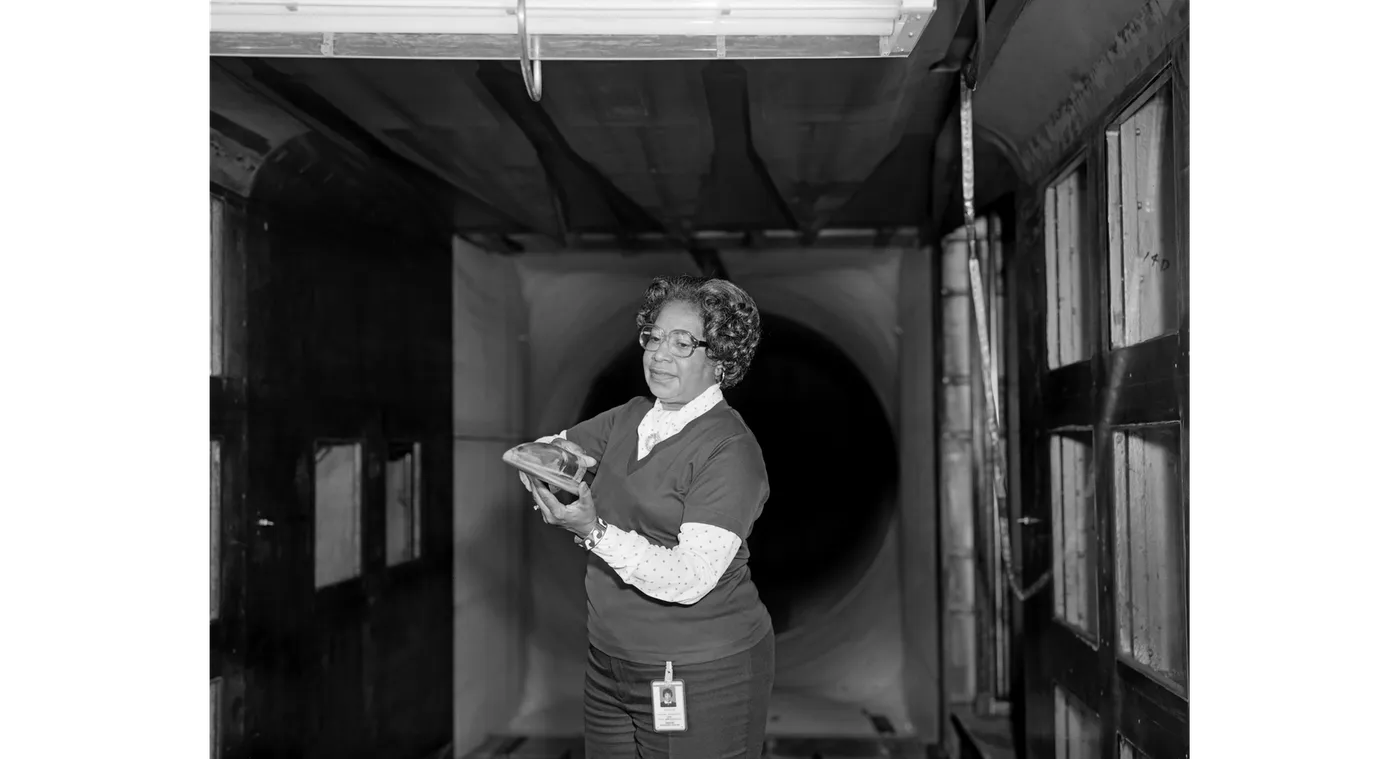
Bob Nye, a NASA photographer, took this picture in 1977 at NASA's Langley Research Center in Virginia. It shows Mary Jackson working with a model in a wind tunnel, where engineers tested how air flows around aircraft designs. Jackson joined Langley in 1951 as a "human computer" in the segregated West Area Computing unit, got special permission to take advanced math and physics classes at a white-only school, and in 1958 became NASA's first Black woman engineer. Later in her career she worked to help women and minorities get hired and promoted at NASA. The photo is evidence of Black women's contributions to American aeronautics and space science, alongside Katherine Johnson and Mae Jemison.
Mae Jemison Works at Zero Gravity, 1992

This photograph captures Jemison during her historic 1992 spaceflight, the very mission that made her the first African American woman to travel in space. Seeing her actually at work in zero gravity brings this landmark achievement to life, showing the practical, hands-on reality behind a milestone that's often referenced only in the abstract.
Henrietta Lacks (HeLa): The Mother of Modern Medicine by Kadir Nelson, 2017
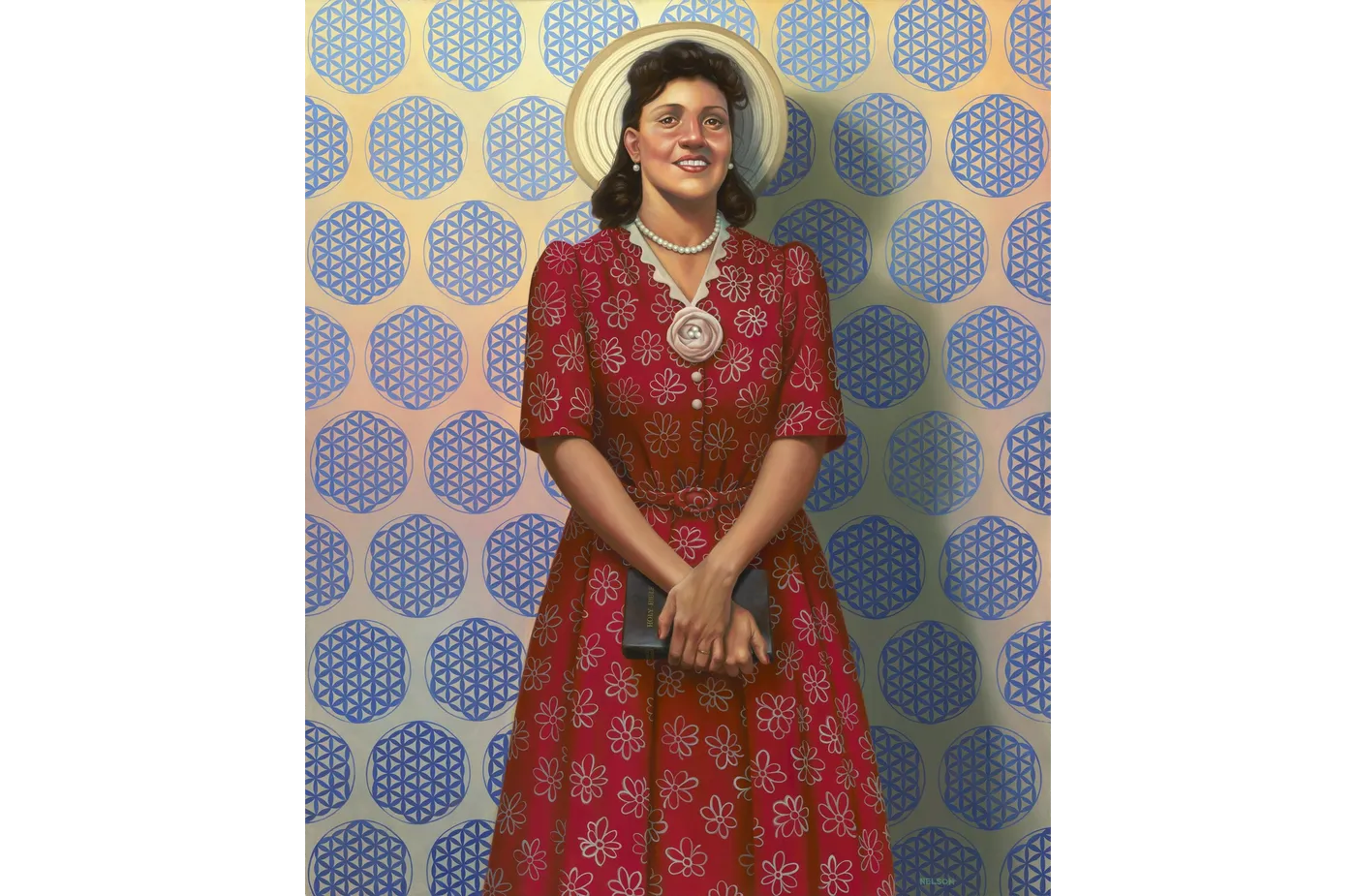
This artwork honors Henrietta Lacks directly, reclaiming her identity and humanity in a way the medical establishment failed to do when her cells were taken without her knowledge or consent in 1951. Given how profoundly her HeLa cells have shaped modern medicine, from vaccines to disease treatment, this piece serves as an important act of recognition, ensuring the woman behind this immense medical contribution is remembered as a person, not just as a source of research material.