

4.9 - Black Religious Nationalism and the Black Power Movement
The Nation of Islam
The Nation of Islam was founded in Detroit in 1930, blending core beliefs and practices of Islam, including devotion to Allah and study of the Qur'an, with its own distinct mythology and Black Nationalist ideology.
The NOI's founder was a mysterious figure named Wallace D. Fard (later called Wallace Fard Muhammad), who disappeared in 1934. The NOI taught that Black people were the world's original people and that white people were "devils" created by an evil scientist named Yakub, the kind of mythology mainstream Muslims reject. It also preached strict personal discipline (no alcohol, drugs, or pork), Black economic self-reliance through Black-owned businesses, and separation from white society rather than integration.
Elijah Muhammad led the organization from its Chicago headquarters starting in 1934. Under his leadership, followers were encouraged to give up their surnames in favor of Muslim names. Many members adopted the letter "X" as a symbolic act, representing the rejection of the surname inherited from their ancestors' enslavers, until they eventually received a new name upon becoming a devout member. This same spirit extended beyond just surnames: Malcolm X also encouraged African Americans to move away entirely from terms tied to slavery and its legacy, like "Negro" or "colored," and instead embrace ethnonyms like Black or African American with genuine pride.
It's worth noting that the Nation of Islam has faced significant criticism over the years. Organizations like the Anti-Defamation League and the Southern Poverty Law Center have criticized the organization and its leadership for espousing antisemitic and homophobic views, and many Muslim leaders have distanced themselves from the Nation of Islam, which is not considered a mainstream Muslim organization.
From Civil Rights to Black Power
By the mid-1960s, some African Americans had come to believe that the Civil Rights Movement's emphasis on racial integration, equal rights, and nonviolent strategy wasn't adequately addressing the disempowerment and lack of safety they faced in their everyday lives. This growing frustration led many toward Black Power, a movement that promoted genuine self-determination, defended violence as a legitimate strategy when necessary, and worked to transform Black consciousness by centering cultural pride.
The phrase "Black Power" became a national rallying cry in June 1966, when SNCC chairman Stokely Carmichael (later Kwame Ture) used it during the March Against Fear in Mississippi. Under Carmichael, SNCC moved away from interracial organizing, and many young activists began arguing that Black communities had to control their own politics, businesses, and schools.
Malcolm X, a Muslim minister and activist, became one of the most influential voices championing Black autonomy. Rather than prioritizing integration into existing white institutions, he encouraged African Americans to build their own independent social, economic, and political institutions instead.
Malcolm X was born Malcolm Little in Omaha, Nebraska, in 1925. He joined the Nation of Islam while in prison in the late 1940s and became its best-known minister and national spokesman, leading its temple in Harlem.
Malcolm X didn't just encourage voting, though he did emphasize that right too, he also encouraged African Americans to exercise their Second Amendment right to keep and bear arms. He urged Black communities to defend themselves directly if the government proved "unwilling or unable to defend the lives and the property" of African Americans. This emphasis on self-defense, dignity, and solidarity went on to shape the political groups that emerged during the broader Black Power movement in the years that followed.
Malcolm X's own thinking evolved considerably over the course of his life. Toward the end of his life, he left the Nation of Islam and embraced orthodox Islam instead, marking this transition with a new name: el-Hajj Malik el-Shabazz. In this later period, he pursued a broader vision centered on Black nationalism, pan-African connections, and framing African people's rights explicitly as human rights, protesting injustice on an international stage rather than solely within the United States.
After leaving the NOI in March 1964, Malcolm X made the hajj (the pilgrimage to Mecca) that April, where praying alongside Muslims of every color changed his views on white people. He founded the Organization of Afro-American Unity, modeled on the Organization of African Unity, traveled through Africa, and planned to bring charges against the United States before the United Nations for violating African Americans' human rights. He was assassinated in Harlem on February 21, 1965.
Required Sources
"The Ballot or the Bullet" by Malcolm X, 1964
Malcolm X gave this speech in Cleveland, Ohio, on April 3, 1964, just weeks after leaving the Nation of Islam, while the civil rights bill was stuck in a Senate filibuster. He says he is still a Muslim but asks listeners to set religion aside and unite around Black nationalism, which he defines as Black people controlling the politics, economy, and social life of their own communities. He calls 1964 the year of "the ballot or the bullet": Black Americans should vote as a bloc and use their votes to force change, but if the government keeps failing to protect them, they have the right to defend themselves. He also argues that the struggle should move from civil rights to human rights so it could be taken before the United Nations. The speech lays out the main Black Power ideas in this topic: self-determination, self-defense, and building Black institutions instead of waiting for integration.
Malcolm X, "The Ballot or the Bullet," speech in Cleveland, Ohio, April 3, 1964
Malcolm X gave this speech a few weeks after leaving the Nation of Islam, while the civil rights bill was stuck in the Senate. He asks Black Americans to put religious differences aside and unite around Black nationalism, to vote as a bloc, and to defend themselves if the government won't protect them, warning that in 1964 the choice was "the ballot or the bullet." He also argues for taking the struggle to the United Nations as a fight for human rights. The speech lays out the main ideas of Black Power: self-determination, self-defense, and community control.
Malcolm X and Martin Luther King Jr. After Press Conference at United States Capitol, 1964
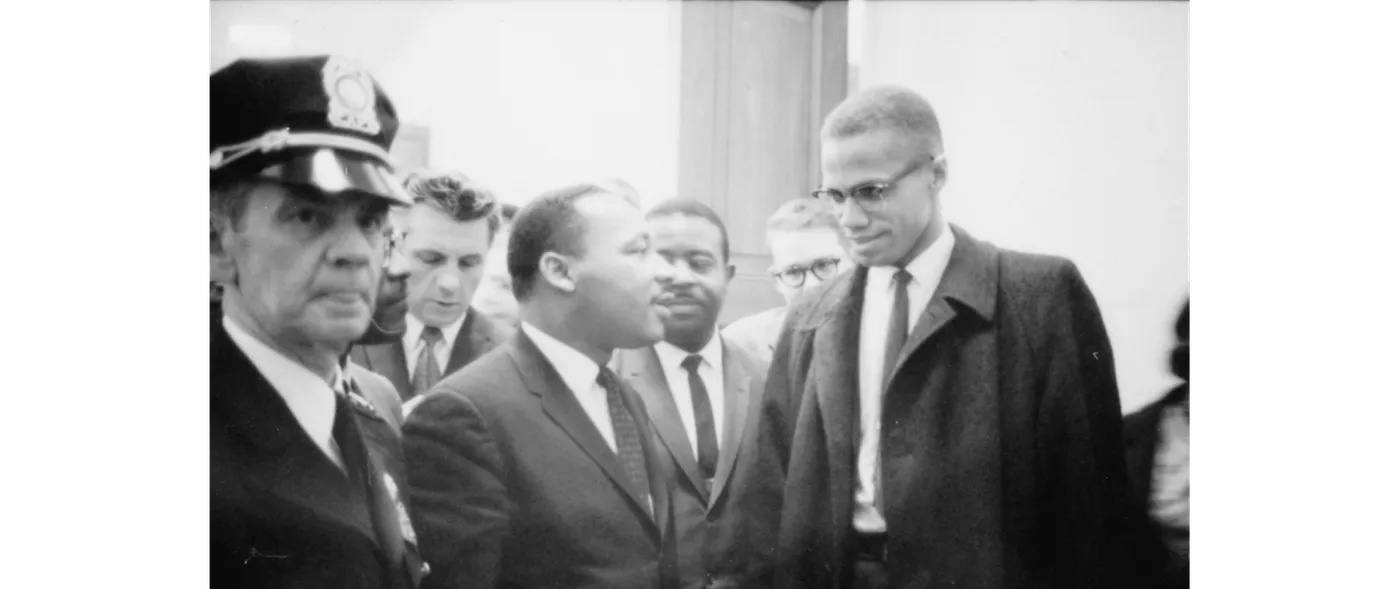
Marion S. Trikosko, a photographer for U.S. News & World Report, took this photo at the U.S. Capitol on March 26, 1964. King had come to watch the Senate debate the civil rights bill, and Malcolm X, who had left the Nation of Islam weeks earlier, came too. The two men met briefly in a hallway and shook hands for the cameras. It was the only time they ever met. The photo is a useful reminder that the Civil Rights and Black Power movements, often presented as opposites, existed in the same moment and were in conversation with each other.
Muhammad Speaks Newspaper Salesmen, 1965
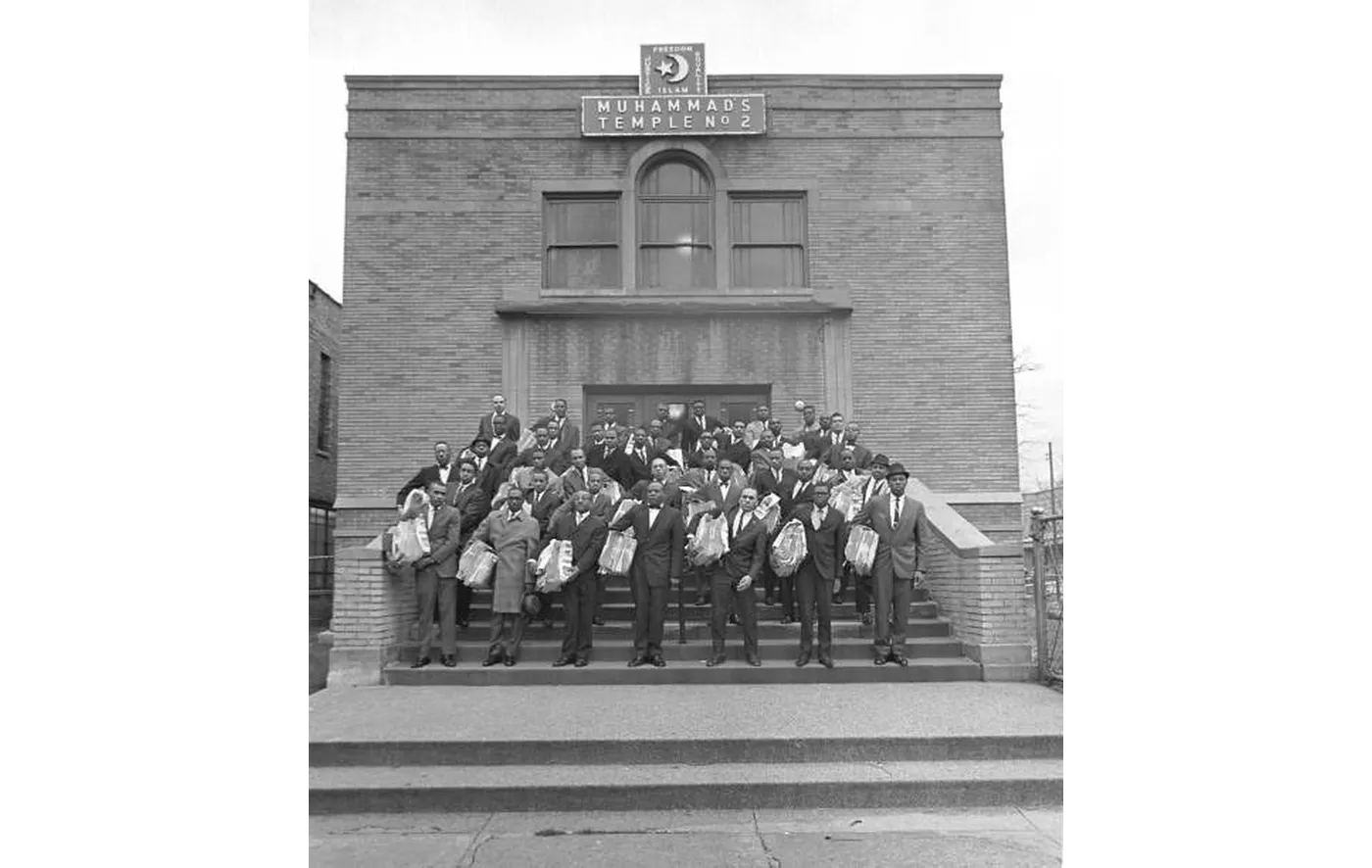
This photograph shows the Nation of Islam's own newspaper being actively sold and distributed within Black communities, reflecting how the organization built and maintained its own independent media and communication network, consistent with its broader emphasis on Black economic and institutional self-sufficiency.
Elijah Muhammad Addressing Black Muslims at Convention, 1966
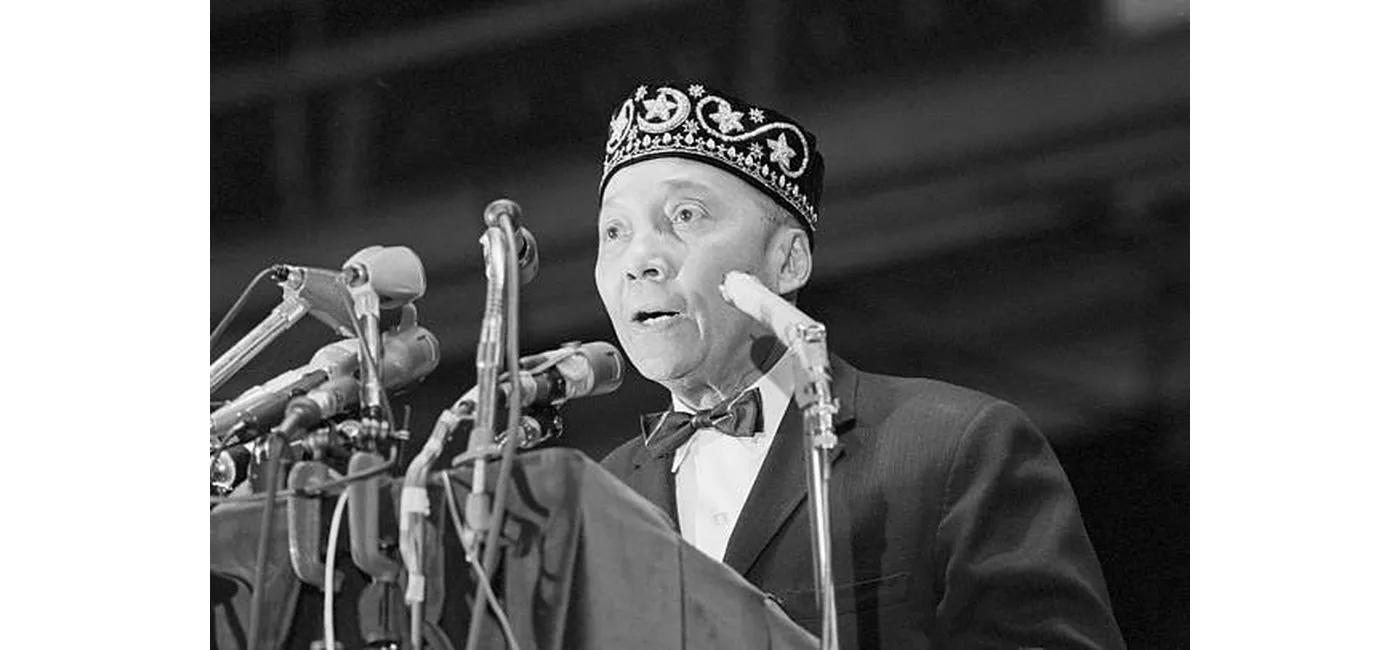
This photograph shows Elijah Muhammad directly engaging with his followers at a large gathering, illustrating the scale and organizational structure of the Nation of Islam under his leadership during this period, the same leadership era that shaped Malcolm X's early political and religious formation before his eventual departure from the organization.